Профессиональная практика / Справочник по США
Tattoo Guest Spots and Conventions in the U.S.: A Verification Guide
A respected artist's home credentials do not automatically authorize work in another state. Verify the person, the host, the event or facility, and the exact dates as separate facts.
Материал подготовлен на американском английском для аудитории США. Интерфейс и навигация остаются на русском.
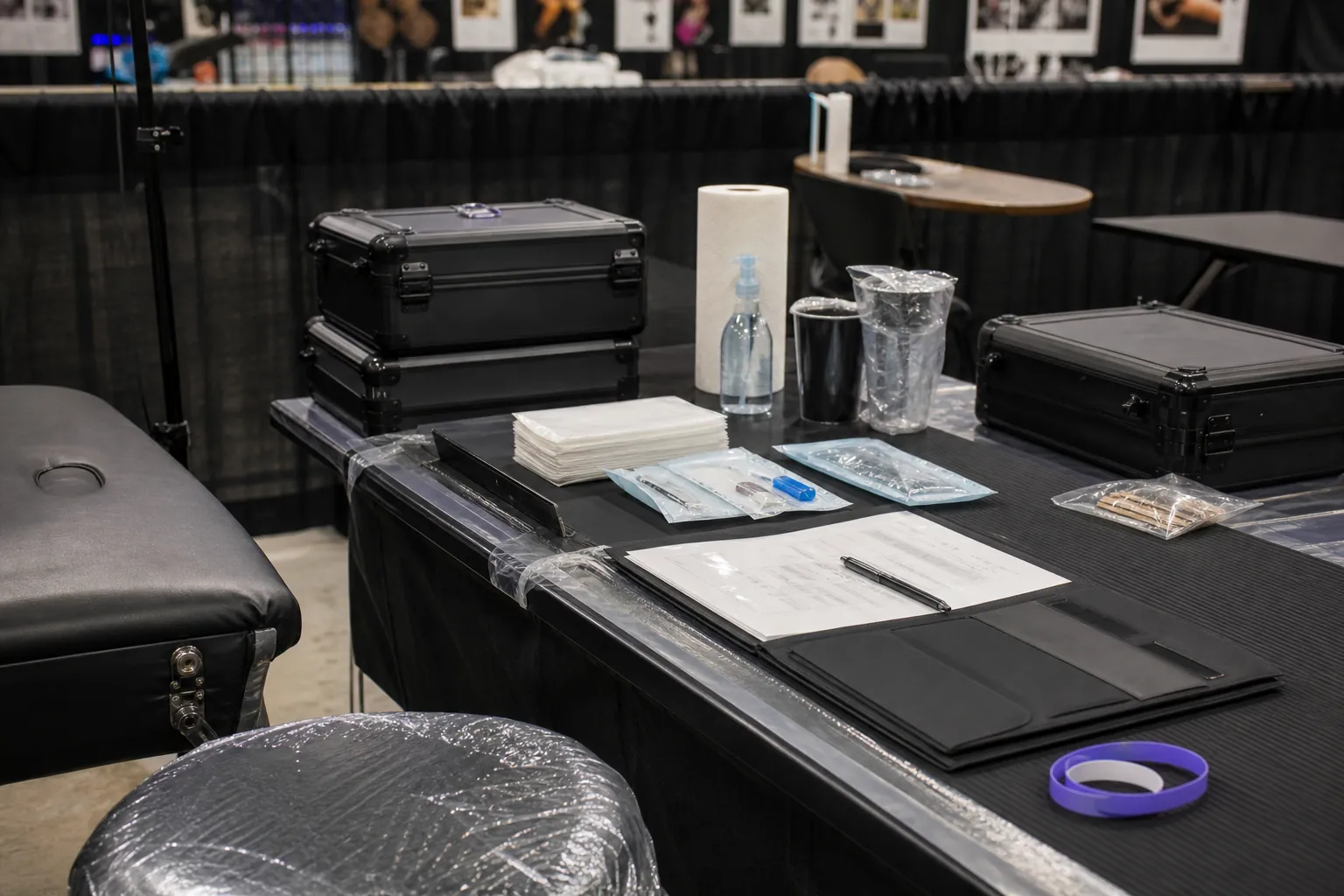
A guest appearance becomes a verifiable appointment only when the artist, host, location, and dates align.ИИ-иллюстрация редакции; это не работа мастера из каталога.
Guest spots and conventions let clients meet artists who normally work in another city or country. They also compress discovery, licensing, scheduling, payment, travel, and aftercare into a short window. The artist may be excellent and the event may be well known, yet the specific appointment can still be poorly documented. Treat a traveling session as four separate verifications: the artist's identity, the host or organizer, the authorized location, and the dates on which the artist may work there.
There is no single U.S. guest-artist license. State, county, and city systems differ. Some regulate individual practitioners and facilities; some focus on establishments; some issue temporary artist registrations, temporary event licenses, or booth permits. This guide explains a research method, not legal advice. Confirm current requirements with the authority responsible for the exact address before advertising, booking, traveling, or paying.
Know Which Type of Appearance You Are Booking
A guest spot usually means a visiting artist works for a limited period inside an established host studio. A convention appointment occurs in a temporary event environment, often within an individual booth under an organizer's approval. A private pop-up can describe many things, from a properly permitted temporary facility to an improvised room with no valid authorization. The marketing label does not determine the legal category; the regulator and physical setup do.
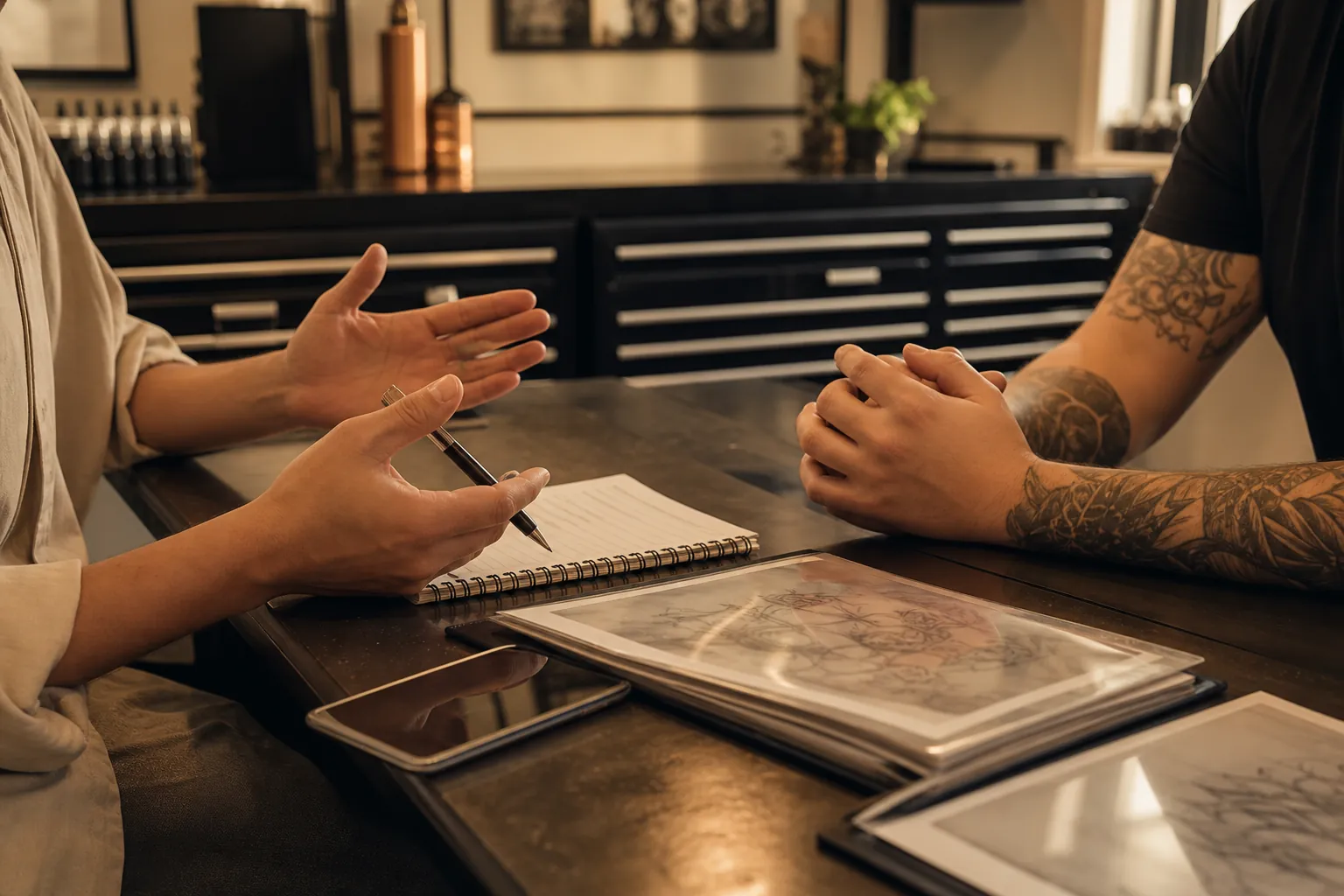
Ask for the complete address, host legal name, event name if applicable, artist's working dates, and the type of authorization being used. Do this before choosing flights or sending a nonrefundable deposit. “Downtown guest spot” is not an address, “licensed in Europe” is not U.S. authorization, and “the organizer handles everything” is not a verifiable explanation unless the organizer can identify the permits and responsible parties.
Start With the Appointment Address and Work Outward
The artist's home base tells you where to discover their work; the destination address tells you which rules govern the appointment. Identify the city, county, and state, then search official health or licensing sites for tattoo, body art, temporary event, guest artist, practitioner registration, and facility permit. A city may operate its own program inside a county. A state rule may establish minimum standards while a local authority processes the paperwork.
Los Angeles County, for example, publishes a Body Art Events FAQ stating that each practitioner needs a Temporary Body Art Booth Permit and must work in a permitted temporary facility, subject to its stated registration and event rules. Florida publishes a guest registration for qualified out-of-state artists and requires the licensed Florida establishment to be identified; its current guidance says the registration can be valid for up to fourteen consecutive days. Texas says temporary tattoo locations operating in conjunction with one event for no more than seven days must be licensed. New York City publishes a temporary tattoo license for convention or special-event work. These examples demonstrate variation, not interchangeable nationwide rules.
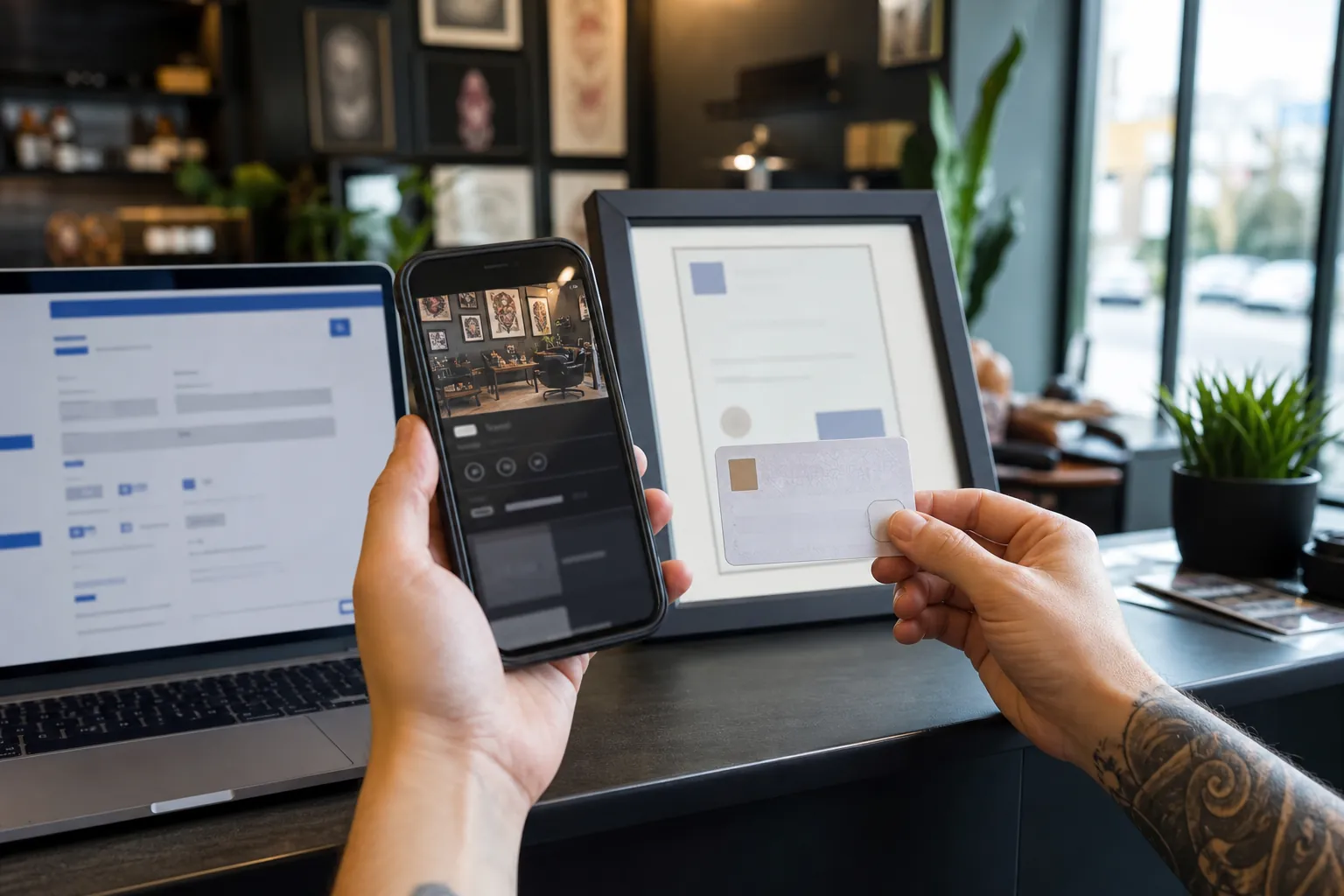
Use the credential verification guide to create an evidence log. Record the official page, exact name, credential type, number when public, status, address, authorized dates, and the date you checked. If the regulator does not publish a lookup, contact it directly. A directory record or screenshot can point you to the right question but should not replace the responsible agency.
Verify Four Layers Instead of One Badge
- Artist: confirm identity, portfolio authorship, home credentials where relevant, destination registration or license, and exact working dates.
- Host or organizer: confirm the legal operator, official contact channel, venue relationship, and responsibility for permits and client records.
- Facility or booth: confirm the permanent-studio license or temporary-event authorization at the exact physical location.
- Appointment: confirm the artist, date, session, price, deposit, design scope, aftercare, and cancellation process in writing.
Confirm Artistic Fit Before Travel Urgency Takes Over
Travel announcements often open a short booking window. Resist the pressure to choose before reviewing full, recent work. Compare multiple tattoos in the relevant style, scale, placement, color approach, and complexity. Ask for healed examples. Verify that studio reposts, drawings, and collaborative work are credited accurately. The portfolio-reading guide is especially useful when an artist's feed mixes several countries, studios, and media types.
Ask whether the project is realistic inside the guest period. A large piece may need follow-up sessions that cannot be completed before the artist leaves. A cover-up may require an in-person assessment. A custom design may need more preparation than a flash appointment. Determine who handles a touch-up, what photographic evidence the artist needs after healing, and whether completion requires travel to the artist's home city. Do not assume the host studio will inherit responsibility.
Evaluate Temporary Workflow, Not Event Prestige
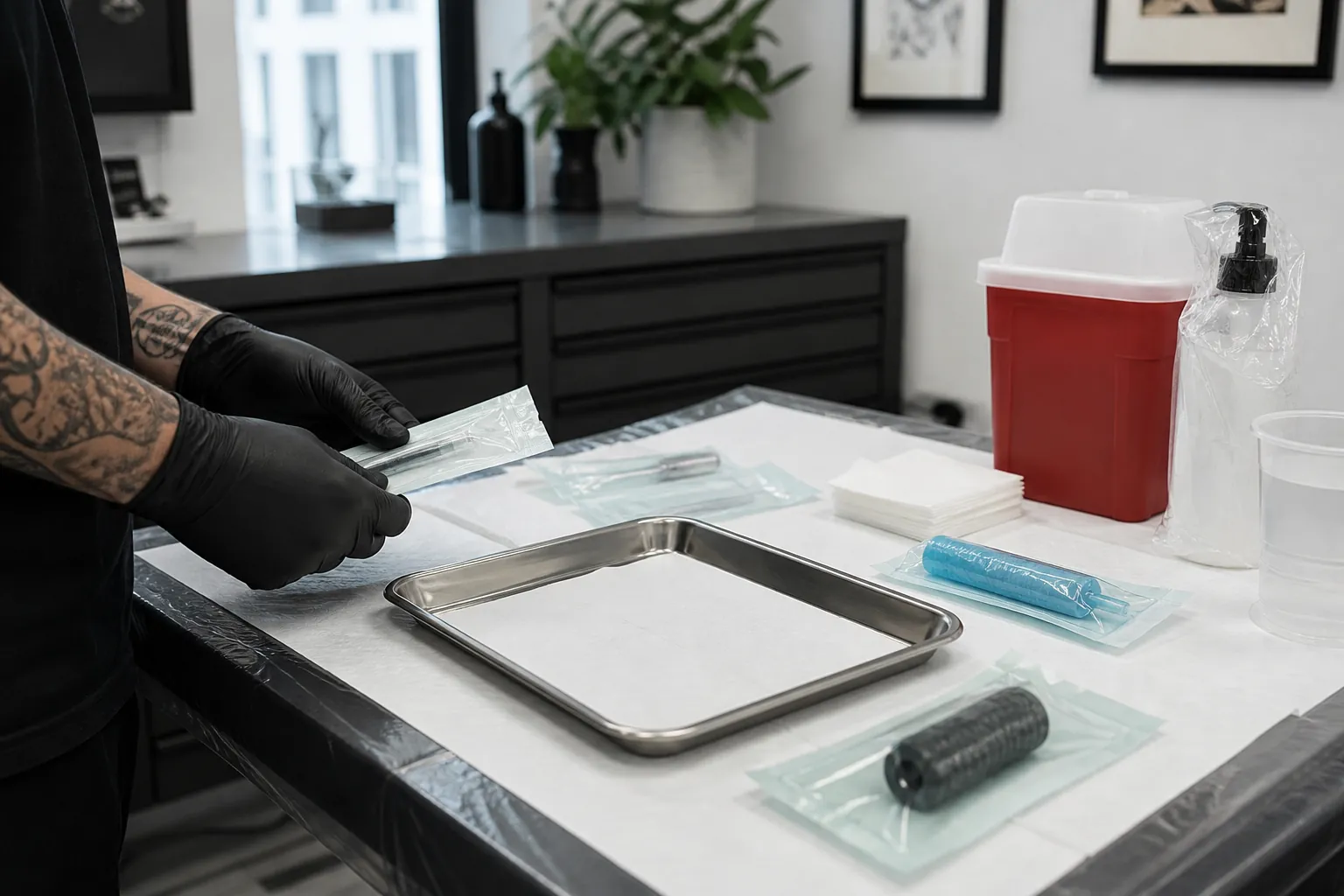
A convention can be busy, loud, and visually impressive while each procedure still needs a controlled clean-to-dirty workflow. Look for a defined procedure area, handwashing access as required, cleanable surfaces, barriers, single-use sterile needles or cartridges, fresh ink caps, appropriate glove changes, and nearby sharps disposal. Food, drinks, bags, spectators, phones, merchandise, and photography should not cross into the procedure zone without controls.
Ask who provides consent forms, client records, ink lot traceability, written aftercare, and a contact for post-session concerns. Ask how the station is cleaned between clients and what happens if the schedule runs late. A public health permit is not a promise that no error can occur; observing a polished setup is not an inspection. The studio hygiene checklist explains how to ask useful questions without claiming authority you do not have.
Know Who Holds the Booking and the Money
Guest bookings may be handled by the artist, host studio, organizer, or a manager. Identify the contracting party before payment. Use the artist's official channel to confirm any new account. Match the payment recipient, invoice, host, dates, and venue. Be cautious when a newly created profile claims to fill a cancellation, moves the conversation to an unrelated account, or requests a payment method that provides no usable record.
Read the deposit, cancellation, rescheduling, late-arrival, no-show, design-change, event-cancellation, and travel-disruption terms. Ask what happens if the artist cannot enter the country, the event loses its venue, the temporary permit is not issued, or severe weather affects travel. No policy can eliminate uncertainty, but it should allocate it clearly. The pricing and deposits guide helps separate the project charge from travel and contingency costs.
Build a Travel and Healing Plan With Margin
Avoid a flight or long drive that leaves no margin before the consultation, and avoid scheduling high-friction activities immediately after the session. Ask the artist about food, hydration, breaks, clothing, dressing, and the expected session length. Plan transport from the venue when you may be tired. Keep the tattoo away from activities the written aftercare excludes, which may affect swimming, sun exposure, workouts, costumes, or crowded event plans.
Know where to seek medical care during and after the trip. If you develop rapidly worsening pain, spreading redness, fever, pus, red streaks, or other concerning symptoms, contact a healthcare professional promptly. An artist can explain the studio's normal aftercare process but should not diagnose an infection. Read the first 30 days aftercare guide before departure rather than trying to learn it in a hotel room.
Artist and Host Preflight Checklist
- Confirm the destination regulator, correct credential types, application deadlines, approved dates, and exact permitted address.
- Define in writing whether the artist, host, or organizer supplies furniture, barriers, handwashing, sharps disposal, waste service, consent forms, ink records, and aftercare.
- Publish the legal host and booking channel so clients can distinguish official payment requests from impersonation.
- Keep client records and product-lot traceability under the applicable rules and privacy commitments.
- Prepare a cancellation and post-session communication process that still works after the guest leaves.
Client Verification Message You Can Send
Before I send the deposit, please confirm the exact studio or event address, the legal host or organizer, the dates you are authorized to work there, the relevant guest or practitioner credential, and the facility or booth permit. Who will hold the booking, provide my consent and aftercare documents, and handle questions after you leave?
A legitimate professional may need time to retrieve details or may direct you to the organizer. That is different from refusing to identify the location, ridiculing the question, or substituting awards and follower counts for authorization. Mark unavailable public information as unknown and contact the regulator when necessary. Do not accuse someone of unlawful practice based only on a missing search result; names, processing delays, and jurisdiction boundaries can make records difficult to find.
Recognize Red Flags and Reasonable Limits
Pause for a venue changed after payment, a hotel or home address with no clear regulatory explanation, credentials covering different dates, copied portfolios, payment through an unrelated identity, unsafe booth workflow, or no post-session contact. Also pause when a project obviously needs follow-up but no one can explain how completion or touch-ups work. Travel scarcity can make clients tolerate ambiguity they would reject at home.
Reasonable limits include a small accepted-project list, strict arrival times, a deposit, refusal to copy art, limited revisions, protected drawings, or an artist declining work that cannot be completed responsibly during the visit. The distinction is disclosure. A professional boundary is stated before commitment and connected to the process; a dangerous surprise appears after the client has paid or traveled.
A guest spot should expand access without weakening evidence. When identity, host, location, dates, process, and terms all align, a traveling appointment can be planned with the same care as a local one. Begin with artist profiles, studio profiles, and current guest-spot records, but finish the verification with official authorities and the people responsible for your exact session.
Источники
Первоисточники и дополнительное чтение
Внешние источники приведены для проверки и контекста. Правила могут меняться — уточняйте актуальную версию у ответственного органа.