Выбор и запись / Справочник по США
Tattoo Pricing and Deposits Explained for U.S. Clients
Tattoo costs become easier to evaluate when you separate the artist's pricing unit, the project scope, and the rules attached to reserving time.
Материал подготовлен на американском английском для аудитории США. Интерфейс и навигация остаются на русском.

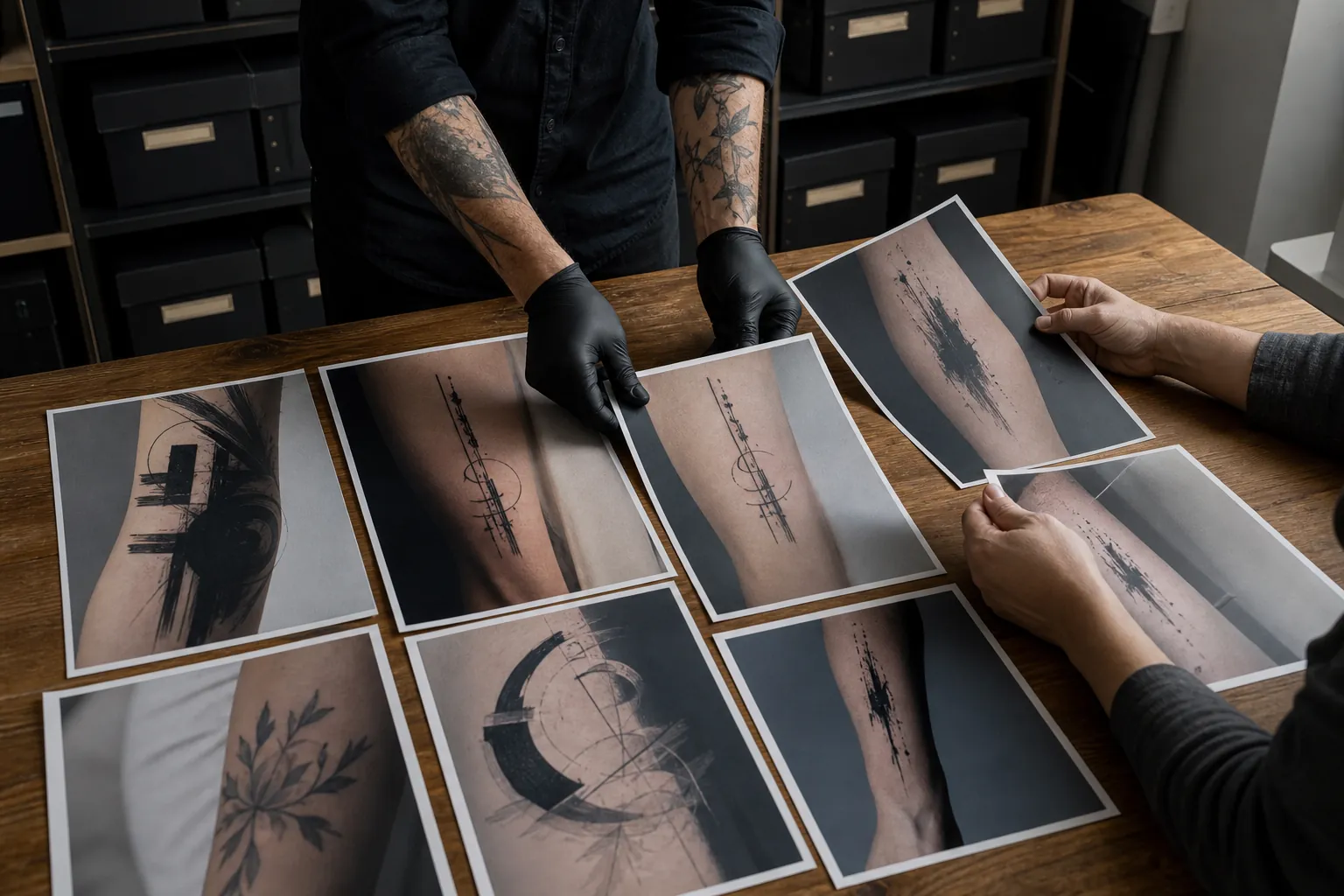
A useful quote connects the price to scope, timing, and written booking terms.ИИ-иллюстрация редакции; это не работа мастера из каталога.
Tattoo pricing can feel opaque because the finished object is visible while much of the work behind it is not. A quote may reflect consultation, drawing, setup, the tattoo session, specialized experience, studio operations, and follow-up policies—but different artists group those elements differently. The useful question is not “What should every tattoo cost?” It is “What does this artist's price mean for this project?”
Pricing varies widely across the United States. Artist experience, location, demand, style, placement, scale, complexity, studio model, and project structure all matter. This guide does not provide a national hourly average or a “correct” price. A market average cannot quote your tattoo, and inventing one would create false certainty.
Understand the Main Pricing Formats
An artist may price by time, by session, by day, or by project. Flash may carry a set price, while large custom work may be estimated in stages. None of these formats is inherently fairer. What matters is whether the unit is defined and appropriate to the work.
With time-based pricing, ask when the clock starts and stops. Does it include stencil adjustments, placement, setup, breaks, or only active tattooing? With session or day pricing, ask the expected duration and what happens if the session ends early for safety, comfort, or design reasons. With project pricing, identify what scope the fixed amount covers and which changes would require a new quote.
A minimum charge can reflect the baseline work required even for a small tattoo: communication, preparation, single-use supplies, setup, cleaning, and reserved time. Do not assume a tiny design consumes only the minutes the machine touches skin. Ask the artist to explain the minimum rather than demanding that every cost be converted into visible ink.
Identify the Variables Behind Your Estimate
Size is only one variable. A small, highly detailed piece may require slower work and more design refinement than a larger open composition. Placement can change access, positioning, skin behavior, and the number of breaks. Color approach, line density, cover-up requirements, existing scar tissue, and coordination with older tattoos can all affect the plan.
Experience and specialization also shape pricing. You are not merely buying minutes; you are commissioning judgment developed through previous work. That does not mean the most expensive artist is automatically the best match. It means quote comparisons should include portfolio relevance, scope, and process. Review the portfolio evidence alongside the estimate.
Ask for an Estimate You Can Actually Interpret
A useful estimate identifies the design scope, placement, approximate dimensions, color direction, pricing format, expected session structure, and known exclusions. It should say whether the number is fixed or estimated. For multi-session work, ask how and when each portion is paid and whether the next session is booked separately.
Ask what could change the total. Common scope changes include increasing size, adding background elements, switching from black-and-gray to complex color, turning a standalone tattoo into a wrap, or requesting a substantial redraw. The artist may also discover at an in-person assessment that a cover-up needs a different approach. A good estimate names uncertainty rather than hiding it.
Do not demand a guaranteed total when the work cannot be predicted responsibly. Instead, ask for decision points: “Before exceeding the expected session, will we discuss the remaining scope?” or “If another session becomes likely, when will you tell me?” These agreements make uncertainty manageable.
Budget for the Project, Not Just the Invoice
Your personal budget may include travel, lodging, local transportation, meals, time away from work, aftercare supplies, and a possible return visit. These are not necessarily charges from the artist, but they affect whether the booking is realistic. A lower tattoo quote in another city can become the more expensive plan once logistics are included.
Leave a contingency for uncertainty rather than planning to the last dollar. This does not mean authorizing unlimited cost. Set a point at which artist and client must pause, reassess, and agree on the next stage.
What a Tattoo Deposit Is Meant to Do
A deposit commonly reserves appointment time and may compensate for preparation or lost booking opportunity under the artist's stated policy. Whether it is credited to the final balance, refundable, transferable, or retained after cancellation depends on the written terms and applicable law. Do not assume the same word produces the same policy at every studio.
Before paying, ask: What date or booking window does this reserve? Is the payment applied to the tattoo balance? Under what circumstances can it move to another date? What notice is required? What happens if the artist cancels? Does a major concept change require a new deposit? Request answers in writing.
A deposit should be traceable to the real artist or studio. Verify the payment request through an official website, known profile, or direct studio contact. A copied portfolio and a plausible username are not enough. Check studio records, source links, and UFO Calling's evidence methodology before sending funds to an unfamiliar account.
Read Cancellation and Rescheduling Terms Line by Line
Look for the notice period, permitted number of reschedules, treatment of lateness and no-shows, illness policy, and any deadline for using a transferred deposit. Ask how weather or travel disruption is handled if you are coming from another region. A policy can be strict and still be clear; the problem is learning it only after a conflict.
Separate client cancellation from artist cancellation. If the artist cannot perform the appointment, the policy should explain whether the payment is returned or transferred and how a new date is arranged. If a guest spot moves, determine whether the new location or date works for you before accepting the change.
“Nonrefundable” is not a complete analysis of every legal situation. Consumer and contract rules vary by state and facts, and this article is not legal advice. Keep the version of the terms you accepted. If a dispute arises, first communicate with the business in writing; for legal rights or local remedies, consult an appropriate consumer agency or attorney.
Document Payment Without Turning the Relationship Hostile
Save the invoice, receipt, confirmation email, appointment date, studio address, artist name, policy, and relevant messages. Note the payment method and the account that received it. This is ordinary recordkeeping, not an accusation. Professional businesses also benefit when both parties can reconstruct what was agreed.
If paying by credit card, review the issuer's terms and use an authorized channel. The Consumer Financial Protection Bureau advises consumers to contact the card company promptly about billing problems and explains that written notice deadlines may apply in certain disputes. Those protections depend on the transaction and facts; they are not a reason to bypass the artist's resolution process or assume every disappointment qualifies for a chargeback.
Avoid payment instructions that require you to mislabel a commercial transaction or conceal its purpose. If the recipient name does not match the artist, studio, or verified manager, stop and confirm through a separate known channel.
Compare Quotes by Scope, Not by One Number
Put competing estimates into the same frame. Record the approximate design size, placement, custom or flash status, color approach, number and length of anticipated sessions, what the pricing unit includes, deposit treatment, touch-up policy, and travel requirements. Unknown remains unknown until you ask.
Consider a scenario: Artist A gives a lower project estimate but excludes a likely second session and provides no written rescheduling terms. Artist B gives a higher estimate that covers two defined stages, identifies what could add cost, and supplies clear policies. Artist B is not automatically the better artist, but the quotes are not directly comparable until the missing scope from Artist A is resolved.
Do not pressure an artist to match another person's price without showing that the work and terms are equivalent. A more productive question is, “My budget cannot support this scope. Is there a smaller or phased version that still works with your design standards?” The artist may propose an option or decline.
Plan for Changes Without Accepting Blank Checks
Creative projects evolve. Agree on how changes are classified and approved. Minor placement adjustments on the day may be expected; a new subject, larger coverage, or different color strategy can require new drawing and scheduling. Ask for an updated estimate before authorizing a material expansion.
During a multi-session project, request a brief status at the end of each visit: what was completed, what remains, whether the original plan still holds, and what the next payment covers. This makes long projects easier to budget and gives both sides a shared record.
Recognize Pricing and Deposit Red Flags
Pause when the payee cannot be connected to the portfolio owner, the location remains undisclosed, the price changes repeatedly without a scope change, or you are pressured to pay before receiving any terms. Be cautious when a stranger offers an implausibly immediate opening under a famous artist's name or requests several escalating “verification” payments.
A low quote is not itself proof of fraud, and a large deposit is not itself proof of legitimacy. Verify identity, official booking channel, current studio, and policy together. The pre-booking questions provide a concise sequence.
A Practical Pre-Payment Check
Before sending a deposit, confirm the artist, studio, appointment location, project summary, pricing format, estimate status, deposit application, cancellation and rescheduling rules, payment recipient, and next step. Keep a copy. If any material term exists only in a disappearing story or a phone call you cannot summarize, request a written version.
Then ask whether the project still makes sense when the complete personal budget and uncertainty are included. If the answer is yes, the payment reserves a process you understand. If the answer depends on an assumed discount, guaranteed session count, or unwritten exception, return to the consultation before committing.
Transparent pricing does not mean every tattoo can be calculated like a retail product. It means the artist explains the model, the client understands the scope, and both know what happens when reality differs from the estimate.
Источники
Первоисточники и дополнительное чтение
Внешние источники приведены для проверки и контекста. Правила могут меняться — уточняйте актуальную версию у ответственного органа.