Проверка данных / Справочник по США
How to Verify a Tattoo Artist's Credentials in the United States
There is no national tattoo-license lookup. Reliable verification starts with the appointment address, follows the responsible regulator, and keeps legal compliance separate from artistic fit.
Материал подготовлен на американском английском для аудитории США. Интерфейс и навигация остаются на русском.
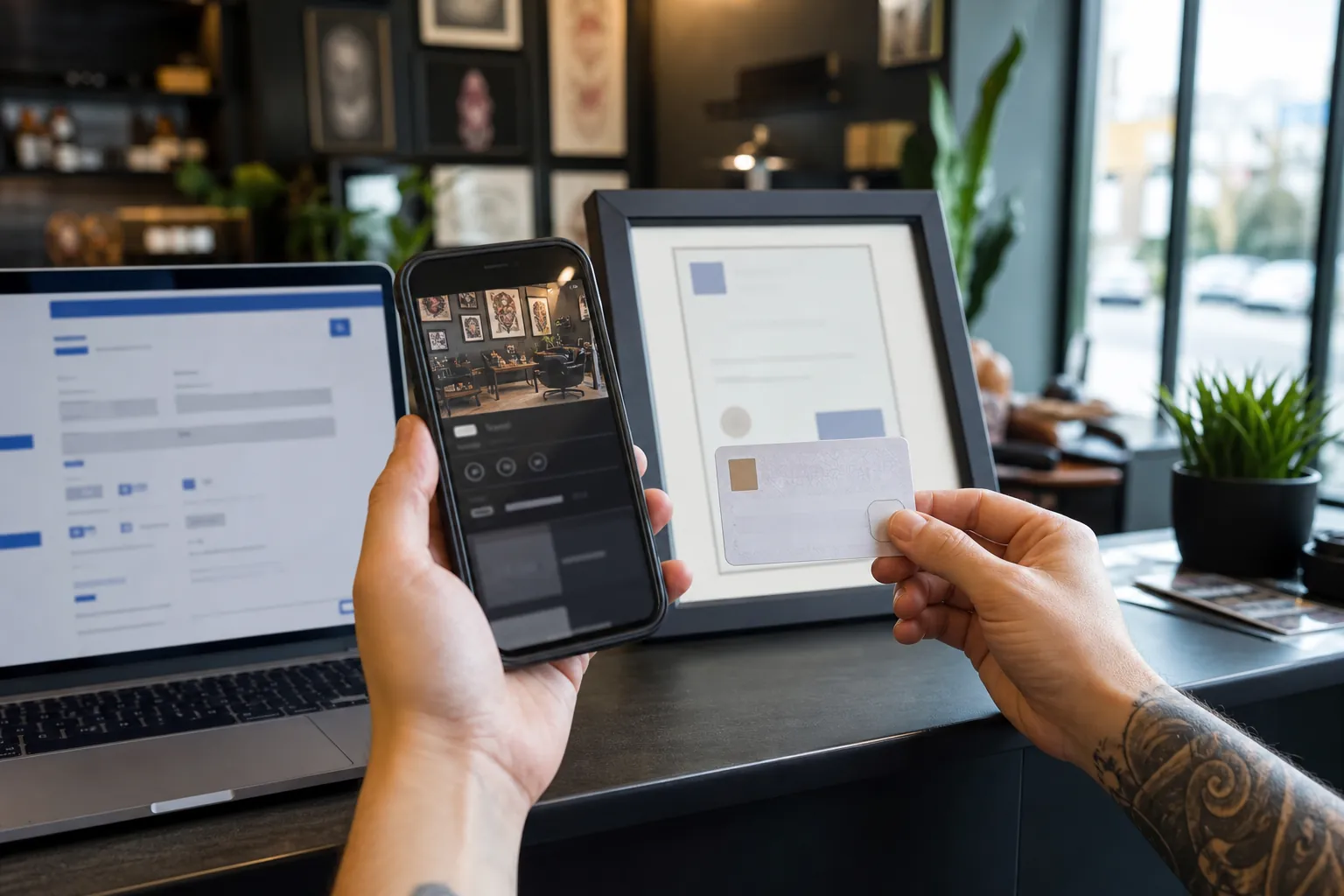
Good verification connects the person, the workplace, the jurisdiction, and the date instead of trusting a single badge.ИИ-иллюстрация редакции; это не работа мастера из каталога.
“Licensed tattoo artist” is a location-dependent U.S. claim. One city may license artists, a county may register practitioners and permit facilities, and another jurisdiction may use different local rules. An artist can be authorized at one address but lack guest approval elsewhere. Verification begins with who will tattoo, where, when, and which authority governs that address.
First Define What “Credentialed” Should Mean in That Jurisdiction
FDA regulates tattoo inks as cosmetics and monitors product safety issues, but it does not license tattoo parlors or issue a federal tattoo-artist credential. State, county, and city authorities generally regulate tattooing practice. Los Angeles County says each practitioner must register and body-art facilities in its service area need a public-health permit. New York City requires an individual tattoo license and completion of an infection-control course. New York State also warns that statewide regulations are still being developed and that local rules apply until those regulations are in place. These examples are not a national template; they demonstrate why copying requirements from another city can produce a confident but wrong answer.
A legal credential also answers only a limited question. It may show that an artist or facility met defined administrative and health requirements at a point in time. It does not guarantee artistic skill, healed results, honest pricing, good communication, or that every session follows safe practice. Conversely, a great portfolio does not replace a required permit. Keep three evaluations separate: regulatory status, infection-control behavior, and artistic fit. You need all three, but the evidence for each is different.
Use the Appointment Address to Find the Correct Authority
Do not begin with a broad search for the artist's name. Begin with the street address where the procedure will occur. Search the official website for that city or county health department and use terms such as “body art,” “environmental health,” “tattoo practitioner,” “tattoo facility,” “permit,” and “registration.” A state health department may explain the framework and then point you to local enforcement. Watch for independent city health departments: Los Angeles County, for example, notes that Pasadena, Long Beach, and Vernon run their own environmental-health programs. A county search would not necessarily verify a session inside one of those cities.
- Write down the complete appointment address, including city and county. Do not assume the Instagram location pin identifies the legal workplace.
- Find the regulator through a .gov site or an official municipal directory. Avoid paid “license lookup” pages that do not identify their source or update date.
- Read what the jurisdiction requires from the individual artist, the permanent facility, and temporary events or mobile operations.
- Use the official online lookup when one exists. If it does not, call or email the program using contact details on the government site.
- Record the date checked, the name searched, the address, the credential number or agency response, and the official source URL.
Match the Record to the Person, Not Merely the Brand Name
Tattooers often use professional names, while studio branding may differ from the legal entity on a permit. Ask for the credentialed artist and facility names, then compare number, status, expiration, and address. A name match is weak when the city, photograph, or workplace differs. Collect only what establishes the professional connection; do not publish personal license details.
A photograph of a license is a lead, not final verification. It may be expired, belong to another jurisdiction, or omit a disciplinary status that changed after the image was posted. Follow the number back to the issuing agency. If the agency has no public database, ask whether it can confirm current status and whether the document should be displayed at the workplace. New York City's health code, for example, requires a current license to be conspicuously posted where the licensee is tattooing. The display requirement itself is local, so do not demand the same format everywhere.
Verify the Facility as Well as the Artist
An individual credential may not make an unpermitted room lawful. Check whether the location needs body-art or public-health authorization and match its address. Moving a session to an apartment, hotel, or private suite changes the question. Ask which permit covers the new location and verify claims that a personal license works anywhere with the local authority.
A facility permit is also not proof that the named artist currently works there. Check the studio's own roster and contact the studio through a channel independently listed on its official site. A direct question—“Is Jordan Lee booked here on September 18?”—can expose an impersonation account or deposit scam without asking the studio to disclose private client information. Explore studio profiles and artist profiles as discovery layers, then confirm the relationship at the source.
Guest Spots and Conventions Need Date-Specific Evidence
A home-city license may not authorize a traveling artist at the destination. Search temporary-practitioner, event, booth, or guest requirements. Los Angeles County describes registration and temporary booth permits; New York City offers a temporary tattoo license with different conditions. Verify the exact event, venue, dates, and person.
Ask the convention or host studio which entity holds the facility or event permit and how guest credentials are checked. Then verify independently with the regulator where feasible. A promotional flyer proves that someone was advertised, not that authorization was issued. Likewise, “application pending” is not the same as an active license unless the agency explicitly says the applicant may work while pending. If the credential will not be valid until after your scheduled date, move the appointment or choose another professional.
Interpret Training Certificates With Precision
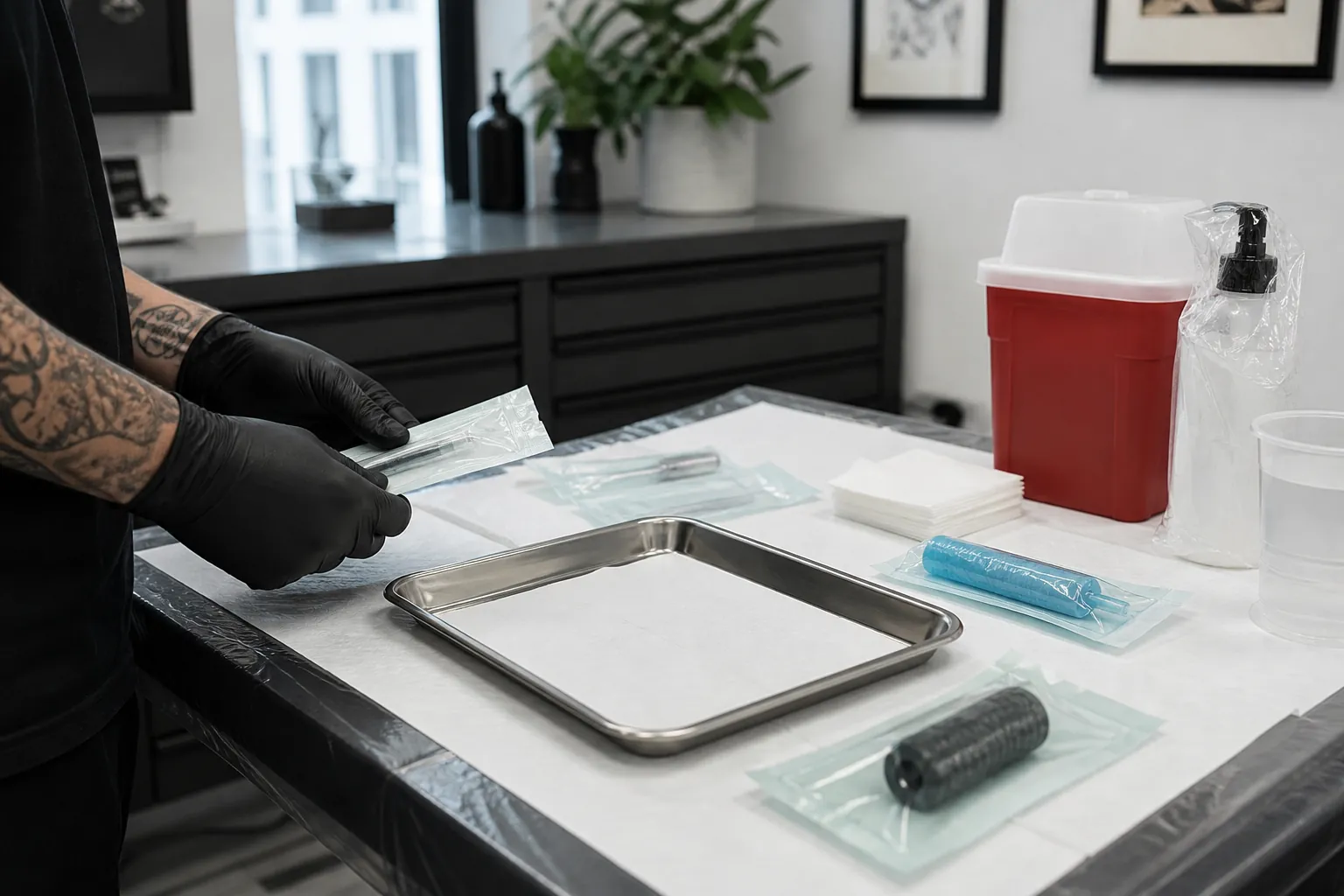
Bloodborne-pathogen and infection-control education can be required locally and is relevant to safe work. OSHA's Bloodborne Pathogens Standard also imposes duties on covered employers with occupational exposure, including an exposure-control plan, training, controls, hepatitis B vaccination provisions, and recordkeeping. A course certificate, however, is not a universal practice license. Confirm who issued it, when it expires if applicable, whether the regulator recognizes that provider, and what claim the certificate actually supports. “Completed a three-hour course” should not be inflated into “medically certified.” Tattoo artists are not licensed physicians merely because they passed infection-control training.
First-aid, CPR, apprenticeship, and brand-ambassador claims have similarly limited meanings. Training may be useful, but it does not establish tattoo authorization; sponsorship is commercial evidence, not a safety or skill certificate. Verification methodology should state what was checked, against which source, and on what date rather than stacking unrelated badges into one score.
Verify Portfolio Identity and Healed-Work Relevance
Credential checks do not confirm that a portfolio belongs to the person taking your deposit. Compare the artist's website, established social accounts, studio roster, convention listings, and directory profile. Look for consistent contact details, long-term posting history, tagged studio relationships, and multiple views of the same body of work. Reverse-image searching a suspicious hero image can reveal copying, but a match is not automatically theft; artists, studios, magazines, and clients may repost work with permission. Ask directly when attribution is unclear.
Fresh photographs emphasize contrast and can hide how skin settles. Ask for healed examples relevant to your style, scale, placement, and skin range. Check that the portfolio distinguishes tattoos, collaborations, cover-ups, and digital concepts; generated concepts must not be presented as completed work. A licensed artist can still be the wrong artistic fit for a project.
Use Identity Checks to Reduce Deposit Scams
Impersonation accounts create urgency, move clients to private channels, and request irreversible payment under an unrelated name. Reach booking from an independently verified artist site or studio roster. Confirm the payee, location, deposit and cancellation terms, and request an invoice. Cryptocurrency, gift cards, wires, or friends-and-family payments do not prove fraud, but unexplained identity mismatch is a reason to stop.
Build an Evidence Ladder Instead of a Green Checkmark
- Strong regulatory evidence: a current government record tied to the right person, facility, jurisdiction, and date.
- Strong relationship evidence: an official studio roster plus separate confirmation that the artist is scheduled there.
- Useful professional evidence: consistent portfolio history, healed work, clear policies, and verifiable event or publication credits.
- Limited evidence: uploaded certificates, badges, followers, testimonials, sponsorships, and marketplace profiles.
- Unresolved evidence: no public lookup, a name mismatch, an expired page, or a claim the regulator cannot confirm. Unresolved is not fraudulent; it is not verified.
If a profile belongs to you, use the profile claim and verification flow to connect first-party information with source evidence. If you are a client, treat a UFO Calling badge as a dated evidence summary, not permanent certification. Rules, workplaces, and license status change. Recheck before each appointment, especially after a move or for a guest spot. For the physical session, use the tattoo studio hygiene checklist even after every record matches.
What to Do When There Is No Online Lookup
Confirm the regulator and spelling, then read its body-art page and contact instructions. Send the professional name, facility, address, credential number if provided, and appointment date. Ask whether authorization is current and whether another authority controls the address. Save the dated response, but do not request or publish protected personal information.
If the agency cannot confirm status, ask the artist for an official route to a renewal, program contact, or temporary permit. If the response stays evasive, the address changes, or the artist asks you to ignore a confirmed requirement, choose another appointment.
Good verification proves specific facts with a date and source; it does not turn administrative compliance into a quality promise. Use Los Angeles tattoo listings to find candidates, then follow the evidence to the local authority and workplace.
Источники
Первоисточники и дополнительное чтение
Внешние источники приведены для проверки и контекста. Правила могут меняться — уточняйте актуальную версию у ответственного органа.
- FDA — Tattoos & Permanent Makeup fact sheet
- OSHA — Bloodborne Pathogens general guidance
- Los Angeles County Public Health — Body Art
- Los Angeles County Public Health — Body Art Events FAQ
- NYC Health — Tattooing permits, licenses, and infection-control course
- New York State Department of Health — Body Art