城市指南 / 美國指南
How to Find a Tattoo Artist in Austin, Texas
Austin's creative reputation can help discovery, but it is not evidence by itself. Compare the artist's actual work and verify the studio or temporary location through Texas sources.
本文以美式英語撰寫,面向美國讀者;介面與導覽保持中文。

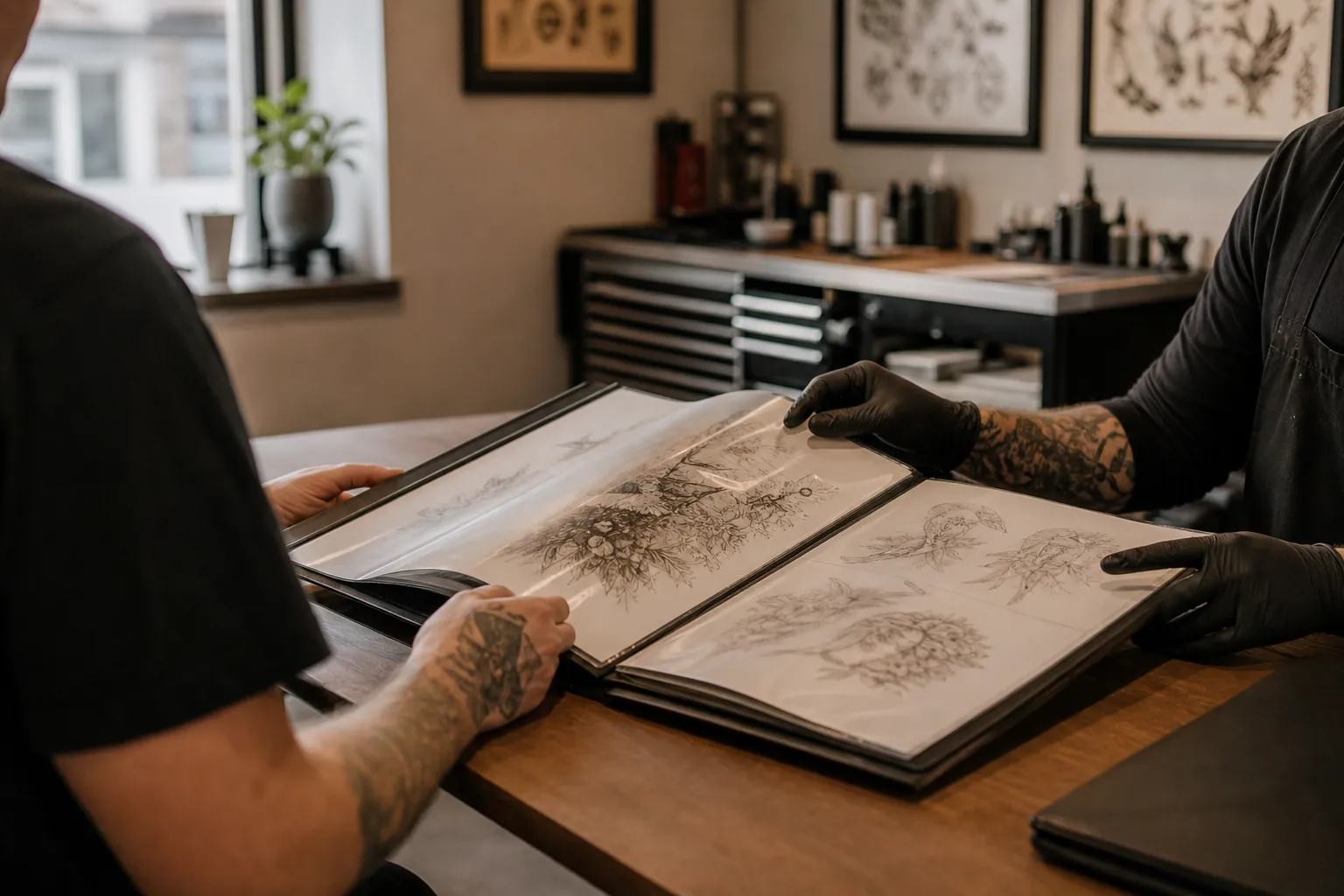
For an Austin appointment, compare artistic evidence and verify the exact licensed studio or temporary event location.AI 生成的編輯插圖;並非目錄中紋身師的作品。
Austin makes tattoo discovery easy and decision-making difficult. The city attracts resident artists, touring practitioners, convention guests, music and design audiences, and studios with very different booking models. Search results often compress that variety into follower counts and listicles. A useful choice requires a closer match: the artist's recent work fits your exact project, the appointment occurs at a verifiable licensed studio or temporary location, and the written process makes sense for your schedule and budget.
This is not a ranking of Austin artists. Use Austin tattoo listings to discover people and studios, then follow every material claim to its current source. UFO Calling can organize a profile and its citations, but Texas Department of State Health Services records and other responsible authorities decide regulatory status.
Build a Brief That Artists Can Actually Evaluate
Describe the subject, approximate dimensions, body placement, color direction, style, desired timing, and whether the area contains an existing tattoo or scar. Attach references to communicate composition, texture, movement, or mood rather than asking to copy another artist's custom piece. Identify what is essential and what is flexible. If you are unsure about size, say so and ask what the design needs to remain readable.
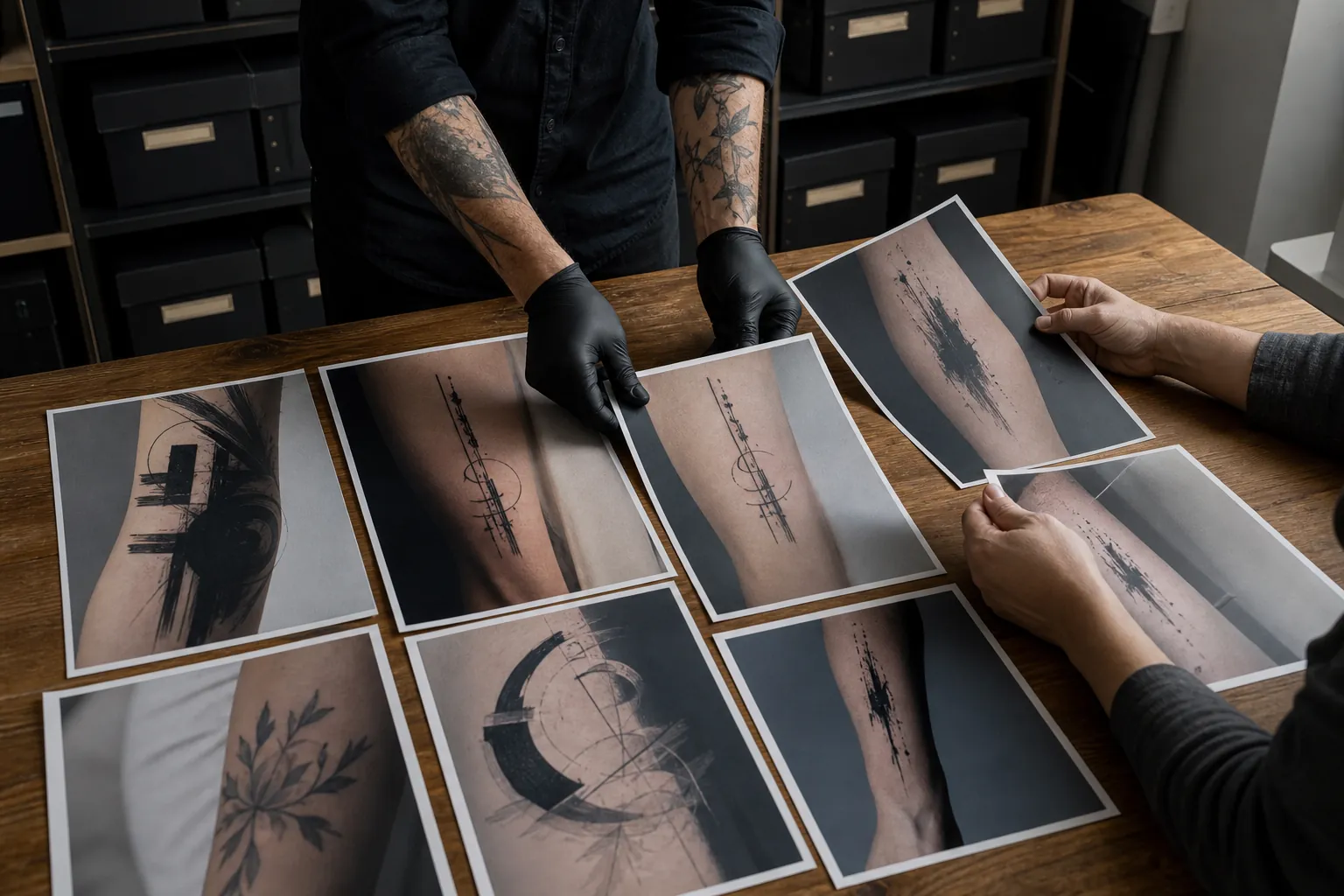
Search by the visual characteristics of the work, not only a broad label. One artist's “traditional” portfolio may focus on bold flash and compact compositions; another may develop larger custom pieces from the same lineage. Blackwork can be ornamental, illustrative, geometric, or heavily saturated. Fine-line work can vary widely in scale and density. Compare the portfolio to the brief you wrote and use the tattoo styles guide when terminology is getting in the way.
Separate Style Fit From Social Proof
A large audience may show that an artist communicates effectively or has been visible for a long time. It does not demonstrate healed outcomes, experience with your placement, or a current studio relationship. Review several recent tattoos at full size. Look for control, consistent choices, body flow, negative space, and readability. Compare wide placement images with detail views. If all photographs are cropped tightly, ask to see how similar work sits on the body.
Healed examples are valuable for fine detail, dense black, pale color, large color fields, and cover-ups. They cannot guarantee your healing, but they show information that a fresh, edited image cannot. Ask when the photograph was taken and whether it shows a completed piece or an in-progress session. Use the portfolio-reading guide to inspect evidence consistently instead of favoring the candidate whose feed design you like most.
Check authorship. Studio accounts commonly feature multiple artists and guests. Event accounts may feature work done elsewhere. Artist pages may contain flash, digital concepts, collaborations, or inspiration alongside finished tattoos. Credits should tell you which work belongs to whom. When credit is missing or inconsistent, record that uncertainty; do not quietly transform it into proof.
Understand What Texas Licenses and What the Lookup Proves
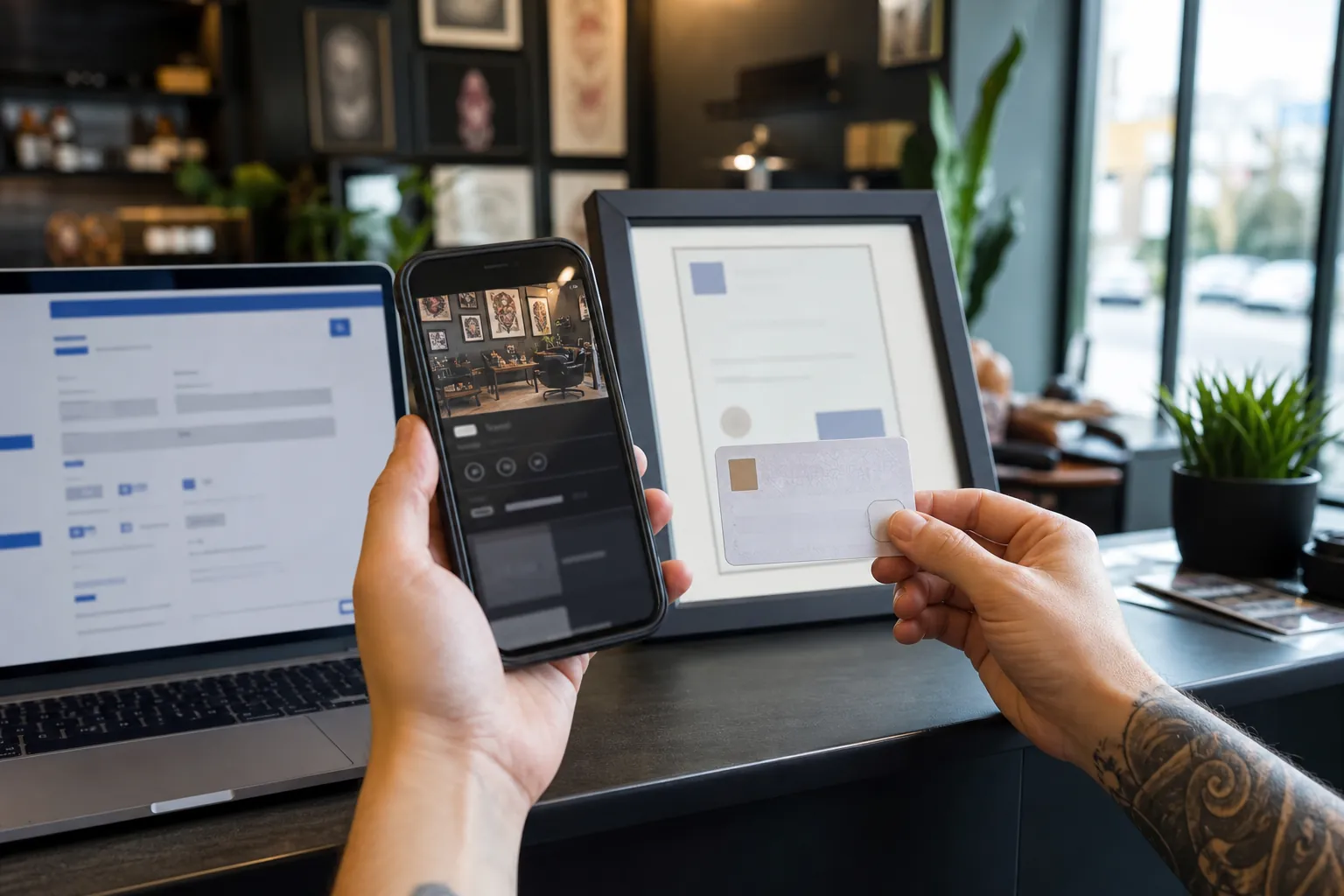
Texas DSHS states that businesses engaged in tattooing must be licensed with the department. Its tattoo and body-piercing program licenses and inspects studios and temporary locations and provides a public search for tattoo studio licenses. The state's framework therefore makes the establishment record central to a client's verification. Do not assume that a social-media phrase such as “Texas licensed artist” describes the exact type of public record available. Ask for the studio's legal name, address, and license number, then search the correct license type.
Match the public result to the place where the tattoo will happen. DSHS notes that cities may impose local ordinances or zoning restrictions and that a studio within city limits must provide zoning approval with its state application. A state studio license does not tell you whether the artist's style matches your project, and an attractive artist profile does not replace the studio license. Use the credential verification guide to keep these different claims separate.
When a record is difficult to match, contact DSHS using the program information on its official page. Search by business name, owner name, city, county, or license number as supported by the public tool. Save the date you checked. Businesses move and names change, so a lookup performed months before an appointment may no longer describe the current location.
Evaluate the Studio Process Without Pretending to Inspect It
Texas DSHS describes inspections that address studio cleanliness, universal precautions, handwashing, single-use gloves, disposable or routinely sterilized instruments, waste handling, sterilization records, client records, and aftercare instructions. A client can observe portions of that workflow and ask calm questions, but cannot certify compliance from a tour. Look for clean-to-dirty separation, fresh single-use supplies, barriers on touched equipment, proper glove changes, fresh ink caps, nearby sharps disposal, and written aftercare.
Ask what happens when the artist touches a phone, lamp control, drawer, or another unprotected surface. Gloves are useful only within an intentional workflow. Ask which ink products and lot numbers are used and whether the studio records them. The tattoo studio hygiene checklist and ink recall guide explain the limits of what a client can verify and where official sources become essential.
Verify Conventions and Temporary Austin Locations Separately
Texas DSHS says temporary locations where tattooing occurs for no more than seven days in connection with a single event or celebration must be licensed. A convention ticket, artist invitation, or home-studio license is not the same as the temporary-location license. Ask the event organizer for the name and license information of the temporary location, confirm your artist is listed through the appropriate process, and verify current requirements before the event.
A guest artist working in an established Austin studio also needs a clear host relationship and an appointment at the licensed address. Do not accept a last-minute switch to a hotel, residence, or unverified pop-up because travel plans are already paid. Read the guest-spot and convention guide before committing to a traveling practitioner.
Use the Consultation to Reveal Judgment, Not Just Friendliness
Explain the brief and ask how the artist would solve it. A useful answer may include changing the dimensions, moving the placement, simplifying detail, altering contrast, or dividing a large project into sessions. Ask why. The consultation should establish who designs the tattoo, when you see it, how revisions work, what reference material is acceptable, and which decisions remain for appointment day.
Clarify accessibility, privacy, breaks, support persons, photography, and communication if those factors matter. If the booking is managed by the studio, identify who has authority to approve a schedule or payment change. Ask how the artist handles illness, severe weather, travel disruption, and a client who arrives with irritated or sunburned skin. The tattoo consultation guide turns these topics into a practical checklist.
Compare Scope, Price, and Policy Together
Request the pricing method and what the estimate includes. An hourly number is not comparable when one artist includes drawing and setup while another starts the clock differently. For a project quote, ask what design scope and session length it assumes. For a large tattoo, ask how many sessions are reasonably anticipated and how the next session is scheduled. Keep your own travel, parking, meals, aftercare, and missed work outside the studio quote unless the agreement says otherwise.
Read deposit, cancellation, rescheduling, lateness, no-show, design-change, and touch-up terms before payment. Verify the payment account through the official booking channel and licensed studio. Do not interpret a low price as proof of poor work or a high price as proof of expertise. Compare relevant portfolio evidence and the complete agreement. The pricing and deposits guide provides the right questions without pretending there is one Austin market rate.
Make the Final Choice With a Documented Scorecard
- Project fit: the recent portfolio shows comparable style, scale, placement, color behavior, and complexity.
- Evidence quality: work is clearly credited, shown at useful resolution, and includes healed results when available.
- Location: the exact studio or temporary-event address matches a current Texas DSHS license and any relevant local requirements.
- Process: the consultation, hygiene explanation, design workflow, aftercare, and communication are understandable.
- Agreement: the timing, total scope, pricing method, deposit, cancellation policy, and travel plan are workable.
Red flags include stolen portfolio images, a studio address that cannot be matched to the booking, pressure to pay a look-alike account, dismissal of reasonable hygiene questions, or an unverified last-minute venue. Normal professional boundaries can include closed books, a required deposit, limited revisions, refusal to copy custom art, or protected drawings. Judge whether the terms are clear and disclosed before commitment.
Austin's creative reputation is a reason to explore, not a reason to skip verification. A strong final choice rests on three independent things: visible evidence that the artist suits the tattoo, reliable evidence that the appointment location is authorized, and a written process you can follow from inquiry through healing.
資料來源
主要參考資料與延伸閱讀
外部資料用於核實與補充背景。法規可能變更,請向主管機構確認現行規則。