安全與護理 / 美國指南
Tattoo Ink Safety and Recalls: How to Check a Product Before and After a Session
A brand name is not enough to clear or condemn a bottle. Recall research depends on the exact product, color, lot, dates, and an official source—and health concerns belong with a clinician, not a search result.
本文以美式英語撰寫,面向美國讀者;介面與導覽保持中文。
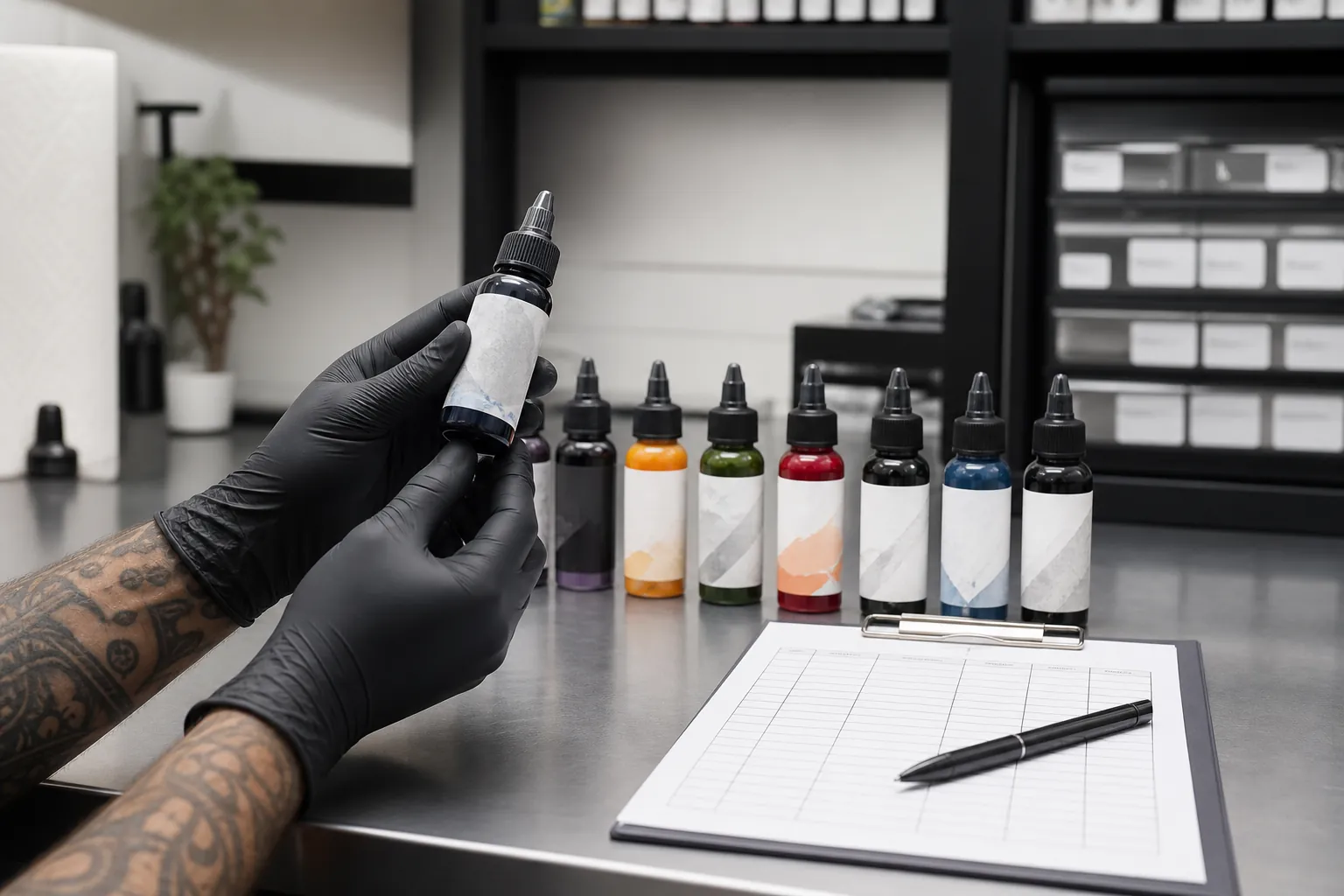
Product checks work at lot level: manufacturer, ink name, color, code, and date should be read together.AI 生成的編輯插圖;並非目錄中紋身師的作品。
Tattoo ink safety is often reduced to two bad questions: “Is this brand safe?” and “Is this ink FDA approved?” A notice usually identifies a product, color, lot, or date range—not every bottle under a brand. FDA states that no color additives are approved for injection into skin. A useful check identifies the bottle, uses current official information, preserves traceability, and sends symptoms to a clinician rather than a product search.
How Tattoo Ink Oversight Works in the United States
FDA considers inks used in intradermal tattoos, including permanent makeup, to be cosmetics. The agency monitors safety problems, investigates reports, publishes certain alerts and recall information, and can take action when appropriate. The day-to-day practice of tattooing is generally regulated by state and local jurisdictions, not by an FDA parlor license. That division matters: a current studio permit does not certify every ink lot, and a professionally manufactured ink does not prove that a station handles it hygienically. Product oversight and procedure oversight are two connected but separate layers.
FDA's 2024 final guidance on insanitary conditions in tattoo-ink manufacturing notes reports of illness caused by microbially contaminated inks and contamination found in sealed bottles. The agency reported that firms conducted 18 voluntary recalls involving tattoo inks contaminated with microorganisms between 2003 and 2024. Historical CDC outbreak work likewise found that contamination could originate during manufacturing or be introduced when ink was diluted with nonsterile water. “The cap was sealed” and “the artist was careful” therefore cannot, by themselves, rule out a product problem.
Collect the Product Identity Before You Search
A brand-only search creates false alarms and reassurance. Ask which manufacturer and ink line the studio expects to use. For traceability, capture the manufacturer, product line, color, bottle size, lot or batch, date information, and supplier when available. Do not enter the clean zone; ask the artist to read or photograph the label before setup.
- Manufacturer and brand or product-line name; distributor names can differ, so preserve both when the label shows them.
- Exact color or shade, because an alert can apply to one color and not another.
- Lot, batch, code, and date information copied character for character; zero and letter O are easily confused.
- Bottle size and packaging details, including whether it was a kit, single bottle, sample, or premixed wash.
- Session date, studio, artist, and body area, which connect a product record with a specific exposure without making a medical conclusion.
A studio that maintains client-level ink logs can answer a later recall question quickly. If the studio does not record lots, ask whether it can preserve a label photo in your consent record. The purpose is not to publish proprietary inventory or shame a brand. It is to make a future notice actionable. Browse tattoo brand profiles to understand manufacturer relationships, but use FDA and the responsible company notice—not a directory badge—as the authority for a recall.
Search FDA Information in the Right Order
Start with FDA's Tattoos & Permanent Makeup fact sheet and its current safety pages, then search the Recalls, Market Withdrawals, & Safety Alerts section using the manufacturer, brand, and product terms separately. FDA explains that its main recall page carries notices for a limited period and directs users to archives for older material. The Enforcement Report offers more complete recall listings and search tools, including entries that may be pending classification. A company's own notice can add distribution or return instructions, but compare it with the FDA record when one exists.
- Open the official FDA page directly and note the page's posted or updated date. Do not use a search-engine summary as the final record.
- Match manufacturer, product line, color, size, lot or batch, and date range. A brand-level name match alone is insufficient.
- Read the audience and action language. “Avoid using,” “recall,” “market withdrawal,” and a general safety update are not interchangeable labels.
- Check whether FDA links a company announcement, photographs, distribution information, or later update. Preserve the URL and access date.
- If the result is ambiguous, contact the manufacturer and FDA using official contact details, and ask the studio to quarantine the bottle while it verifies the lot.
A Real Example Shows Why Every Character Matters
On May 7, 2025, FDA advised consumers, artists, and retailers to avoid two Sacred Tattoo Ink products after laboratory analysis found pathogenic microorganisms: Raven Black, lot RB0624, and Sunny Daze, lot SD1124, with specified best-before dates. The notice did not say that every product from every Sacred lot was affected. A client who remembers only “black ink” cannot reliably match the alert; a label photograph containing the shade and lot can. This example is historical evidence, not a claim about what is currently on a studio's shelf. Always recheck FDA's live notice and any updates.
What to Ask Before the Ink Is Used
Ask whether the ink is manufactured specifically for tattooing, where it was purchased, how opened bottles are stored, and how the studio checks safety notices. The artist should dispense ink into clean single-use caps for one client and should not return leftovers to a bottle. A nozzle that contacts a used glove or contaminated cap can compromise handling even when the original product was acceptable. CDC advises artists to avoid products not intended for tattooing and, if dilution is needed, to use sterile water; distilled and reverse-osmosis water should not be assumed sterile.
Words such as “vegan,” “organic,” “natural,” “professional,” or “made in the USA” do not answer a microbial-contamination question. Nor does sponsorship. A brand ambassador can accurately disclose a partnership, but the relationship is commercial evidence, not a government safety certification. Treat broad purity claims cautiously unless they point to defined testing, scope, date, and an accountable source. The studio hygiene checklist explains how product handling fits into the wider procedure.
If Your Bottle Appears to Match an Alert
Before tattooing, do not allow a possibly affected product to be used while the identity is unresolved. Show the official notice to the artist, compare the label together without handling clean supplies, and ask the studio to segregate the product. The studio or retailer should follow the action instructions in the notice and contact its supplier or manufacturer. Choosing another lot should involve a new verification, not simply pouring from an unlabeled bottle. If the appointment cannot continue safely, reschedule; a deposit dispute is secondary to an injection product concern.
After tattooing, a matching lot does not mean you will develop an infection, and the absence of symptoms today does not let an article predict what will happen. Save the notice, bottle details, consent and aftercare documents, and session date. Contact the studio so it can preserve records. Ask a physician or board-certified dermatologist what observation or evaluation is appropriate for your circumstances, particularly if you have symptoms or factors that affect healing or immunity. Do not try to “draw out” ink, scrub the tattoo, start leftover antibiotics, or apply concentrated antiseptics because of a recall search.
Treat Symptoms as a Medical Question, Not a Recall Verdict
A new tattoo can normally be tender, mildly red, and produce some clear fluid while early healing begins. Infection, allergic response, irritant dermatitis, and ordinary healing can overlap visually. AAD advises prompt medical attention for infection signs such as redness that darkens or spreads, pain that persists or worsens, a painful itchy rash, fever, chills, pus, or open sores. A reaction may be limited to a particular pigment and can appear long after the session. A clinician may need the product history, examination, and sometimes testing to determine the cause.
Seek urgent medical care for severe or rapidly worsening symptoms, extensive swelling, faintness, confusion, difficulty breathing, or swelling of the lips, tongue, face, or throat. For non-emergency but concerning changes, contact a physician or board-certified dermatologist rather than waiting for the artist's opinion. Artists can supply traceability and aftercare information; they should not diagnose, prescribe, or tell a client to ignore systemic symptoms. See the first 30 days of tattoo aftercare for a structured observation guide.
Report Useful Facts to the Right Organizations
FDA accepts cosmetic-product complaints from consumers and health professionals, including adverse reactions involving tattoo ink and product-quality concerns such as unusual odor, color change, foreign material, or other suspected contamination. Include the exact product and lot, label photographs, purchase or studio source, dates, symptoms, and medical information requested by the reporting system. Also contact the relevant state or local body-art regulator if handling or facility practice may be involved. A report helps an agency identify patterns; it does not establish liability or replace care.
Studios should preserve affected containers, invoices, client-use records, and supplier communications according to regulator and legal guidance rather than discarding evidence casually. They should identify other potentially exposed inventory and clients through an appropriate, privacy-conscious process. Public posts should reproduce the official scope accurately. Saying “all inks from Brand X are contaminated” when the notice names one lot can create misinformation; omitting a lot because the brand is popular can leave clients uninformed.
A Practical Recall-Readiness System for Clients and Studios
- Clients: keep a private session record with date, artist, studio, colors, lot codes when available, and the aftercare sheet.
- Artists: record which lots were used for each client and separate clean inventory from opened working supplies.
- Studios: assign one person to review official FDA notices and supplier communications on a regular schedule and document the check.
- Brands and distributors: publish precise, dated notices with product photographs, lot identifiers, distribution scope, and a direct action channel.
- Directories: link to primary notices, state what was verified and when, and avoid displaying a permanent “safe” badge for a changing product landscape.
The durable habit is traceability, not fear. Verify the bottle, consult current official sources, observe studio procedure, and involve a clinician when health is at issue. Use brand profiles, studio profiles, and UFO Calling's methodology to organize research, then return to FDA, the manufacturer, and the regulator for confirmation.
資料來源
主要參考資料與延伸閱讀
外部資料用於核實與補充背景。法規可能變更,請向主管機構確認現行規則。
- FDA — Tattoos & Permanent Makeup fact sheet
- FDA — Final guidance on tattoo ink microbial contamination
- FDA — Recalls, Market Withdrawals, & Safety Alerts
- FDA — 2025 Sacred Tattoo Ink safety alert
- FDA — How to report a cosmetic product related complaint
- CDC MMWR — Tattoo-associated NTM skin infections
- American Academy of Dermatology — Tattoo skin reactions