Choosing & Booking / U.S. field guide
Questions to Ask Before Booking a Tattoo
The right questions turn a promising portfolio into a clear agreement—and reveal when important details are still missing.

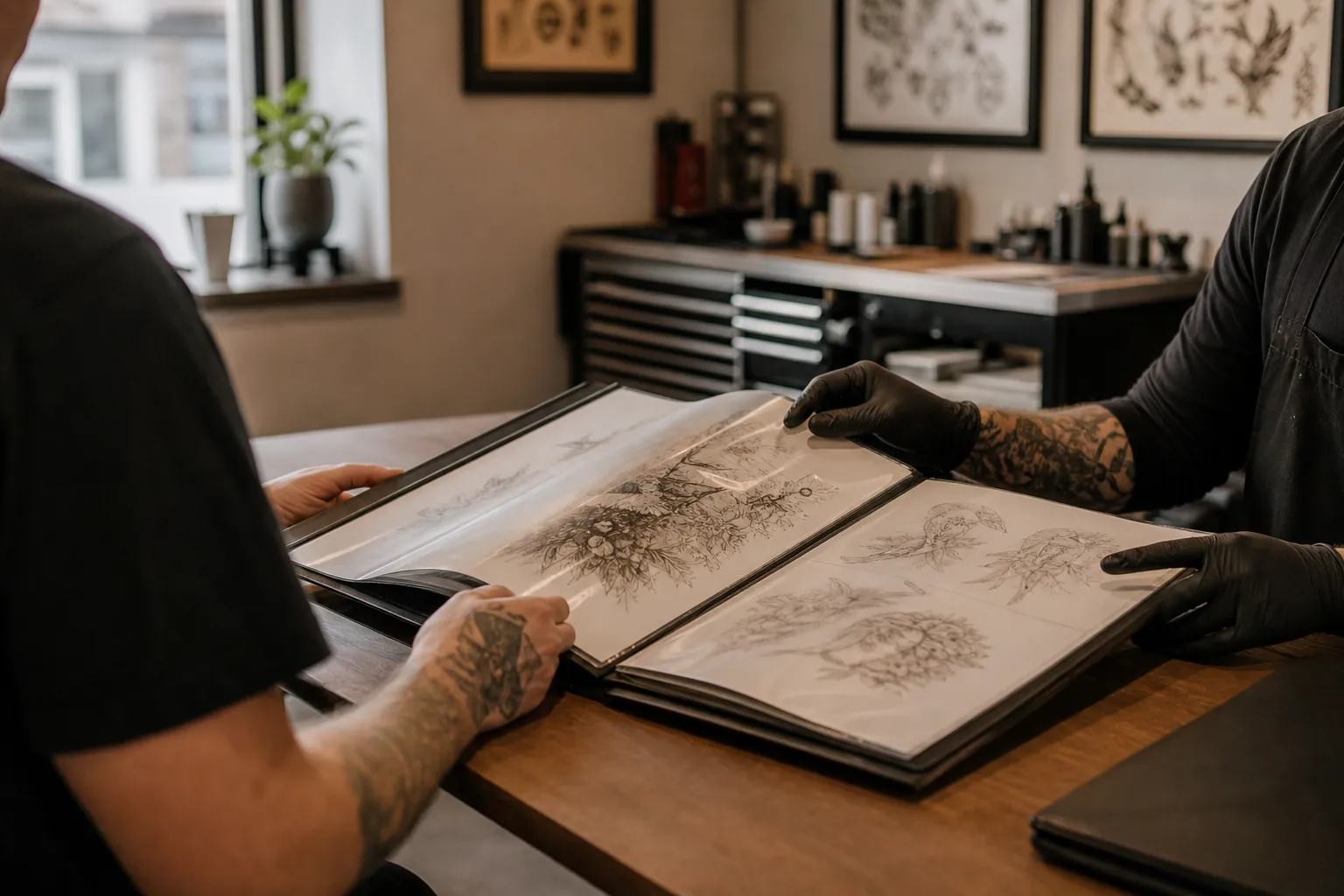
A short, specific question list can prevent expensive misunderstandings later.AI-generated editorial illustration; not a listed artist’s work.
A tattoo inquiry can move from “I love your work” to a deposit request surprisingly fast. Before you reserve a date, you need enough information to judge artistic fit, understand the process, and know what happens if the plan changes. That does not require sending an exhausting questionnaire. It requires asking the right person the right questions at the right stage.
Use the sections below as a conversation guide, not a script you must fire off in one message. Many established artists publish answers in booking forms, highlights, or studio policies. Read those first, then ask only what remains unclear. Clear questions show that you respect the artist's process while protecting your own time, money, and health.
Before Asking: Confirm That the Books and Channel Are Real
Start on the artist's official profile or the studio's current website. Confirm whether books are open, which projects are being accepted, and how inquiries must be submitted. Some artists use email, some use a form, and others route everything through a manager. A direct message sent outside the stated process may be missed, but a payment request from an unfamiliar look-alike account deserves caution.
Ask, “Is this the correct account and payment channel for booking with you at this studio?” if anything is ambiguous. Cross-check the address and contact details against the artist profile and the relevant studio listing. A directory record is a lead, not proof by itself, so follow its source links. UFO Calling's methodology explains how public information and verification signals are separated.
Questions About Artistic Fit
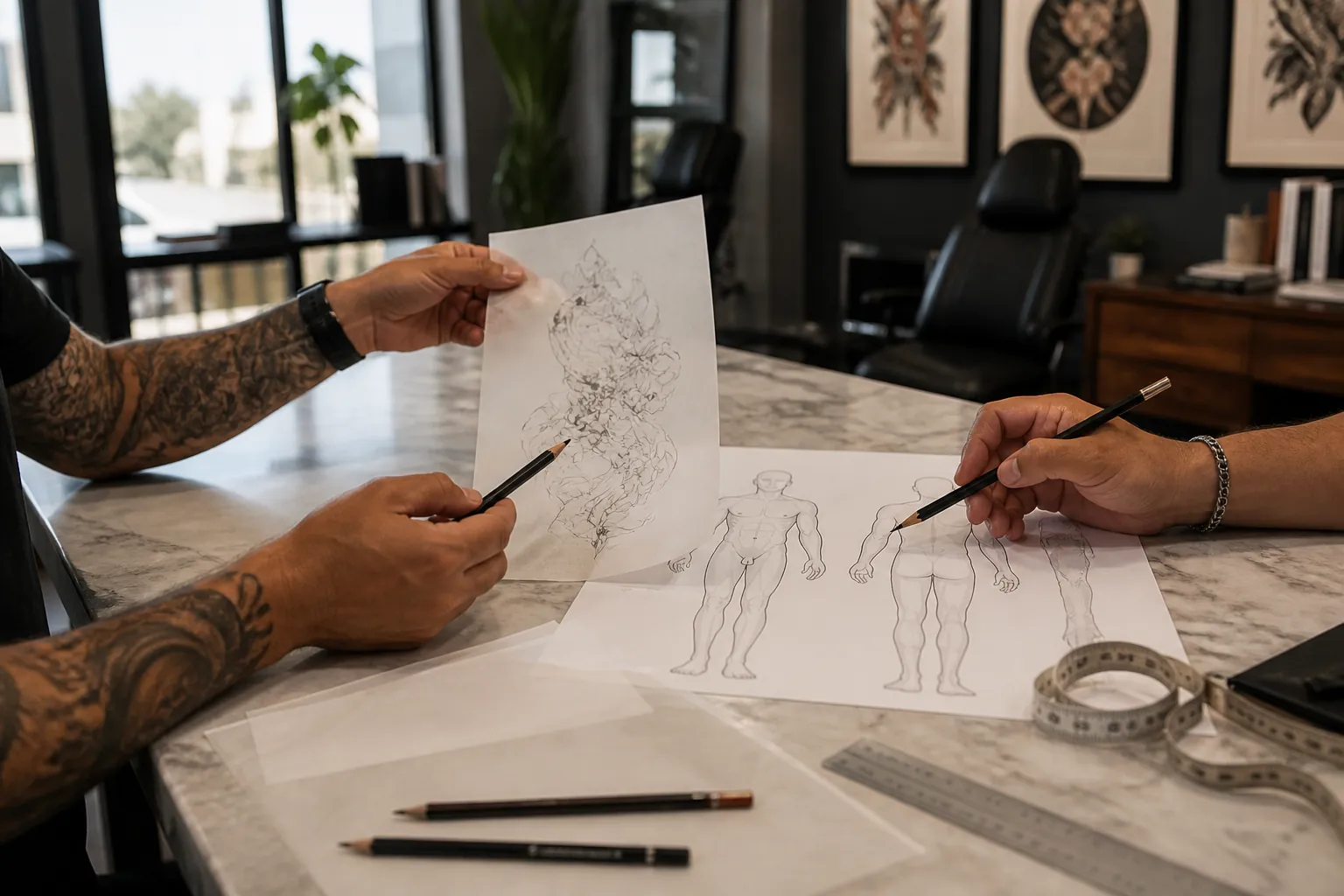
Your first substantive question should make the project easy to classify: “Is this subject, style, scale, and placement a good fit for your current work?” Include a concise description, approximate dimensions, body placement, color direction, and a clear photo of the area if requested. If you are flexible, say where. If one element is nonnegotiable, say that too.
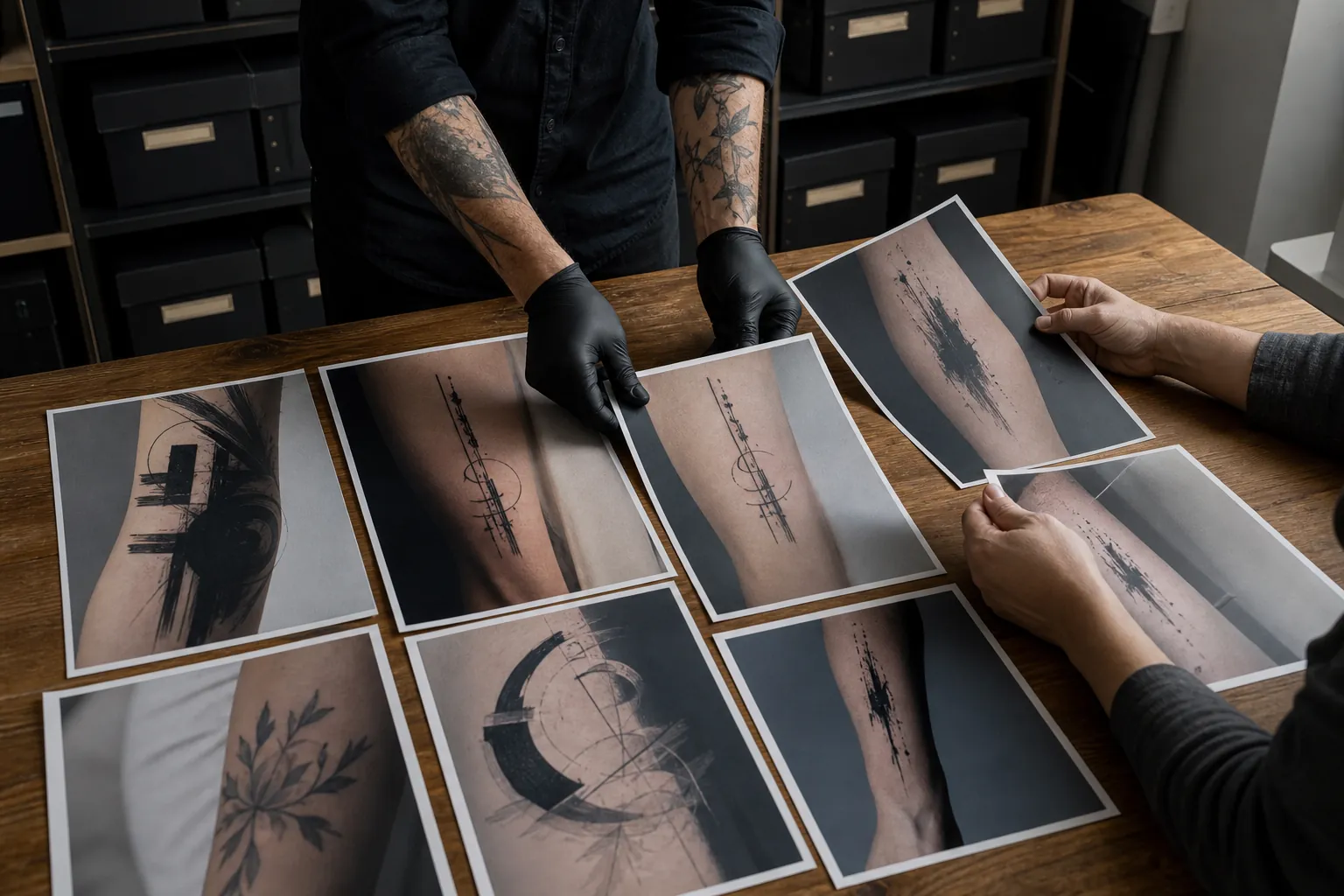
Then ask for relevant evidence rather than a general assurance. “Do you have healed examples of similar line weight, color, placement, or skin tone?” is more useful than “Are you good at this?” When reviewing a specialized portfolio—such as artists listed under blackwork—look for the particular branch of the style you want. Dense geometric coverage and delicate illustrative blackwork solve different visual problems.
For a cover-up, rework, scar-adjacent design, or large multi-session piece, ask what the artist needs to evaluate before accepting it. They may require an in-person look, healed photographs in neutral light, or a consultation before discussing feasibility. A responsible “I cannot decide from this photo” is more credible than a guarantee made without enough information.
Questions About Design Ownership and Revisions
Ask who creates the artwork and whether any part is pre-drawn flash, customized flash, or a fully custom composition. If you bring references, state that they communicate mood, subject, or composition—not permission to reproduce another tattoo. A professional may decline direct copying and propose an original solution.
Useful wording includes: “When will I first see the design?” “What type of revisions are included?” “What counts as a new concept rather than a revision?” and “What happens if the drawing does not match the agreed brief?” Artists handle design previews differently. Some share work shortly before the session to protect their drawings and workflow. That boundary is not automatically a problem; it should simply be disclosed before you book.
Ask how last-minute changes affect time and price. Replacing a flower with another flower may be a small adjustment. Changing a forearm botanical piece into a full upper-arm animal composition is a new scope. Establishing this distinction early prevents both sides from treating a major redesign as a minor correction.
Questions About the Studio and Safety Process
Tattoo practice is regulated by state and local authorities in the United States, so ask which jurisdiction covers the appointment and whether the artist and facility meet its requirements. “What is the permitted studio address for my session?” and “Where can I check the applicable practitioner or facility status?” are reasonable questions. For example, Los Angeles County publishes body-art registration and facility-permit information, but requirements differ elsewhere.
You can also ask how single-use needles and other disposable items are handled, how reusable equipment is processed when applicable, how surfaces and machines are protected, and what ink-handling practices the studio follows. Do not settle for a decorative use of the word sterile. Ask for an understandable description of the workflow. OSHA notes that tattooing generates occupational exposure to blood, and FDA information explains that contaminated inks can cause infection even when other hygiene practices are followed.
Ask who you should contact if the tattoo appears not to be healing normally. The artist should provide aftercare guidance but should not diagnose an infection or allergic reaction. FDA advises contacting a health care professional when there are concerns and especially when symptoms suggest the tattoo is not healing as expected. If you have personal medical questions before tattooing, bring them to a qualified clinician rather than asking the artist to provide medical clearance.
Questions About the Estimate and What It Covers
Instead of asking only “How much?”, ask, “How is this project priced, what is included in the estimate, and what could change the total?” This invites an explanation of the actual unit—project, session, day, or time—and the assumptions behind it. Clarify whether design time, placement changes, setup, breaks, taxes where applicable, and a later touch-up are included or treated separately.
For work expected to take more than one visit, ask how many sessions the artist anticipates and how payments are divided. The answer is still an estimate: skin response, detail changes, pain tolerance, placement, and healing between sessions can affect the plan. The goal is not a false guarantee. It is a shared understanding of how decisions change cost.
US tattoo pricing varies widely by artist, city, project, and working model. There is no responsible national average that can price your specific tattoo. Read our pricing and deposit guide before comparing quotes, then compare scope and terms rather than isolated totals.
Questions About the Deposit and Cancellation Policy
Before paying, ask five things in plain language: how much is due, what the payment reserves, whether it is credited to the final balance, when it can be transferred or refunded, and what happens after a cancellation or reschedule by either side. Request the written policy and a receipt or payment confirmation tied to the artist, studio, and appointment.
Also confirm the deadline for rescheduling and the consequences of lateness, illness, travel disruption, or arriving unable to be tattooed. Policies differ, so do not rely on what another studio allowed. If the artist cancels, ask whether the deposit moves to a mutually agreed date or can be returned. If the client changes the project dramatically, ask whether a new consultation or deposit is required.
Do not assume the word “nonrefundable” answers every possible situation or determines your legal rights. Contract and consumer rules vary by state and facts. Keep the written terms and payment records. If a real dispute cannot be resolved directly, seek appropriate local consumer or legal guidance rather than treating a general article as legal advice.
Questions About Timing and the Appointment Day
Ask how long the artist expects you to be at the studio, not just how many hours the machine may run. Arrival, paperwork, placement, resizing, stencil work, breaks, photography, and bandaging all take time. For a long session, ask what food and drink are allowed, whether a support person can come, and whether the studio has accessibility or privacy arrangements you need.
Confirm age and identification requirements, and ask what would cause the appointment to be postponed. Arriving intoxicated, sunburned, ill, or with irritated skin may prevent a safe session. Do not ask an artist how to alter prescription medication or manage a medical condition; ask your clinician. Tell the studio about relevant practical concerns early enough for them to explain their policy.
Questions About Aftercare and Touch-Ups
Ask which dressing the artist plans to use, when you will receive written aftercare instructions, and how those instructions change if the dressing does not stay in place. You should know who to contact with routine questions and when the studio expects you to seek medical care. Do not combine advice from several social feeds into a homemade protocol that contradicts your provider's instructions.
Clarify the touch-up policy before you need it. Ask what the artist considers a touch-up, how healed work is evaluated, whether there is a time window, and which circumstances carry an additional fee. A small healed gap and a request to redesign or extend the tattoo are not the same service. Travel clients should ask whether healed photos can be reviewed remotely and how any return visit would be scheduled.
How to Interpret the Answers
Good answers are not always long. They are specific, consistent with written policies, and appropriate to the question. An artist may say that an exact session count is impossible but explain the range of variables. A studio may link directly to its local permit information. A manager may answer logistics while routing design questions to the artist. Those are signs of a defined process.
Pause when answers conflict across channels, the location remains hidden, payment is demanded through an unrelated account, portfolio ownership cannot be established, or ordinary safety questions trigger hostility. Repeated urgency—“pay in the next ten minutes or lose everything”—is not a substitute for a verifiable booking process.
Finally, ask yourself one question: “Can I summarize the design scope, working location, expected process, price structure, deposit policy, and next step in my own words?” If not, request clarification before paying. The purpose of a good pre-booking conversation is not to eliminate every uncertainty. It is to make the remaining uncertainty visible and manageable.
A Compact Message You Can Adapt
A respectful inquiry can be short: “Hi, I am interested in a palm-size black-and-gray botanical piece on my outer forearm. I like the healed floral work in your portfolio, especially the open spacing. My preferred months are October or November, and I can travel within the city. Is this a fit for your current bookings? If so, could you share your consultation process, pricing format, deposit and rescheduling terms, and the studio address where the appointment would take place?”
Source desk
Primary References and Further Reading
External sources are provided for verification and context. Regulations can change; confirm the current rule with the responsible authority.