安全与护理 / 美国指南
Tattoo Aftercare: A Practical Guide to the First 30 Days
Healing is not a contest to collect products or endure discomfort. The first month is mostly about clean hands, restrained care, and recognizing changes that deserve professional attention.
本文以美式英语撰写,面向美国读者;界面与导航保持中文。
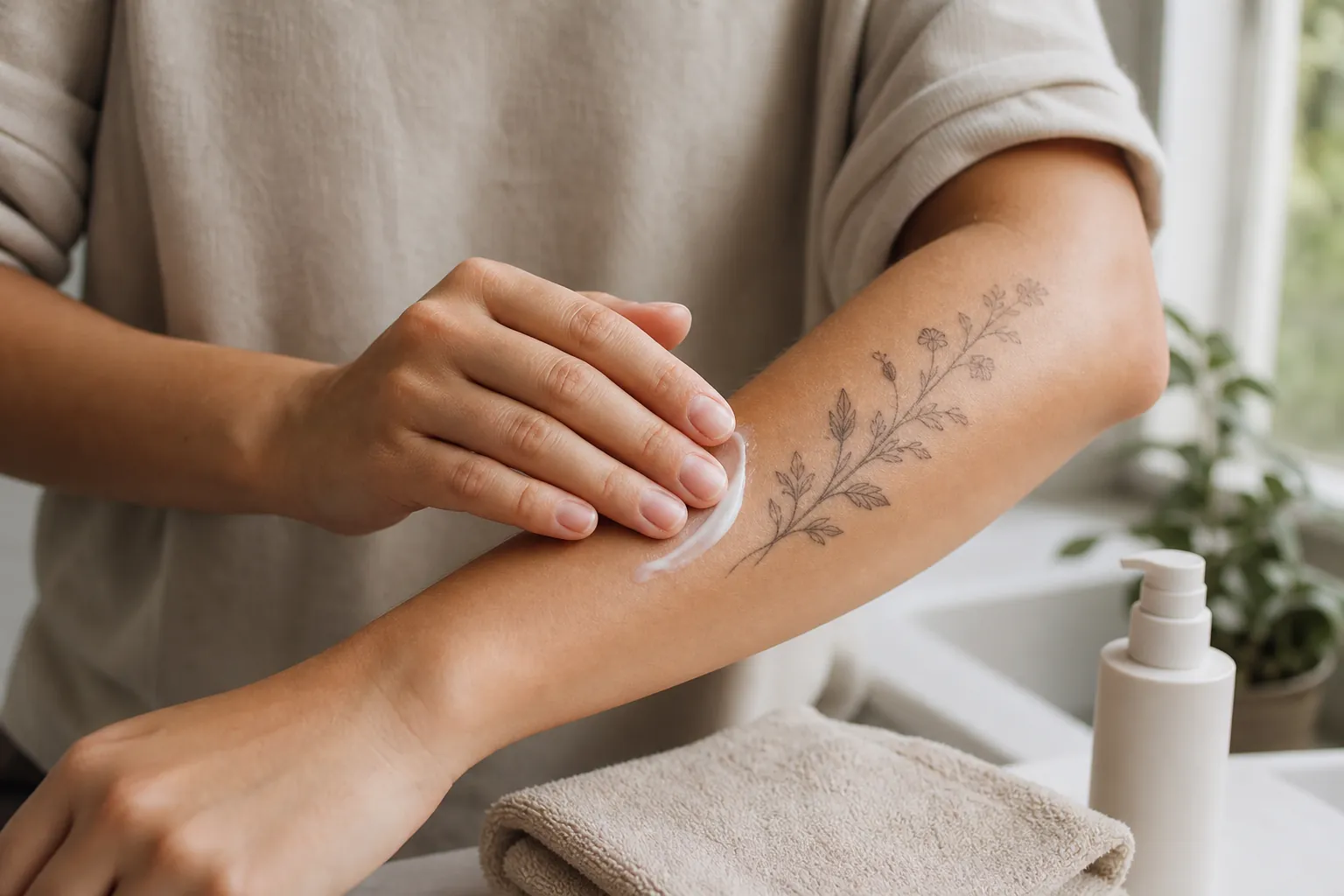
Good aftercare is intentionally uneventful: clean hands, gentle washing, light moisture, and protection from friction and sun.AI 生成的编辑插图;并非目录中纹身师的作品。
The first 30 days after a tattoo are less about “healing hacks” than avoiding preventable interference. Your skin has been repeatedly punctured, the surface barrier needs time to recover, and the artwork sits inside that process. The artist's written instructions and directions for your specific dressing come first. Advice for an absorbent pad is not automatically appropriate for an adhesive film, and neither a friend nor this guide can evaluate your skin from a description. This is general U.S. education; it cannot diagnose a reaction or replace a physician, dermatologist, or health authority.
Before You Leave the Studio: Make the Plan Specific
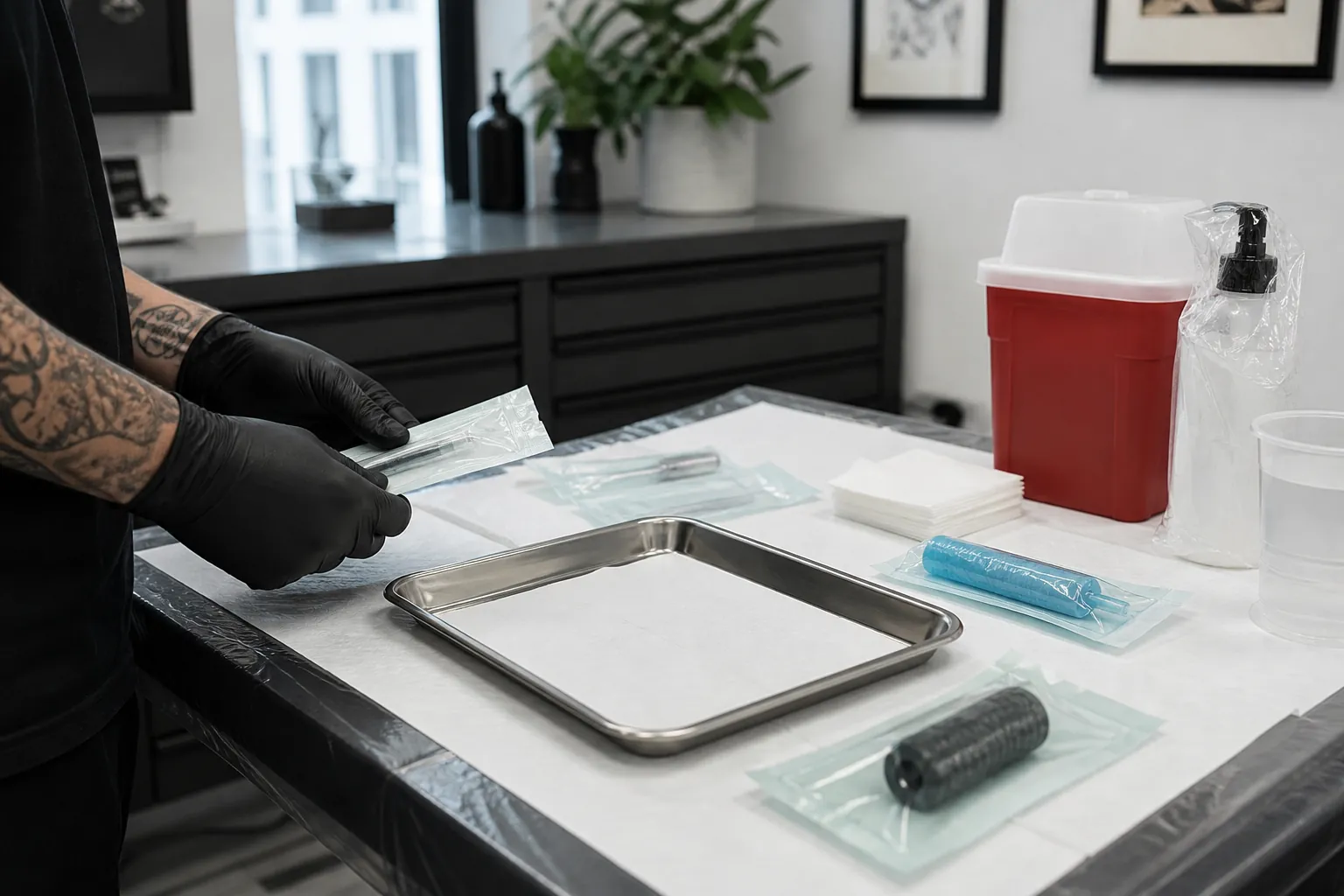
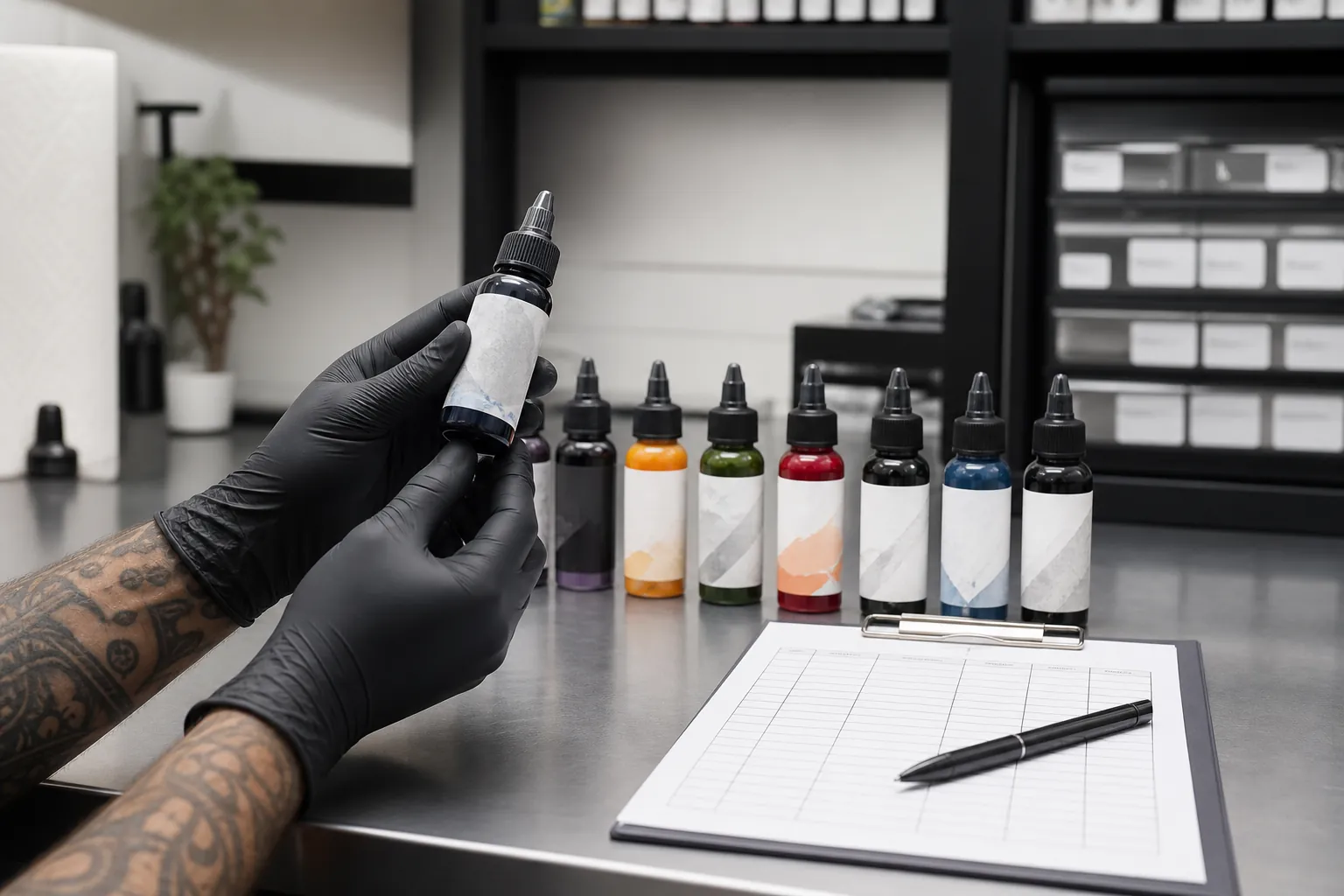
Ask the artist to identify the dressing and explain when and how it should be removed, what to do if it leaks or peels, which cleanser and moisturizer characteristics they recommend, and how to contact the studio after hours. Get the instructions in writing. Save the appointment date, studio address, artist's legal or professional name, and the ink brand, color, and lot information if the studio records it. These details are not busywork: they help a clinician or public-health agency investigate an unexpected reaction or a product alert. The studio hygiene checklist covers what should happen before this point.
Tell the artist before the session about known adhesive or topical-product sensitivities and about any clinician-directed wound-care plan. People with conditions or treatments that affect healing, bleeding, circulation, immunity, or the skin should ask their own clinician for individualized guidance before getting tattooed. Do not stop prescription medicine, alter a dose, or apply a prescription product to a tattoo because of an online article. If the studio gives a plan that conflicts with your clinician's instructions, pause and have the professionals clarify it.
Days 0–3: Protect the Area Without Trapping New Problems
A new tattoo can be tender, warm, mildly swollen, or red near the worked area. Clear fluid mixed with small amounts of ink may appear, especially early. The American Academy of Dermatology notes that some redness, soreness, clear fluid, itching, flaking, and scabbing can occur during normal healing. Direction matters more than a single snapshot: discomfort and redness should generally settle rather than spread or intensify. Fever, chills, pus, open sores, worsening pain, or redness that becomes darker or expands are reasons to contact a physician or board-certified dermatologist promptly. Severe symptoms, rapidly spreading redness, red streaks, faintness, trouble breathing, or swelling of the face or throat call for urgent medical help.
Leave the initial dressing in place for the period specified for that exact product and your session. Do not choose a universal removal time from a video. If an adhesive film fills with fluid, breaks its seal, rolls back across the tattoo, causes marked burning, or produces a rash beyond the covered shape, contact the studio for product-specific instructions and seek medical advice when symptoms are significant. Once instructed to remove a dressing, wash your hands first. Peel or lift it gently as directed, using lukewarm water if the product instructions permit. Do not rip it from dry, tender skin.
- Wash your hands before every intentional contact with the tattoo.
- Clean the area gently with lukewarm water and a mild cleanser consistent with the artist's instructions; do not scrub with a washcloth, brush, or exfoliant.
- Rinse away cleanser and loosened residue, then pat with a clean disposable paper towel or allow the area to air-dry in a clean environment.
- Apply only the thin amount of the recommended product, if a product is called for. A glossy, heavy layer is not evidence of better protection.
- Put on loose, clean clothing and reduce rubbing from waistbands, straps, shoes, jewelry, or sports equipment.
Clean Is Not the Same as Aggressively Scrubbed
Repeated washing, hot water, alcohol, hydrogen peroxide, fragranced oils, exfoliating acids, and vigorous towel drying can irritate healing skin. So can “letting it dry out” until it cracks. The workable middle is gentle cleaning followed by the smallest amount of an appropriate moisturizer needed to relieve dry tightness. AAD advises a water-based lotion or cream for tattooed skin that feels dry and notes that petroleum-based products can contribute to fading. During the fresh-wound phase, use the product plan provided for your tattoo and ask a clinician before applying an antibiotic ointment; topical antibiotics themselves can trigger contact reactions in some people.
Days 4–14: Itching and Flaking Without Picking
As surface tenderness eases, itching and flaking often become the main nuisance. Thin flakes may carry pigment-colored residue, which can look alarming without meaning the tattoo is falling out. Let flakes and small scabs release on their own. Picking creates a new injury, increases the opportunity for contamination, and can alter how an area heals. Instead, use cool surroundings, loose fabric, and the light moisturizer recommended for you. Pressing or tapping around an itch is less damaging than scratching, but avoid touching the tattoo unnecessarily. Trim fingernails and keep pets away from the healing area and bedding.
Continue showers rather than soaking. Pools, hot tubs, baths, lakes, rivers, and ocean water expose the area to prolonged moisture and, in some settings, microorganisms or chemicals. Wait until the surface is fully healed and your artist or clinician says immersion is appropriate. Sweat is not a disinfectant. Exercise may be reasonable when it does not stretch, rub, compress, or contaminate the tattoo, but a large piece over a joint, under a waistband, or where gym equipment contacts the skin may need more rest. Clean shared surfaces before use, cover them with a barrier when appropriate, wear clean clothing, and wash after the activity without over-washing throughout the day.
Sleep, Sheets, and Accidental Friction
Use clean bedding and avoid sleeping directly on the tattoo when that can be done comfortably. Do not wrap the area in household plastic overnight unless the specific medical dressing plan calls for it. If fabric sticks, do not pull it free; wet it carefully with clean lukewarm water and separate it slowly. A tattoo on a foot, hand, elbow, knee, or waist can receive hundreds of small friction events that a shoulder piece avoids, so location changes the practical plan. The goal is not perfect stillness. It is to prevent repetitive rubbing, dirty contact, and reopening of fragile skin.
Days 15–30: The Surface May Look Healed Before It Feels Settled
By the third and fourth weeks, many tattoos have lost obvious flakes and heavy tenderness. The skin may still look slightly shiny, feel dry, or show uneven contrast as deeper recovery continues. Do not use the calendar alone to declare the area healed. A large saturated piece, a frequently moving body part, individual skin factors, and an earlier irritation can change the pace. Continue gentle moisture when dry and avoid exfoliation, shaving directly over fragile skin, waxing, chemical peels, or cosmetic procedures until the skin is intact and comfortable. Ask the relevant professional before scheduling another procedure over or near the tattoo.
Once the skin surface is fully closed, sun protection becomes a long-term color and skin-health habit. AAD recommends broad-spectrum, water-resistant sunscreen with SPF 30 or higher on tattooed skin, applied before outdoor exposure and reapplied at least every two hours, along with avoiding tanning beds and sunlamps. Do not rub sunscreen into an open or actively peeling wound; use clothing and shade during the fresh phase and ask a clinician if you are unsure whether the surface is ready. Sun protection helps limit fading, but it does not turn a suspicious mole or changing lesion into something safe to ignore.
Normal Healing, Irritation, Allergy, and Infection Can Look Similar
Clients often want a photograph to answer one question: “Is this infected?” A photograph cannot reliably do that. Irritant dermatitis from adhesive, an allergic response to ink or a topical product, bacterial infection, and ordinary inflammation can share redness, bumps, itching, or swelling. Timing helps a clinician but does not settle the diagnosis; AAD notes that ink reactions can appear immediately or years later, while infection may occur soon after tattooing or later. Avoid treating an uncertain rash with someone else's antibiotics, steroid cream, essential oils, or concentrated disinfectants. Those choices can worsen irritation, obscure the pattern, or delay appropriate care.
- Call a clinician promptly for spreading or darkening redness, pain that worsens instead of easing, pus, open sores, fever, chills, or a persistent painful rash.
- Seek urgent help for rapidly progressive symptoms, severe pain, confusion, fainting, breathing difficulty, or swelling involving the face, lips, tongue, or throat.
- Contact a board-certified dermatologist for a persistent localized color-specific reaction, new nodules, a scar that keeps growing, or any changing spot within tattooed skin.
- Tell the artist after seeking care. The studio may need to preserve ink details, contact other clients, or follow a regulator's reporting process, but the artist should not diagnose or prescribe.
Document a Problem Without Turning It Into Online Speculation
Take one clear daily photograph in similar light, including a wider view if redness may be spreading. Note products, dressing changes, water or gym exposure, clinician-prescribed medication, and symptom timing. Keep ink-label or lot photographs when available. FDA accepts reports about tattoo-ink adverse experiences and product problems such as unusual odor, color change, or suspected contamination. Read the ink safety and recall guide before matching a product to an alert.
Touch-Ups, Long-Term Care, and the Thirty-Day Misconception
A touch-up should not be scheduled merely because a fresh tattoo looks cloudy or uneven during flaking. Let the artist assess healed work at the interval stated in the studio's policy; reworking skin too soon creates another wound before recovery is complete. When healed, maintain ordinary skin care, moisturize when dry, and protect the area from ultraviolet exposure. Avoid tanning beds. If a tattoo covers or approaches a mole, remember that ink can make early skin changes harder to see. AAD recommends considering tattoo placement on skin free of moles and seeing a dermatologist when tattooed skin changes.
Good aftercare keeps the area clean, lightly moisturized, and protected from friction, immersion, and sun while healing. Search artist profiles and studio profiles for discovery, but judge aftercare by written clarity, not follower count. If symptoms worry you, contact a medical professional rather than waiting for online consensus.
资料来源
主要参考资料与延伸阅读
外部资料用于核实与补充背景。法规可能变化,请向主管机构确认现行规则。