风格与设计 / 美国指南
How to Plan a Cover-Up Tattoo Without Designing Around a False Promise
A cover-up is a new composition built under existing constraints. Better planning begins with clear photographs, flexible priorities, and a portfolio that shows both the starting point and the completed result.
本文以美式英语撰写,面向美国读者;界面与导航保持中文。
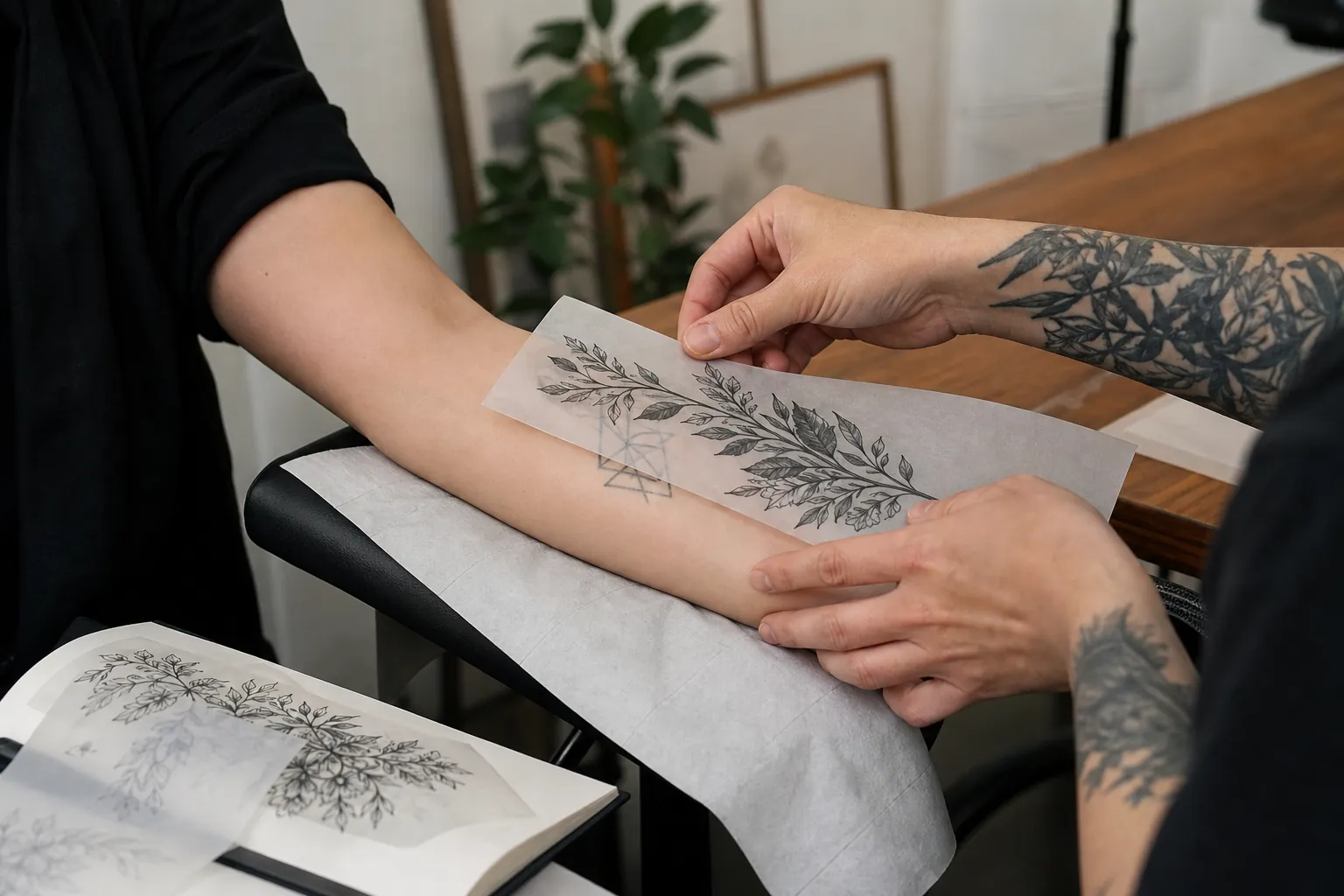
Cover-up planning is constraint mapping: document what exists, then design a new focal structure instead of hiding the problem in a filter.AI 生成的编辑插图;并非目录中纹身师的作品。
A cover-up tattoo is not an eraser. It is a new image designed with an existing shape, value pattern, location, and history already present. The old tattoo may become invisible in casual viewing, partly incorporated, redirected into background, or still detectable when someone knows where to look. No responsible article or artist can promise a universal result from a filtered photograph. The useful work begins by documenting the starting point and deciding how much change you will accept in subject, scale, placement, and visual density.
This guide focuses on planning and artist selection, not skin treatment or medical advice. If the area has raised tissue, persistent irritation, an unexplained change, or another health concern, ask a qualified clinician whether it is appropriate to tattoo before scheduling a design consultation. If you are considering laser treatment, discuss suitability and risks with an appropriately licensed medical provider; a tattoo artist can explain design consequences but should not replace that evaluation.
First Decide What “Covered” Means to You
Clients often say they want the old tattoo gone, then discover that they also want the new tattoo to be smaller, lighter, unrelated in shape, and confined to exactly the same boundary. Those goals may compete. Rank them before contacting anyone. Is your priority that the old subject no longer reads? That a name or symbol is not recognizable? That the new piece feels visually independent? Or that the total footprint changes as little as possible? Different answers lead to different compositions.
- Must change: the part of the old image you no longer want anyone to recognize.
- Must remain: meaningful nearby tattoos, a specific body boundary, or an element you want incorporated.
- Flexible: subject, orientation, palette, amount of background, and expansion beyond the current edge.
- Unacceptable: imagery, symbols, density, or placement changes you would rather decline than wear.
Write the list without solving the design. “The lettering must stop reading as a name; I can accept a larger botanical piece; I do not want a portrait” is useful. “Put this exact pale flower over it at the same size” skips the artist's analysis. A cover-up specialist needs room to redistribute attention, build a focal point, and decide where the existing marks can participate in the new structure.
Document the Existing Tattoo Honestly
Take current photographs in neutral daylight, without beauty filters, contrast changes, body makeup, or wet skin. Include one straight-on close view and one wider view that shows the complete body area. Add angled views when the tattoo wraps. Place a small ruler near—but not over—the tattoo if the artist requests scale. Tell the artist when the tattoo was completed and whether it has been altered, reworked, treated, or tattooed more than once. Do not guess at pigment brands or procedures you cannot verify.
A phone camera can exaggerate fading or flatten texture depending on light. That is why photographs are a screening tool, not the final diagnosis of the design problem. The artist may need to see the area in person before committing to a route. If an inquiry receives an immediate guarantee based on one dim image, treat that certainty cautiously. A careful “I need a consultation” is often the more informative answer.
Understand the Four Design Constraints
1. Existing Shape and Direction
A horizontal word, circular emblem, diagonal branch, and scattered set of symbols create different starting geometry. The new design needs a believable direction of its own. Sometimes the old edge can become a shadow, petal division, pattern boundary, or background movement. Sometimes the most convincing route places a new focal subject beside the darkest area and uses supporting structure to connect them. Centering a new object directly on the old one is only one option.
2. Existing Value and Contrast
Photographs contain light, medium, and dark areas; tattoos do too. A pale element cannot be evaluated as if the underlying marks were blank paper. An artist may use deeper values, texture, overlap, or a redesigned edge to control what attracts the eye. “Just use skin tone” and “any black will hide anything” are not planning principles. Ask the artist to point out which parts of the existing tattoo control the new value structure and where open space can still be preserved.
3. Scale and Boundary
A new composition often needs room beyond the old outline so it can create a fresh silhouette rather than tracing the problem. More area is not automatically better, but an artificially fixed boundary can remove useful options. Discuss a range: the smallest route the artist believes is coherent, a preferred route, and what additional space would accomplish. If the proposed expansion affects another tattoo or a visible clothing line, say so early rather than after the drawing is developed.
4. Anatomy and Nearby Work
The cover-up is part of a body and possibly part of a collection. A design that works in a cropped square can compete with a neighboring piece, end awkwardly at a joint, or point against the natural orientation of the area. Share wider photographs and future plans. You do not need to fill the entire limb, but you should understand whether the new boundary leaves usable space or creates an isolated island. The tattoo placement guide provides a body-mapping worksheet for this conversation.
Compare Four Routes: Rework, Integration, Cover-Up, or a Staged Plan
A rework preserves the original subject while redrawing or extending it. Integration keeps some identifiable parts and makes them intentional within a larger composition. A cover-up makes recognition of the old subject a central design problem. A staged plan may postpone the new design while another qualified professional evaluates whether treatment could change the available options. These routes are not a ladder from weak to strong. The best route is the one that matches your priority and the evidence visible in the area.
Ask the consulting artist to sketch the logic in words before requesting finished art. What becomes the focal point? Which old marks become background? Where does the new silhouette begin and end? What constraint makes the proposed subject appropriate? If the only explanation is “it will be dark enough,” you still do not know how the image is designed. Strong cover-ups redirect attention through composition, not merely through accumulation.
Choose a Subject for Its Structure, Not Because It Appears on a List
Flowers, animals, foliage, masks, ornamental pattern, and abstract blackwork appear often in cover-up searches because they can contain varied edges, overlaps, and value zones. That does not make them universal solutions. A flower selected only because “flowers cover tattoos” may still conflict with the old geometry or with your taste. Start with two or three subjects you would be happy to wear independently, then let the artist explain which one offers a useful structure.
Find an Artist With Traceable Cover-Up Evidence
Begin with artist profiles and studio rosters, then visit the artist's current first-party portfolio. Look for multiple cover-up cases that include a credible starting image, a complete finished view, and enough surrounding anatomy to understand scale. A dramatic result without a “before” image may be excellent tattooing but does not show the same skill. A feed full of before-and-after posts without dates, credits, or consistent authorship creates another verification problem.
- Confirm the artist made the work and identify the current studio or guest location.
- Compare old tattoos that resemble yours in geometry and value, not merely in subject.
- Look for completed compositions from several angles when projects wrap around the body.
- Note whether fresh and healed images are clearly labeled and whether lighting remains reasonably comparable.
- Ask which shown case best demonstrates the proposed strategy and why.
Bring a Decision Packet to the Consultation
- Unedited current photographs, the date of the original tattoo, and known alteration history.
- Your ranked goal: what must stop reading, what may remain, and where flexibility exists.
- Two or three subjects you genuinely like, plus examples from this artist's own work.
- A clear boundary around imagery, scale, darkness, visibility, or expansion you would not accept.
- Nearby tattoo plans, clothing or professional visibility considerations, and scheduling constraints.
Ask for alternatives rather than a binary yes. “What changes if we expand by two inches?” “What can remain lighter if the focal point moves?” “Would integration make more sense than full concealment?” The artist may need tracing, photographs, and time before answering. Use the tattoo consultation guide to structure the review. Confirm design, revision, deposit, cancellation, and rescheduling terms in writing, including when concept approval occurs and what counts as a major change.
Red Flags Are About Process, Not Confidence
Pause if someone guarantees total invisibility from one photograph, refuses to discuss the existing value pattern, presents other artists' work without credit, promises a medical outcome, or pressures you to pay before identifying the appointment location and terms. Also pause if the proposed design is simply your preferred image enlarged without an explanation of how it interacts with the old one. Confidence should be supported by comparable work and a legible design strategy.
A credible cover-up plan names its constraints. Certainty without a starting-point analysis is marketing, not evidence.
资料来源
主要参考资料与延伸阅读
外部资料用于核实与补充背景。法规可能变化,请向主管机构确认现行规则。