Choosing & Booking / U.S. field guide
How to Choose a Tattoo Artist: A Practical U.S. Guide
A strong choice comes from matching the artist to the exact job, checking evidence beyond social media, and confirming the working process before money changes hands.
This article is published in American English for a U.S. audience.

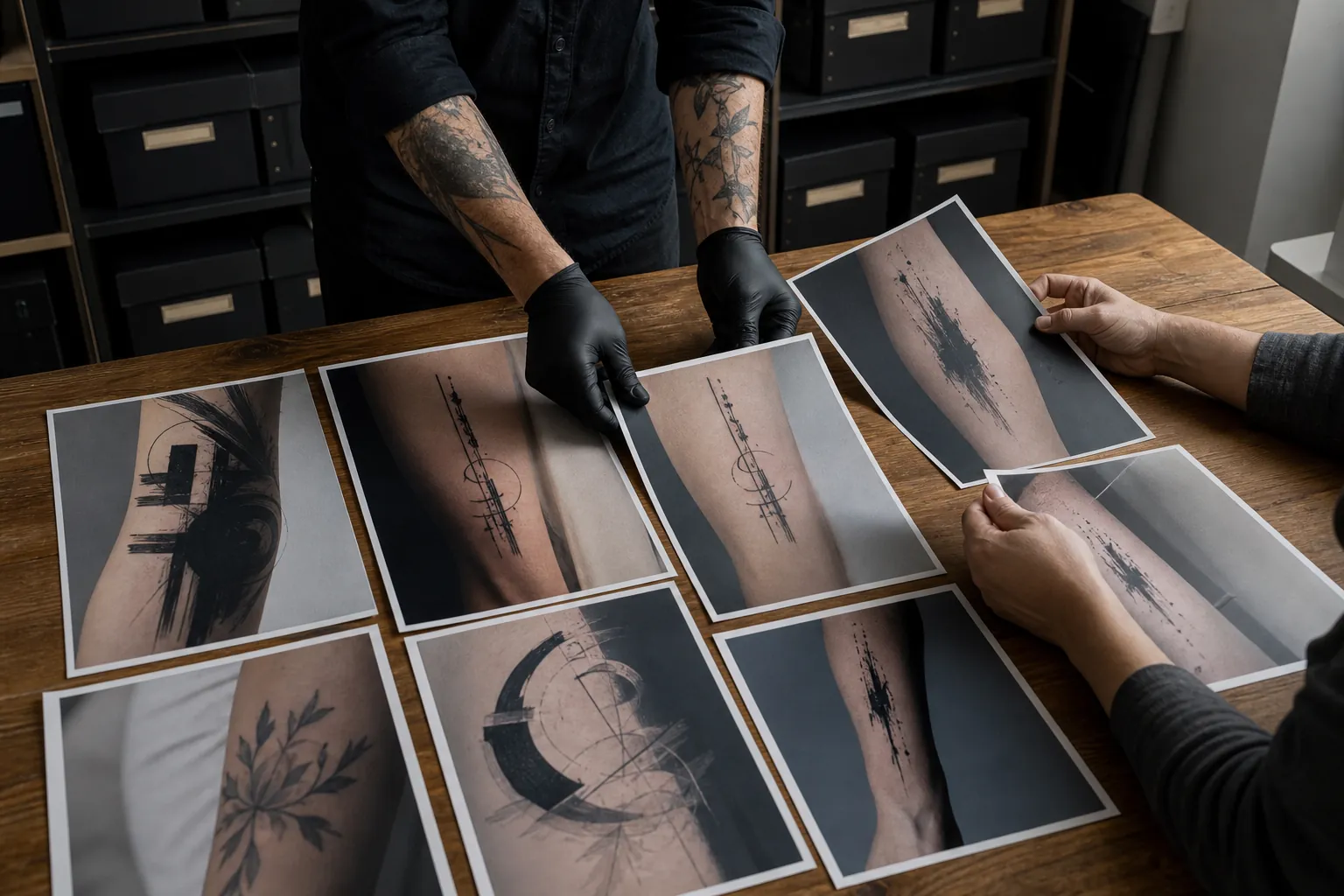
Choosing well starts with close attention to the work, the process, and the setting.AI-generated editorial illustration; not a listed artist’s work.
Choosing a tattoo artist is not the same as choosing a print, a haircut, or the account with the largest following. You are choosing a person to translate an idea onto a moving, healing surface through a process that breaks the skin. The best match is therefore specific: the artist has relevant visual experience, works in an appropriate professional setting, communicates clearly, and offers terms you can understand before committing.
Start With the Tattoo You Actually Want
Begin by reducing the idea to a useful brief. Name the subject, approximate size, body placement, color preference, and the visual qualities that matter most. “A snake tattoo” is broad. “A palm-length black-and-gray snake that follows the outer forearm, with open skin and botanical detail” gives you criteria you can use while searching.
Style labels help, but they are not rigid certifications. Two artists may both use the term blackwork while one specializes in dense ornamental coverage and the other in airy illustrative linework. Browse the artist directory, compare work in the relevant style, and open full profiles rather than deciding from thumbnails. If dark ink, contrast, and negative space are central to your idea, the blackwork section is a useful starting point, not a substitute for portfolio review.
Placement matters just as much as subject. A person who produces excellent flat flash may not be the strongest choice for a design that must wrap around a knee, shoulder, or rib cage. Look for examples on the same body region or on a similarly curved surface. For cover-ups, scar work, large-scale projects, or color on a skin tone underrepresented in the portfolio, ask for directly relevant examples rather than assuming the artist can extrapolate.
Read the Portfolio as Evidence, Not Decoration
A portfolio should answer three questions: what the artist chooses to make, how consistently they execute it, and how the work looks after the initial photo session. Study complete pieces at a useful resolution. Zooming in is not rude; it is due diligence. Examine line control, transitions, saturation, composition, and whether the design remains readable from a normal viewing distance.
Fresh tattoos are often photographed under controlled light while the skin is still red or glossy. Healed examples show a different kind of evidence. They can reveal how lines settled, how pale values remained visible, and whether dense areas healed evenly. An artist does not need a healed photograph of every tattoo, but a mature portfolio should give you some way to assess outcomes beyond the appointment day. Our guide to reading a tattoo portfolio breaks down these signals in more detail.
Do not confuse a narrow portfolio with a weak one. A focused body of work can be a sign that the artist has developed a clear practice. The more important question is whether that practice matches your project. Conversely, a feed containing every popular style may show versatility, or it may make consistent expertise hard to verify. Follow the work back to a named artist and studio whenever possible, and distinguish original tattoos from inspiration reposts, convention photos, or drawings that were never tattooed.
Verify the Artist, Studio, and Local Requirements
Tattoo regulation varies across the United States. The FDA oversees tattoo inks as cosmetics, while the practice itself is generally regulated by state and local jurisdictions. That means the relevant permit or practitioner registration in Los Angeles may not resemble the paperwork used in another city. Check the health department for the place where the appointment will occur, then ask the artist or studio how they meet those requirements.
A directory profile can organize public evidence, but it is not a government license. On UFO Calling, read the source notes and verification status instead of treating any label as a blanket safety guarantee. The methodology page explains how records and claims are handled, while the profile verification process shows what a claimed profile means and what it does not mean.
Review the studio profile as well as the individual artist. Confirm the physical address, the artist's current relationship to the location, and whether a guest spot or convention appointment will take place in a permitted setting. Los Angeles County, for example, states that practitioners must register and facilities must hold the required public-health permit in its jurisdiction. A legitimate answer should be easy to understand and possible to verify with the appropriate local authority.
Use the Consultation to Test Communication
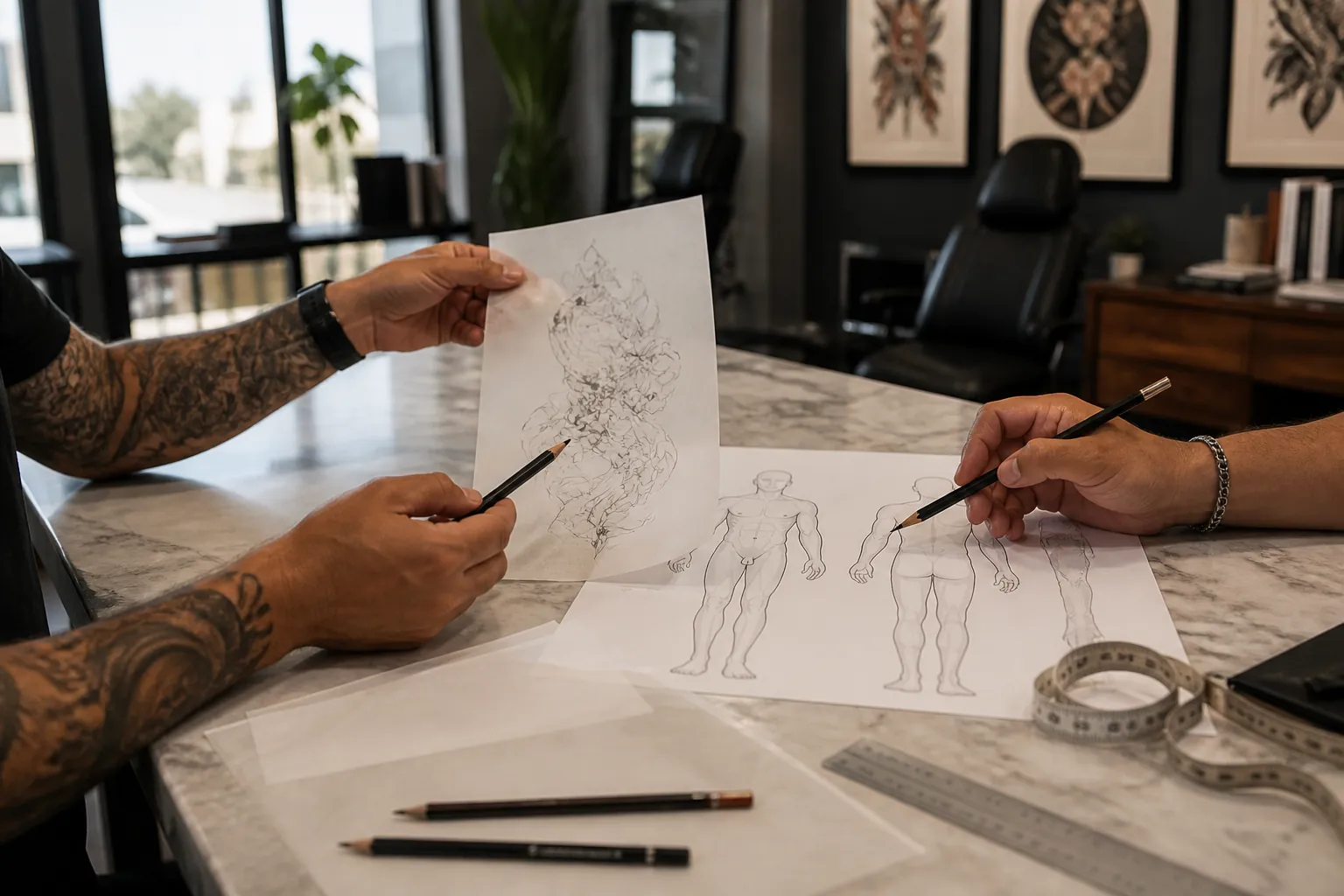
A consultation is not an audition in which you must impress the artist. It is a working conversation about fit, scope, constraints, and expectations. Explain what is essential, what is flexible, and what you dislike about your own reference images. A thoughtful artist may recommend changing scale, simplifying detail, or moving the design so it ages and reads better. The value lies in the reason behind the recommendation, not in automatic agreement.
Ask who will create the design, when you will see it, what revisions are included, and what happens if the concept changes substantially. Confirm whether the consultation itself has a fee and whether that fee is applied to the appointment. If communication happens through a studio manager, identify who will answer design questions and who will handle payment or scheduling issues.
Pay attention to how the artist handles uncertainty. Good communication can include “I need to see the area in person,” “that detail will not hold at this size,” or “this project is outside my specialty.” Precision is more useful than instant confidence. Bring the practical checklist in our tattoo consultation guide so that excitement does not erase the questions you meant to ask.
Ask Direct Questions About Hygiene and Aftercare
You do not need to interrogate an artist while they are working, but you should be able to ask about single-use needles, barriers, hand hygiene, surface disinfection, ink handling, and disposal of contaminated materials. OSHA states that tattooing can fall within its bloodborne-pathogens framework for workers because the work generates blood. The FDA also notes that infections can arise from contaminated ink, including ink in a sealed container, so a clean-looking room is only one part of risk control.
Ask what aftercare instructions you will receive and how to contact the studio if healing concerns arise. Instructions can differ with the dressing, placement, and artist's procedure, but they should be specific enough to follow at home. If you have a medical condition, take medication that affects bleeding or healing, have a history of keloids, or are unsure whether tattooing is appropriate for you, discuss that with a qualified health professional before the appointment. A tattoo artist should not diagnose or clear a medical condition.
Avoid using one visible habit as a complete safety score. Gloves matter, but so do glove changes, clean-to-dirty workflow, protected equipment, and what happens between clients. If the artist dismisses reasonable safety questions, cannot explain the studio's process, or suggests tattooing in an improvised unregulated space, do not let a desirable appointment date override the concern.
Understand the Price and Booking Terms Before Paying
Ask for the pricing format, what the estimate includes, and which factors could change the final total. Artists may quote by project, session, day, or time, and the same label can be applied differently. A usable explanation connects the format to your scope: expected number of sessions, what counts as tattooing time, whether drawing or setup is included, and how breaks are handled.
Get the deposit, cancellation, rescheduling, late-arrival, and no-show terms in writing. Clarify whether the deposit is refundable, transferable to a new date, or credited toward the final bill. Do not send money until you can identify the artist or studio, confirm the booking channel, and understand the policy. For a fuller explanation without invented market averages, see tattoo pricing and deposits explained.
Low price alone is not proof of a bad artist, and a high quote is not proof of quality. Compare relevant work, professional standards, clarity of scope, and confidence in the collaboration. If one quote is materially different, ask what is included instead of guessing. Travel, multiple sessions, tips, aftercare supplies, and time away from work may also affect your overall budget even when they are not part of the artist's charge.
Compare Finalists With One Realistic Scenario
Imagine that one artist has a huge audience and several striking images in your preferred style, but little healed work and vague booking terms. Another has a smaller following, a coherent portfolio with healed examples on similar placements, a clearly identified studio, and a written process. The first artist is not automatically unsafe or unsuitable, but the second gives you more decision-quality evidence. Popularity is a discovery signal; documented fit is a booking signal.
Use a simple comparison note with the same headings for every candidate: style fit, placement experience, healed evidence, studio and jurisdiction, communication, availability, quote structure, and policy clarity. Mark unknown items as unknown. Do not quietly convert missing information into a positive assumption because you like the work.
Location filters can narrow the field while keeping comparison consistent. Someone searching Southern California can begin with tattoo artists and studios in Los Angeles, then verify the current workplace and local requirements directly.
Know the Red Flags—And the Ordinary Boundaries
Walk away from pressure to pay immediately through an unverified account, refusal to identify the working location, copied portfolio images, hostility toward basic hygiene questions, or a proposal to tattoo in a setting that does not meet local rules. Also pause if the artist promises a medical outcome, guarantees that a tattoo will heal in one exact way, or will not provide any written booking terms.
Some boundaries are normal. An artist may decline to copy another artist's custom design, limit revisions, protect drawings until the appointment, refuse a placement they consider unsuitable, or require a deposit before reserving time. The issue is not whether a boundary exists; it is whether it is communicated before you commit and applied in a way you can understand.
The final test is straightforward: can you explain why this artist fits this tattoo, where the work will happen, what you agreed to, and what you will do if the plan changes? If any answer depends on hope rather than evidence, keep researching. A permanent decision deserves more than a fast scroll.
Source desk
Primary References and Further Reading
External sources are provided for verification and context. Regulations can change; confirm the current rule with the responsible authority.