City Guides / U.S. field guide
How to Find a Tattoo Artist in Miami, Florida
Miami attracts local specialists and visiting artists. A safe, useful search separates visual discovery from license verification and confirms the exact studio before the trip begins.
This article is published in American English for a U.S. audience.
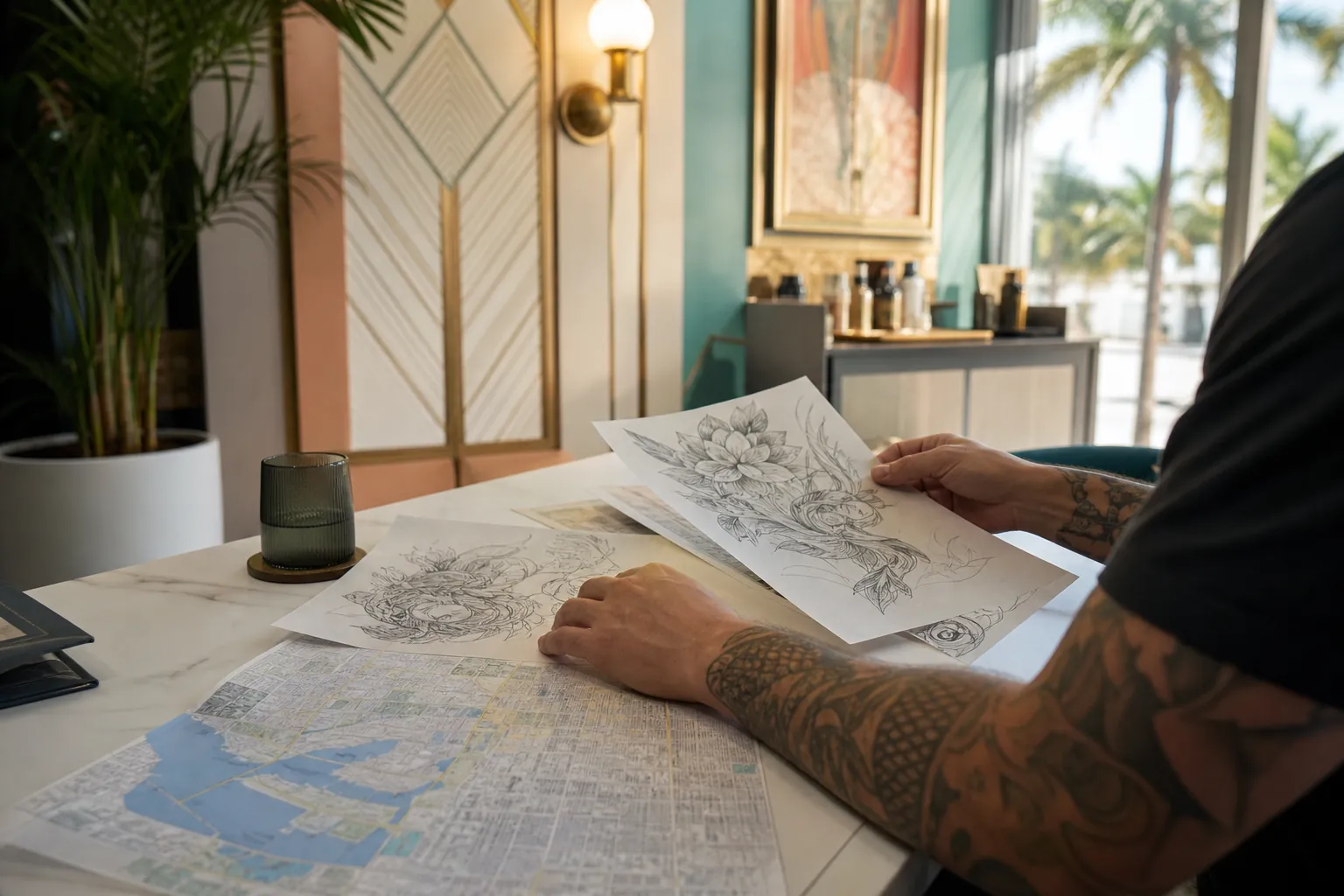
In Miami, confirm both the person and the licensed establishment—especially for a visiting artist or short trip.AI-generated editorial illustration; not a listed artist’s work.
Miami's tattoo scene is shaped by local studios, international travel, guest residencies, conventions, tourism, and a visual culture that crosses languages and neighborhoods. That mix can produce an excellent match, but it also makes location and identity easy to misunderstand. A profile may advertise “Miami dates” before naming the licensed establishment, or a traveler may book around a vacation without allowing for consultation, weather, healing, or schedule changes. Start with the tattoo, not the trip fantasy.
UFO Calling does not rank Miami artists or infer quality from follower counts. Use Miami artist and studio listings to discover candidates, then compare original portfolios and verify current license information. A directory profile organizes public evidence; the Florida Department of Health and the relevant county health department remain the authorities for license questions.
Describe the Project Before Choosing the Neighborhood
Create a short brief: subject, size in inches, body location, color or black-and-gray direction, preferred style, and a realistic date range. Include whether the work is a cover-up, continuation, memorial piece, scar-area project, or first tattoo. For travel, add your arrival and departure dates but do not treat them as a command that the artist must fit. The project may need a different scale, more than one session, or an in-person consultation before a responsible booking.
Search by the visual problem. “Fine line” can describe several approaches; “realism” can be color, black-and-gray, micro-scale, or large-format; “lettering” varies by script and composition. Open the artist's full recent work and compare designs similar in complexity and placement. If you are still choosing a direction, use the U.S. tattoo styles guide to build vocabulary without treating style labels as certifications.
Check Portfolio Depth, Authorship, and Healed Results
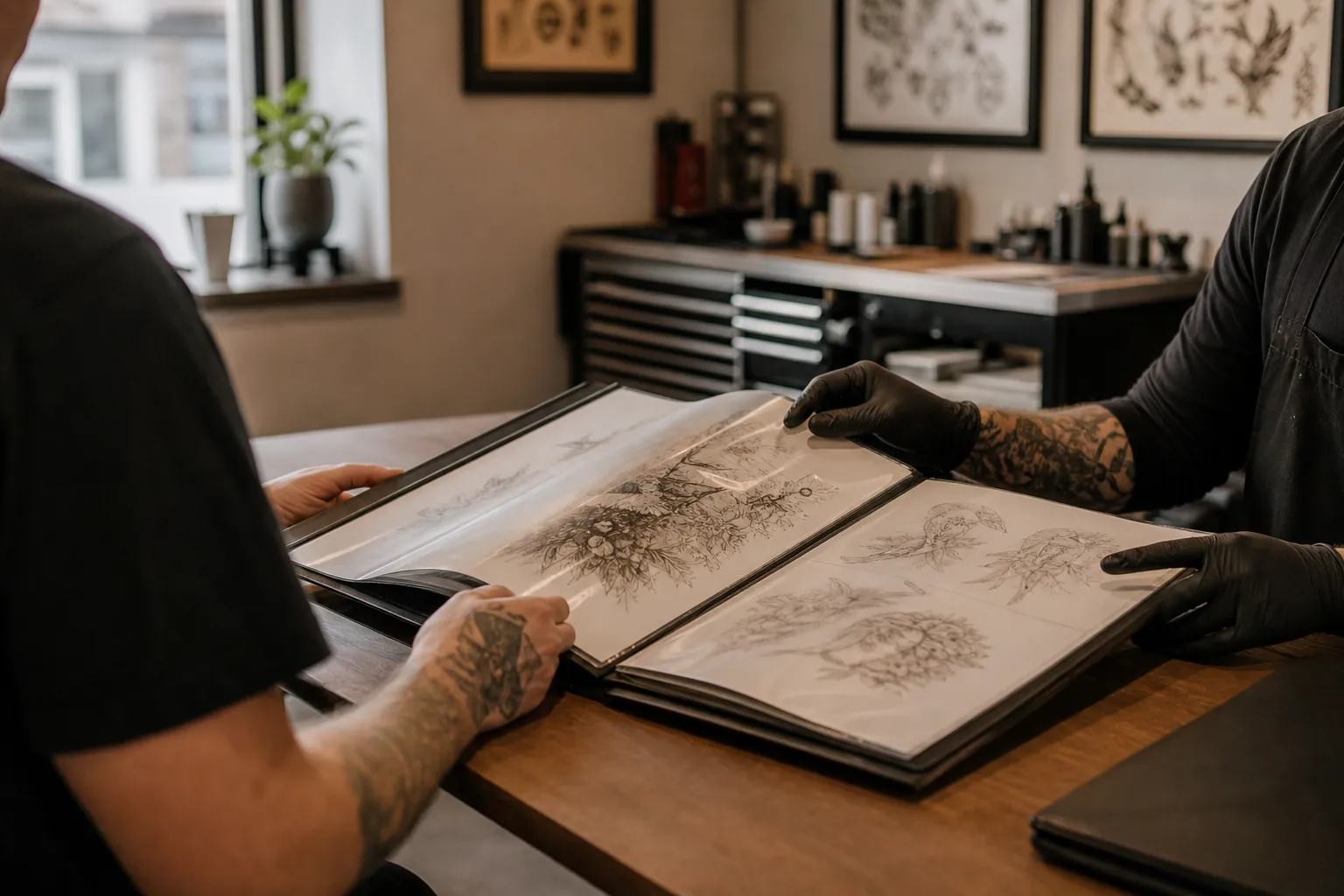
A portfolio should show more than one dramatic finished photograph. Look for consistent control across different bodies and sessions: stable linework, intentional edges, values that support the focal point, color placement that remains legible, and compositions that account for movement. Wider photographs help confirm scale and body flow. Detail crops help inspect execution but can conceal awkward placement or an unreadable overall shape.
Ask for healed examples relevant to the proposed tattoo. Fresh work can look unusually saturated and crisp under polarized light, editing, or studio lighting. Healed images cannot predict your individual result, but they reveal information unavailable on appointment day. For color work, look for comparable palettes and skin tones. For fine detail, look at spacing after healing. For cover-ups, ask for the original, fresh result, and healed result when the client authorized those photographs.
Trace images back to the named artist. Miami's guest culture means a studio feed may contain work by residents and visitors; an artist feed may also contain drawings, reposts, or collaborations. Read captions and credits. Use the portfolio review field guide and mark unclear authorship rather than assuming every image represents the person you plan to book.
Verify the Florida Artist License and Establishment
The Florida Department of Health states that tattooing requires licensure in Florida. Its current guidance addresses conventional tattooing as well as cosmetic tattooing, including permanent makeup and microblading. The department's FAQ says a person tattooing a human generally needs a tattoo artist license and that tattooing must occur at a licensed tattoo establishment, subject to the stated medical and dental exceptions. That means you should verify the artist and the place, not one or the other.
Ask for the artist's name as it appears on the license and the legal name and license number of the establishment at the exact appointment address. Florida directs licensing questions to county health departments and offers state license-verification resources. Match the status, location, and names; do not rely on a cropped certificate, a social bio that says “licensed,” or a studio's reputation in place of the current record. The credential verification guide provides a step-by-step evidence log.
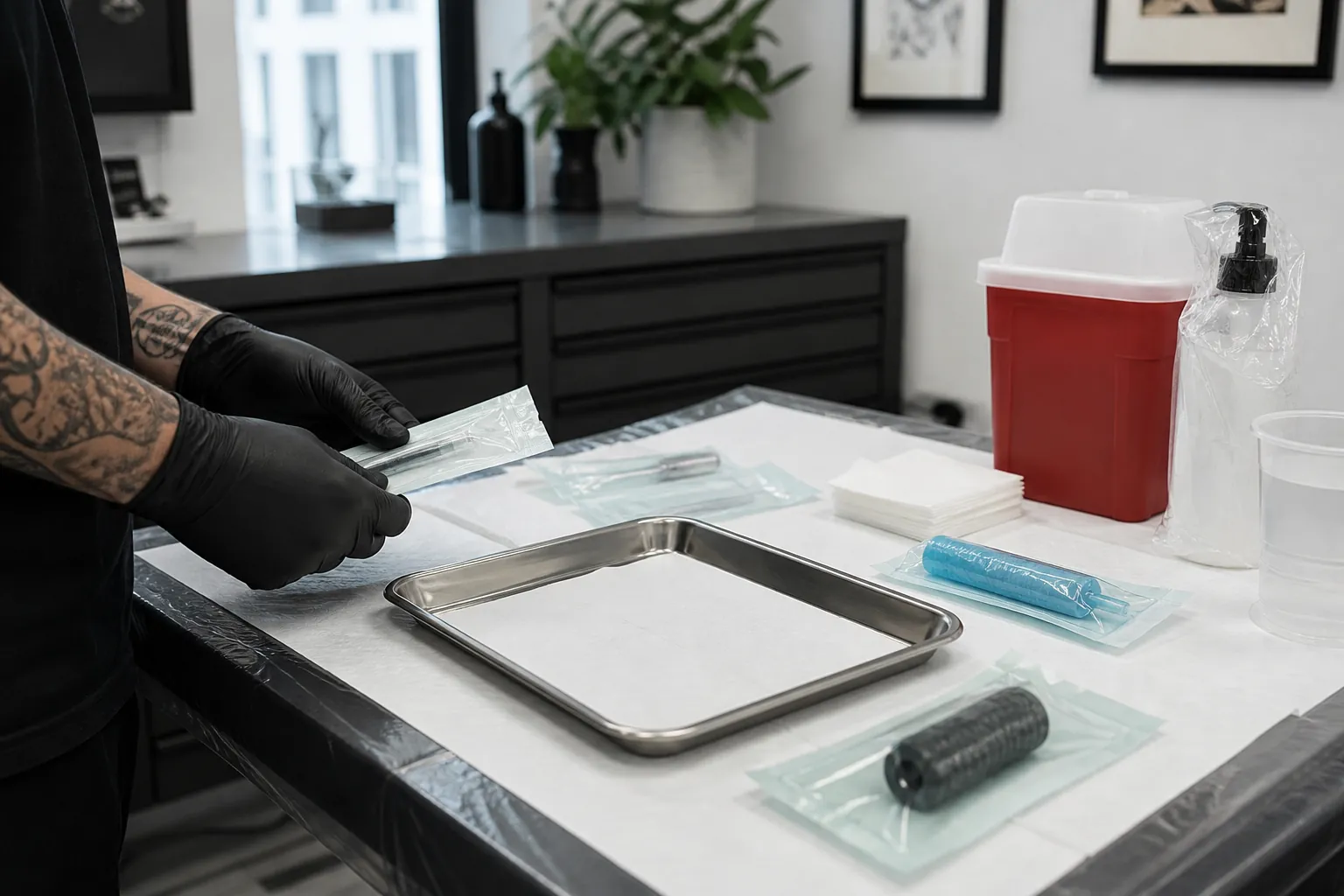
A license is a regulatory requirement, not a portfolio endorsement. It does not rank artistry or guarantee that every individual procedure will be risk-free. Review the studio's workflow, ask about sterile single-use needles or cartridges, fresh ink caps, barriers, surface preparation, sharps disposal, and written aftercare. The studio hygiene checklist explains what a client can reasonably observe without pretending to perform an inspection.
Visiting Artists Need Florida-Specific Registration
Florida publishes a guest tattoo artist registration for a visiting practitioner who holds an active tattoo license, registration, or certification issued outside Florida. Current state guidance says the guest must name the licensed Florida establishment, provide qualifying out-of-state credentials and training documentation, and that the guest registration is valid for up to fourteen consecutive days. If the home jurisdiction does not issue the required credential, Florida directs the person to apply for a Florida tattoo artist license instead.
Before booking advertised “Miami guest dates,” ask to see the current guest registration and establishment information, then verify it with the county health department. Confirm that your session falls inside the authorized dates. A famous home studio, international award, invitation from a host, or brand sponsorship does not substitute for Florida authorization. The guest spot and convention guide explains why every destination must be checked independently.
Plan the Trip Around Healing, Not Only Availability
If you are visiting Miami, avoid placing the appointment immediately before swimming, prolonged sun exposure, a beach day, strenuous activity, or a rushed flight home. Follow the artist's dressing instructions and use medical guidance for health questions. Florida heat and humidity do not create a separate universal aftercare protocol, but travel conditions can make ordinary care harder. Read the first 30 days aftercare guide before choosing the session date so you understand the practical burden.
Confirm transportation, parking, building access, language needs, session length, meal policy, and what happens if a storm or flight disruption affects the appointment. If a design needs multiple sessions, ask whether follow-up can occur with another artist—it often cannot without explicit agreement—or whether you must return to Miami. Ask how touch-ups are evaluated and whether travel costs are ever included; never assume.
Ask Questions That Reveal the Working Process
During the consultation, ask why the artist recommends a particular scale and placement, which references are useful, when the design is shown, what revisions are included, and which elements are flexible. Clarify whether communication is with the artist, an assistant, or the studio. If the artist prefers creative freedom, ask what that means in concrete terms. Consent to interpretation should not become consent to a different subject, placement, or price without discussion.
Discuss relevant skin history and allergies without expecting the artist to diagnose you. If you have a condition, take medication that affects bleeding or healing, have a history of keloids, or experienced a serious prior reaction, consult an appropriate healthcare professional before booking. No artist can guarantee an exact healing result or medically clear you. The questions to ask before booking help separate design questions from health questions.
Put the Money and Schedule Agreement in Writing
Request the pricing format and a scope-based estimate. Determine whether the price is by project, session, day, or time; what starts and stops the clock; whether drawing and setup are included; and how an added session would be approved. Budget for travel, lodging, transportation, meals, aftercare supplies, and missed work separately. An internet “Miami tattoo average” cannot tell you what your specific design should cost.
Read the deposit, rescheduling, cancellation, lateness, no-show, design-change, and touch-up terms. Confirm the payment destination through the artist's official channel and the host studio. Visiting dates create pressure, but urgency is not a reason to send money to an unverified account. Our pricing and deposit explainer shows how to compare agreements without treating the cheapest or most expensive quote as proof of quality.
Use One Evidence Table for Every Finalist
- Visual fit: several recent examples in the relevant style, scale, placement, color approach, and complexity.
- Outcome evidence: healed work where available and honest limits where a comparable example does not exist.
- Identity and authorization: current artist or guest credential plus the licensed establishment at the exact address.
- Process: understandable consultation, hygiene, design, aftercare, communication, and touch-up expectations.
- Agreement: realistic date, price structure, deposit policy, cancellation terms, and travel contingency.
Red flags include copied portfolios, refusal to identify the licensed establishment, payment pressure from a look-alike account, promises of a guaranteed medical outcome, or a proposal to tattoo at a hotel, home, or mobile setting that cannot be matched to Florida's establishment requirements. A selective artist, protected drawing process, limited revisions, or nonrefundable deposit is not automatically a red flag when it is explained clearly before commitment.
A good Miami choice survives three checks: the work matches the project, the artist and establishment are verifiable for the appointment, and the plan remains sensible after travel and healing are included. Build the shortlist slowly enough that the vacation deadline does not become the most powerful selection criterion.
Source desk
Primary References and Further Reading
External sources are provided for verification and context. Regulations can change; confirm the current rule with the responsible authority.