Safety & Aftercare / U.S. field guide
Tattoo Studio Hygiene Checklist: What to Look for Before You Sit Down
A polished portfolio cannot tell you how a studio handles needles, ink, surfaces, or cross-contamination. This field guide shows what a client can reasonably verify without pretending to conduct a health inspection.
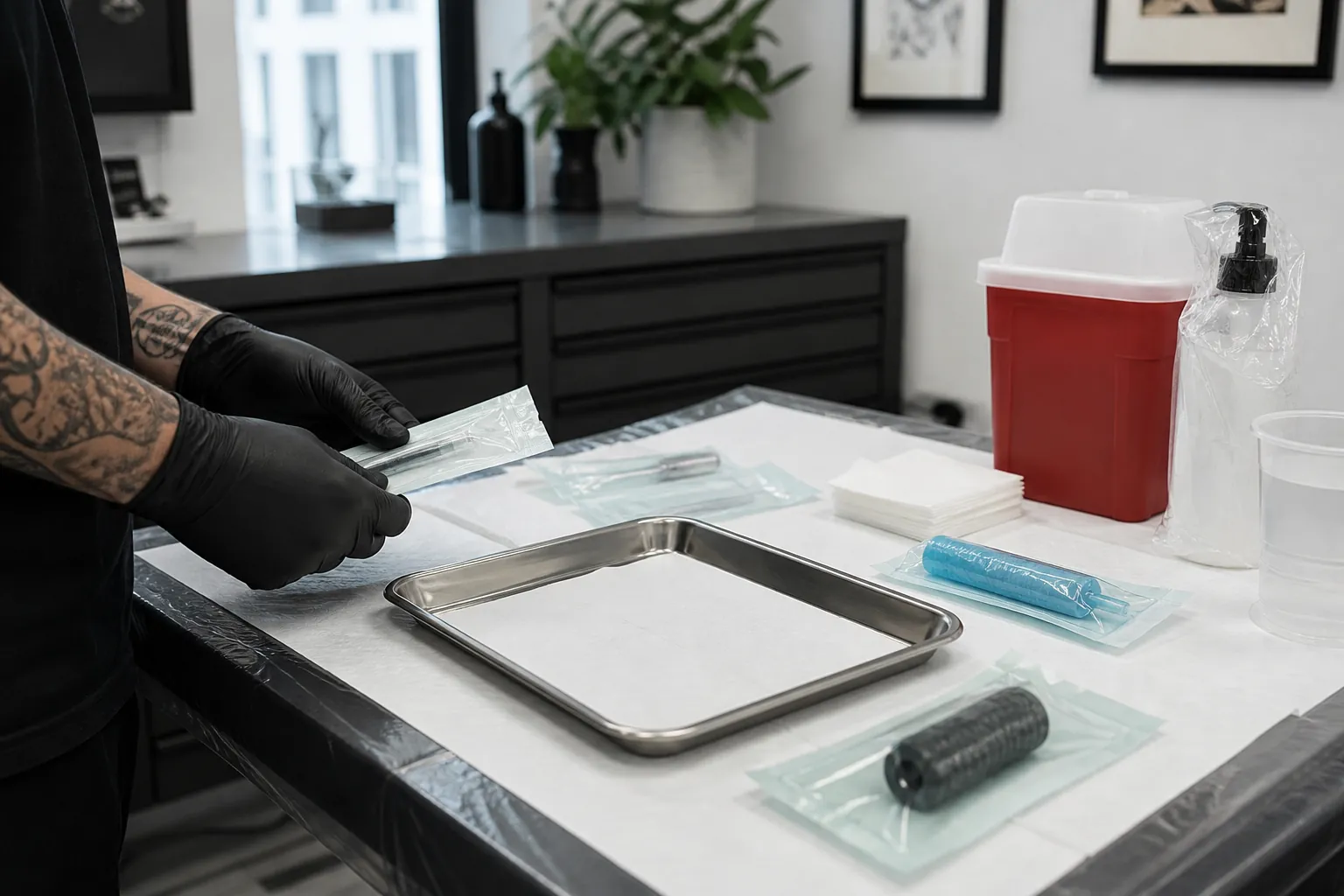
A client can observe preparation, separation of clean and used items, and safe disposal without touching the work area.AI-generated editorial illustration; not a listed artist’s work.
A clean-looking tattoo studio and a hygienic procedure are not the same thing. White walls and a tidy social feed say little about what happens after a gloved hand touches a phone, whether ink is poured for one client, or where a used cartridge goes. Ask whether the studio can show a repeatable system that separates clean supplies from contamination. This U.S. client checklist is general education, not an inspection, medical advice, or a substitute for local health rules.
What Tattoo Hygiene Actually Means
Tattooing intentionally breaks the skin barrier. That makes infection prevention a process, not a decorative feature. The process includes hand hygiene, fresh gloves, sterile single-use needles or cartridges, protected equipment, cleanable surfaces, safe ink handling, and immediate sharps disposal. It also includes decisions clients may never see: an exposure-control plan for employees, bloodborne-pathogen training, cleaning schedules, and records that allow a product or session to be traced. OSHA's Bloodborne Pathogens Standard applies to employers whose workers have reasonably anticipated occupational exposure to blood or certain body fluids; its controls are designed primarily to protect workers. State and local body-art rules protect clients and practitioners and can add different permit, training, facility, and recordkeeping requirements. One certificate on a wall does not replace the entire chain.
CDC investigations have shown why the chain matters. Tattoo-associated infections have been linked both to contamination introduced during manufacturing and to nonsterile water used for dilution. In other words, a careful artist cannot make a contaminated bottle safe through good technique alone, while a reputable ink cannot compensate for poor handling at the workstation. A responsible studio controls both the product and the procedure.
Before Booking: Verify the Local Rules, Not a Universal Checklist
The United States does not have one nationwide tattoo-artist license that you can look up in a single federal database. FDA oversees tattoo inks as cosmetics and monitors safety problems, but FDA does not license tattoo parlors. The practice of tattooing is generally handled by state, county, or city authorities. Los Angeles County, for example, registers practitioners and permits body-art facilities under California's Safe Body Art framework. New York City licenses individual tattoo artists and requires an infection-control course. Elsewhere, the permit may belong to the shop, the artist, both, or neither under a statewide system because a local ordinance controls instead.
Start with the official health-department site for the exact city or county where the appointment will occur. Search for “body art,” “tattoo permit,” or “environmental health,” then confirm what document should exist and whether the agency offers a public lookup. Ask the studio for the legal business name and the practitioner's name as shown on the permit. A social handle may not match a regulatory record. Our guide to verifying a tattoo artist's credentials explains that research in detail, and UFO Calling's methodology shows how directory evidence should be labeled.
- Confirm the permit or registration is current, belongs to the correct person or facility, and covers the location where you will be tattooed.
- For a convention or guest spot, ask about temporary-event authorization; a home-jurisdiction license may not automatically authorize work in another city.
- Check whether the regulator posts inspection grades, enforcement actions, or a complaint channel, but do not interpret missing online data as proof of approval or wrongdoing.
- Use the regulator's own website or phone number, not a badge image uploaded by the studio. Screenshots can be old, cropped, or attached to another location.
The Room Scan: Cleanable Space and a Clear Traffic Pattern
A tattoo station should make it easy to keep clean items clean. Work surfaces should be smooth and cleanable, with bags, food, drinks, pets, and clutter outside the procedure zone. Used supplies should not cross the tray holding unopened supplies. A sharps container should be close enough for immediate disposal; OSHA describes compliant containers as closable, puncture resistant, leak-resistant on the sides and bottom, and labeled or color coded. It should remain upright and below its fill line.
Look at workflow rather than hunting for a particular brand of disinfectant. Does the artist prepare the station after the previous client has left? Are barriers replaced between sessions? Are bottles, cords, lamps, armrests, and controls protected or disinfected according to their role? Are clean packages opened at the station only when needed? You do not need to hover over the tray or touch anything. A professional can narrate the setup in plain language and should not be offended by a calm question about single-use equipment. Browse studio profiles to shortlist locations, then verify each location directly before paying a nonrefundable deposit.
Watch the Setup, Not Just the Finished Tray
Observe the transition from sealed supplies to a ready station. Needle or cartridge packaging should be intact before opening and marked for sterile use. Razors, ink caps, rinse cups, and other single-client items should be fresh. Reusable items, where allowed, need validated cleaning and sterilization beyond a disinfectant wipe. Ask whether an item is disposable or autoclave-processed and how sterilization is monitored; the local regulator defines required documentation.
Gloves Are a Boundary, Not a Magic Shield
Fresh gloves matter only when they are changed at the right moments. A glove that touches a phone, drawer handle, unprotected spray bottle, face, or floor is no longer a clean bridge back to the tattoo. The artist should remove gloves safely, perform hand hygiene as appropriate, and put on a new pair before returning to the procedure. Watch how interruptions are handled. A five-second payment question can create the same cross-contamination route as a long break if the artist taps a screen and resumes work with the same gloves. Barrier film helps, but a torn or forgotten barrier still needs a proper response.
Ink Handling: The Bottle, the Batch, and the Cup All Matter
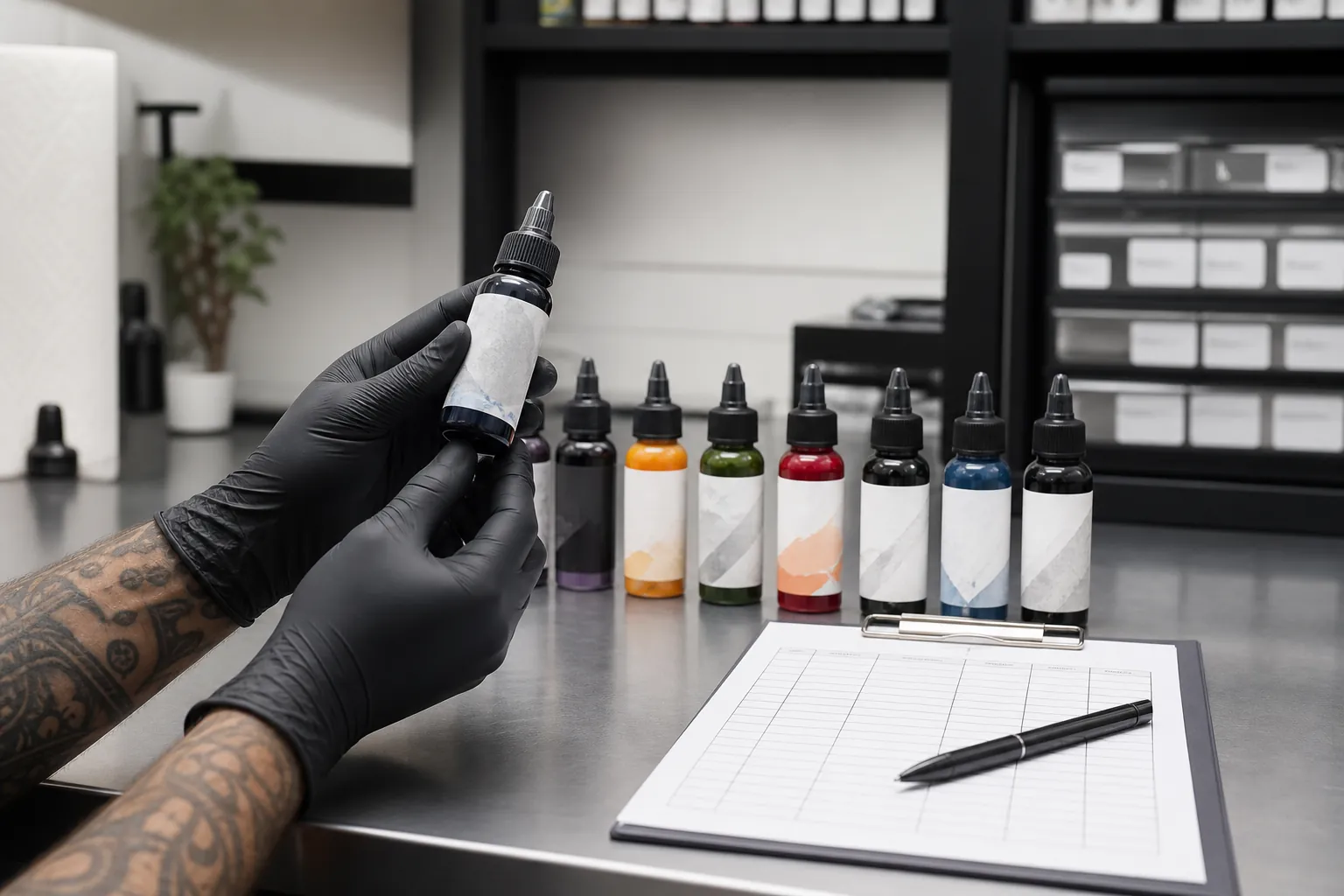
Ink should be dispensed into clean, single-use caps for one client, and leftover ink should not be returned to the bottle. The nozzle should not touch a used glove or contaminated cap. If a color must be thinned, CDC has advised using sterile water rather than assuming distilled or reverse-osmosis water is sterile. Products intended for drawing or printing are not substitutes for tattoo ink. Ask which brands and colors will be used and whether the studio records lot or batch information. That record can become crucial if FDA later identifies a contaminated lot. The tattoo ink recall guide explains how to compare a bottle with an official safety notice.
- Do not rely on the phrase “FDA approved ink.” FDA states that no color additives are approved for injection into the skin.
- A sealed bottle is not automatically contamination-free; FDA testing and outbreak investigations have identified problems in unopened products.
- Brand reputation is not a lot check. Record the manufacturer, product or color name, lot code, and best-before or expiration information when available.
- Ink supplied in an unlabeled squeeze bottle with no traceable source deserves a clear explanation before the session begins.
Aftercare and Records Are Part of Hygiene
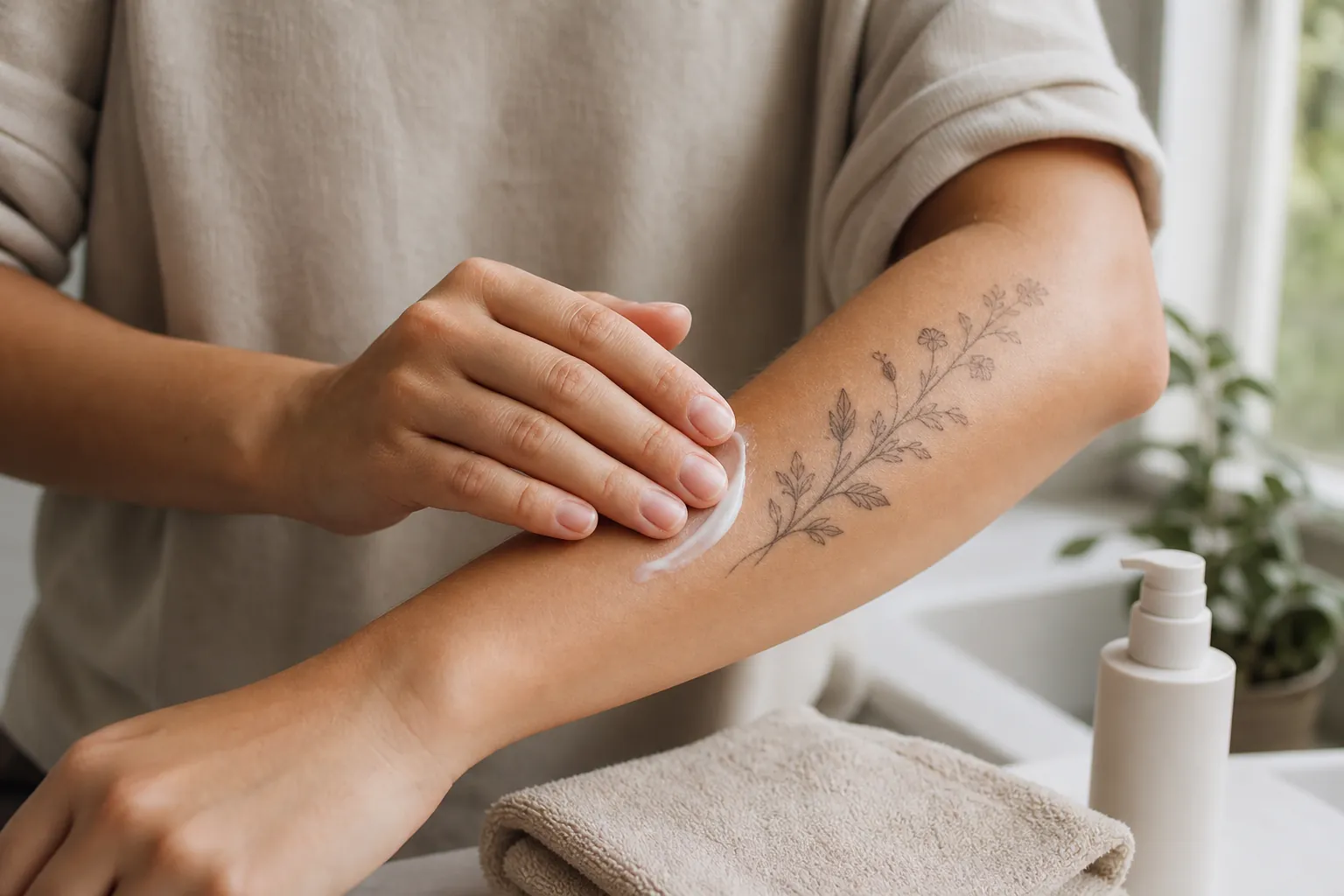
You should receive legible aftercare covering the dressing, handwashing, gentle cleaning, product use, activities to avoid, and when to seek help. Instructions differ for an absorbent pad and adhesive film, so generic social advice should not overrule the session-specific plan. Keep the artist's contact details, appointment date, studio address, and ink information. Document unexpected changes without repeatedly removing a dressing for photographs.
Normal healing and a complication can overlap at first. The American Academy of Dermatology notes that some early redness, soreness, clear fluid, itching, flaking, or scabbing can occur as a tattoo heals, while worsening or spreading redness, pain that intensifies, pus, open sores, fever, or chills warrant prompt medical attention. Do not ask an artist or an online forum to diagnose a rash. Contact a physician or board-certified dermatologist; severe symptoms may require urgent care. The timeline in tattoo aftercare for the first 30 days can help you organize observations without self-diagnosing.
Red Flags, and How to Leave Without Negotiating
Leave before the procedure if the artist cannot show the permit required locally, refuses to explain where needles come from, reuses a disposable item, pours leftover ink back into a bottle, touches contaminated objects and returns without changing gloves, works on visibly unclean surfaces, or pressures you to ignore a concern because a deposit is at stake. Also pause if the address differs from the permitted studio, especially when the appointment moves to a private residence at the last minute. A beautiful stencil does not reduce infection risk. You can say, “I am not comfortable starting today,” ask for your paperwork, and step away. Document the issue from outside the procedure area; never handle supplies as evidence.
If you believe a facility is operating unsafely, use the complaint process of the appropriate state or local health department. If the concern involves a tattoo ink or an adverse reaction, FDA provides a cosmetic-product complaint route. Reports are most useful when they include dates, product details, lot codes, photographs, and health-care records when available. A report is not a diagnosis or a public verdict; it gives the responsible agency information it can assess.
A Five-Minute Client Checklist
- Before paying, identify the regulator for the appointment address and verify the documents that jurisdiction actually requires.
- At arrival, match the artist and facility to the booking, then look for a cleanable station and separation between personal items, clean supplies, and waste.
- Before setup, ask to see sterile single-use needle or cartridge packaging opened for your session and confirm how reusable equipment is handled.
- During setup, watch glove changes, barriers, single-client ink caps, and immediate disposal into an accessible sharps container.
- Before leaving, collect written aftercare, the studio's contact details, and ink brand and lot information when the studio records it.
The goal is not to turn clients into inspectors, but to make safety visible enough to stop when the workflow does not add up. Use artist profiles and Los Angeles tattoo listings for discovery, then check permits and hygiene yourself. A directory can organize evidence; regulators, current studio practice, and health professionals answer different parts of the safety question.
Source desk
Primary References and Further Reading
External sources are provided for verification and context. Regulations can change; confirm the current rule with the responsible authority.
- OSHA — Bloodborne Pathogens Standard and general guidance
- CDC MMWR — Tattoo-associated nontuberculous mycobacterial skin infections
- FDA — Tattoos & Permanent Makeup fact sheet
- American Academy of Dermatology — Tattoo skin reactions
- Los Angeles County Public Health — Body Art
- New York State Department of Health — Body Art