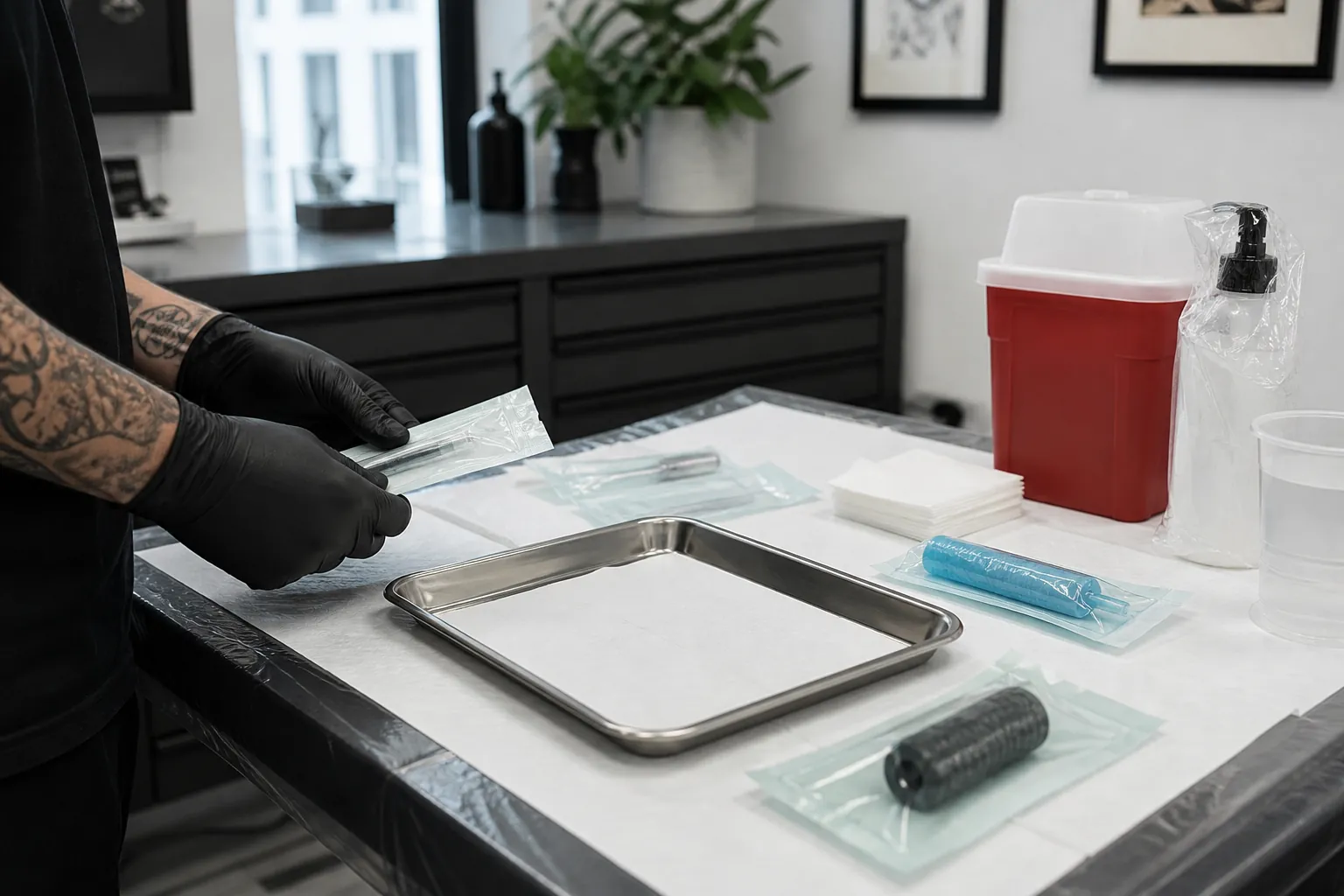
Safety & Aftercare / U.S. field guide
Can You Donate Blood After a Tattoo? U.S. Rules Explained
A tattoo does not automatically prevent blood donation. Eligibility depends on where and how it was applied, the blood collector's current rules, your health on donation day, and other independent screening factors.
This article is published in American English for a U.S. audience.
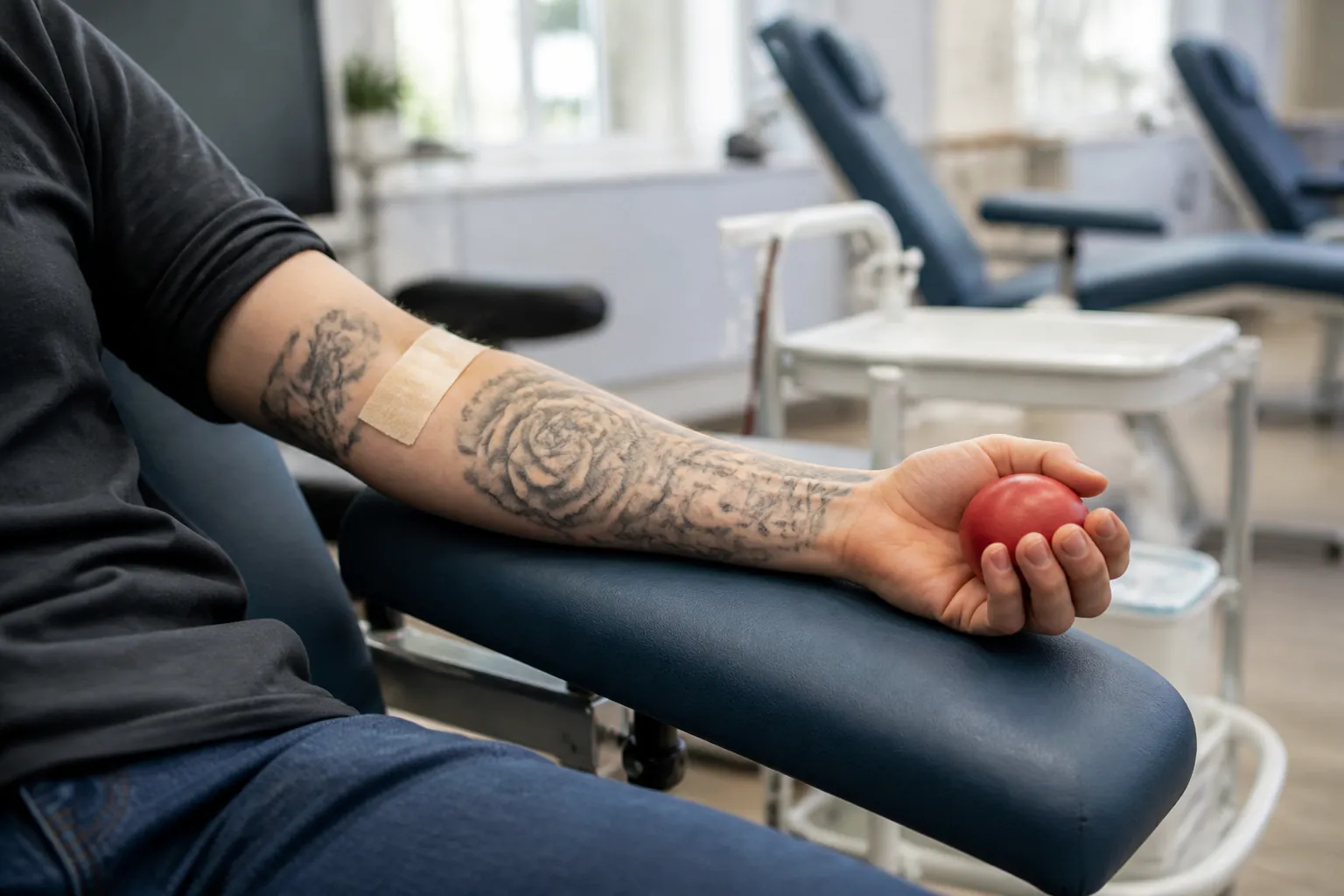
The donor center—not the tattoo studio or an online article—determines eligibility after reviewing the current questionnaire.AI-generated editorial illustration; not a listed artist’s work.
In most cases, having tattoos does not create a lifetime barrier to donating blood in the United States. The question is whether a recent tattoo meets the collection organization's current eligibility criteria. Where the tattoo was applied, whether the facility was regulated, whether sterile needles and non-reused ink were used, and how long ago the session occurred can affect the answer. Other health, medication, travel, procedure, and exposure questions still apply independently. This guide explains the published framework; only the blood collection center can determine your eligibility through its current screening process.
The Short Answer Under Current Red Cross Guidance
The American Red Cross says a tattoo is acceptable when it was applied by a state-regulated entity using sterile needles and single-use ink. If the tattoo was applied in a state that does not regulate tattoo facilities, the Red Cross publishes a three-month waiting period. Its current alphabetical eligibility page lists the District of Columbia, Idaho, Maryland, Massachusetts, New Hampshire, New York, Pennsylvania, and Wyoming as jurisdictions that do not regulate tattoo facilities for this purpose. That list can change; confirm it on the Red Cross page on the day you plan to donate rather than saving it as a permanent rule.
FDA's donor-eligibility guidance similarly recommends a three-month deferral after a recent tattoo but does not recommend that deferral when tattooing was performed by a state-regulated entity with sterile needles and non-reused ink. Blood establishments translate federal guidance into operating procedures and conduct their own donor history assessment. A community blood center, hospital program, plasma center, or collection organization may phrase questions or request information differently. Call the organization that will collect your donation; another organization's website cannot approve you for that appointment.
Why the Question Focuses on the Procedure, Not the Artwork
The concern is exposure to bloodborne infection through nonsterile instruments or reused ink, not tattoo pigment making blood unusable. CDC states that hepatitis C can spread through tattooing or piercing in unlicensed facilities, informal settings, or with nonsterile instruments. A regulated setting using sterile needles and single-use ink provides a documented control framework. It does not make every other donor criterion disappear, and it does not mean the collector must accept an incomplete history.
The three-month period is a deferral, not a diagnosis or an accusation that a particular studio transmitted an infection. Donor screening rules protect recipients by applying consistent risk controls even when an individual feels well. Do not seek an unnecessary medical test solely to “beat” the questionnaire or omit a recent tattoo because it looks healed. Answer exactly as asked. If the wording is unclear, ask the trained donor historian before signing.
How to Establish Whether the Tattoo Was Done by a Regulated Entity
Start with the address where the tattoo was applied, not the artist's home state. A county may register practitioners, permit facilities, or both; a city may run its own program. Los Angeles County regulates body art in its service area while certain cities have separate departments. New York City licenses tattoo artists even though the Red Cross currently lists New York among states without statewide facility regulation for this donor criterion. Give the collector the exact location and let it apply its policy.
- Find the session receipt or confirmation with the tattoo date, full studio address, and artist name.
- Locate the official city, county, or state body-art regulator for that address and save the facility or practitioner record when one is available.
- Ask the studio to confirm that sterile single-use needles or cartridges and ink not reused between clients were used. Do not ask it to decide blood-donor eligibility.
- Call the blood collector with the date and jurisdiction. Describe the setting accurately, including a convention, guest spot, private residence, or session outside the United States.
- Bring the facts to the appointment and allow the donor historian to make the determination under the current questionnaire.
If you cannot verify the facility or the session occurred informally, say that. Uncertainty is information the collector needs. A portfolio, social-media badge, brand sponsorship, or artist statement that a shop is “licensed everywhere” is not a regulatory record. Use the credential verification guide to find the responsible authority, and review UFO Calling's source methodology for the difference between first-party claims and regulator evidence.
Multiple Sessions Reset the Date Question
A sleeve started six months ago but shaded last week includes a procedure last week. Give the most recent session date, including a touch-up, cosmetic tattoo, or added linework. If sessions occurred in different jurisdictions, identify each location. A consultation or healed-work photograph does not puncture skin; answer the procedure question rather than counting ordinary studio visits.
Permanent makeup and microblading may be treated as tattooing because pigment is introduced into the skin. The Red Cross states that cosmetic tattoos, including eyebrow microblading, can be acceptable when applied in a licensed establishment in a regulated state using sterile needles and ink that is not reused. Again, repeat the collector's current wording back if you are unsure whether your service fits the question. Terminology used by a salon does not override how a donor center classifies a skin-penetrating procedure.
Donation Timing Is Also a Health and Healing Decision
Eligibility is not the same as being ready to donate. The Red Cross requires donors to be in good health and feeling well. A fresh tattoo may still be sore or actively healing. With fever, chills, worsening pain, spreading redness, pus, or open sores, contact a physician or board-certified dermatologist and tell the donor center you are unwell. Severe or rapidly worsening symptoms need urgent care.
Do not donate against medical advice, stop a prescribed medication to qualify, or conceal an antibiotic or recent illness. Medication eligibility often depends on why the drug was prescribed, not just the drug name. The donor center will review the current medication and health questions. If you need help caring for the tattoo, use the first 30 days aftercare guide and your artist's written dressing instructions, but ask a clinician to assess concerning symptoms.
A Cleared Tattoo Does Not Clear Every Eligibility Factor
Age, weight, hemoglobin, pregnancy, travel, medications, procedures, transfusions, infections, and other exposures can affect timing. Passing the tattoo question does not guarantee acceptance, and temporary deferral is not permanent exclusion. Complete the current questionnaire honestly and ask staff to explain any deferral and return date.
Whole blood, platelets, and plasma can have different rules. Commercial plasma centers are not interchangeable with blood collectors, and eligibility for one product does not establish another. Ask the actual program; a previous donation does not waive today's screening.
What to Bring and What to Say at the Appointment
- The exact date of the most recent tattoo session or touch-up, not an approximate season.
- The complete studio or event address and the jurisdiction that regulates it, if you were able to confirm one.
- The studio receipt, appointment confirmation, or permit information if the collector asks for clarification.
- An accurate description of sterile single-use needles or cartridges and non-reused ink, without guessing about practices you did not observe.
- Your current medications, recent illness or symptoms, travel, and other information requested by the official donor questionnaire.
A concise statement is enough: “My most recent tattoo was June 12 at this address. The county regulates the facility, and the artist used a sealed single-use cartridge and fresh ink caps.” Say when you do not know. Staff may need a supervisor to apply policy. If deferred, ask for the reason, return date, and whether documentation could resolve uncertainty.
Four Common Scenarios
1. A Recent Tattoo at a Regulated Studio Using Sterile Needles and Single-Use Ink
Under the published Red Cross framework, the tattoo itself may be acceptable without a three-month wait. The donor center still checks all other criteria and confirms the details through its screening process. Bring the address and date, especially when the studio is near a city or county boundary.
2. A Tattoo in a State Without Facility Regulation Under the Collector's Current List
The Red Cross currently instructs donors to wait three months. Count from the most recent tattoo procedure, but ask the collector to give you the eligible return date. Do not assume a city license automatically changes how the organization applies its state-regulation criterion; provide the local details and let staff decide.
3. A Home Tattoo, Informal Pop-Up, or Uncertain Sterile Practice
Disclose the setting and uncertainty. The collector may apply a deferral based on its current procedure, and any unsafe exposure can raise separate health questions. If you are concerned about possible bloodborne exposure, contact a clinician or local health department for individualized advice rather than using blood donation as a test. CDC recommends sterile equipment for tattoos and warns about hepatitis C transmission in unlicensed or informal settings.
4. A Tattoo Received Outside the United States
Tell the donor center the country, date, facility type, and what you know about sterile supplies. Travel can create its own eligibility questions independent of the tattoo. Do not translate another country's license into “state regulated” yourself. The collection organization will apply its current policy to both the procedure and travel history.
Plan Tattoos and Donation Without Gaming Either Process
If regular donation matters, check the collector's live rules before booking, choose a regulated setting, and keep records. Avoid a large tattoo immediately before an important drive because healing or an unexpected reaction can disrupt the plan. For a time-sensitive directed program, ask that program before the tattoo appointment.
Use artist profiles, studio profiles, and Los Angeles listings to discover professionals, then verify local authorization and hygiene at the source. For donation, return to the official collector every time. The rule that matters is the one in force for your donation organization, donation type, jurisdiction, and date—not the most convenient answer in a search snippet.
Source desk
Primary References and Further Reading
External sources are provided for verification and context. Regulations can change; confirm the current rule with the responsible authority.
- American Red Cross — Blood donor eligibility criteria, Tattoo
- American Red Cross — Can I donate blood with tattoos and piercings?
- FDA — Individual risk-based donor eligibility guidance
- CDC — Hepatitis C prevention and control
- Los Angeles County Public Health — Body Art
- American Academy of Dermatology — Tattoo skin reactions