Brands & Industry / U.S. field guide
Tattoo Brand Sponsorships: A Practical Disclosure Guide
Free machines, discounted supplies, affiliate commissions, travel support, and paid campaigns can all shape an endorsement. Clear disclosure protects the audience and makes professional relationships more credible.
This article is published in American English for a U.S. audience.
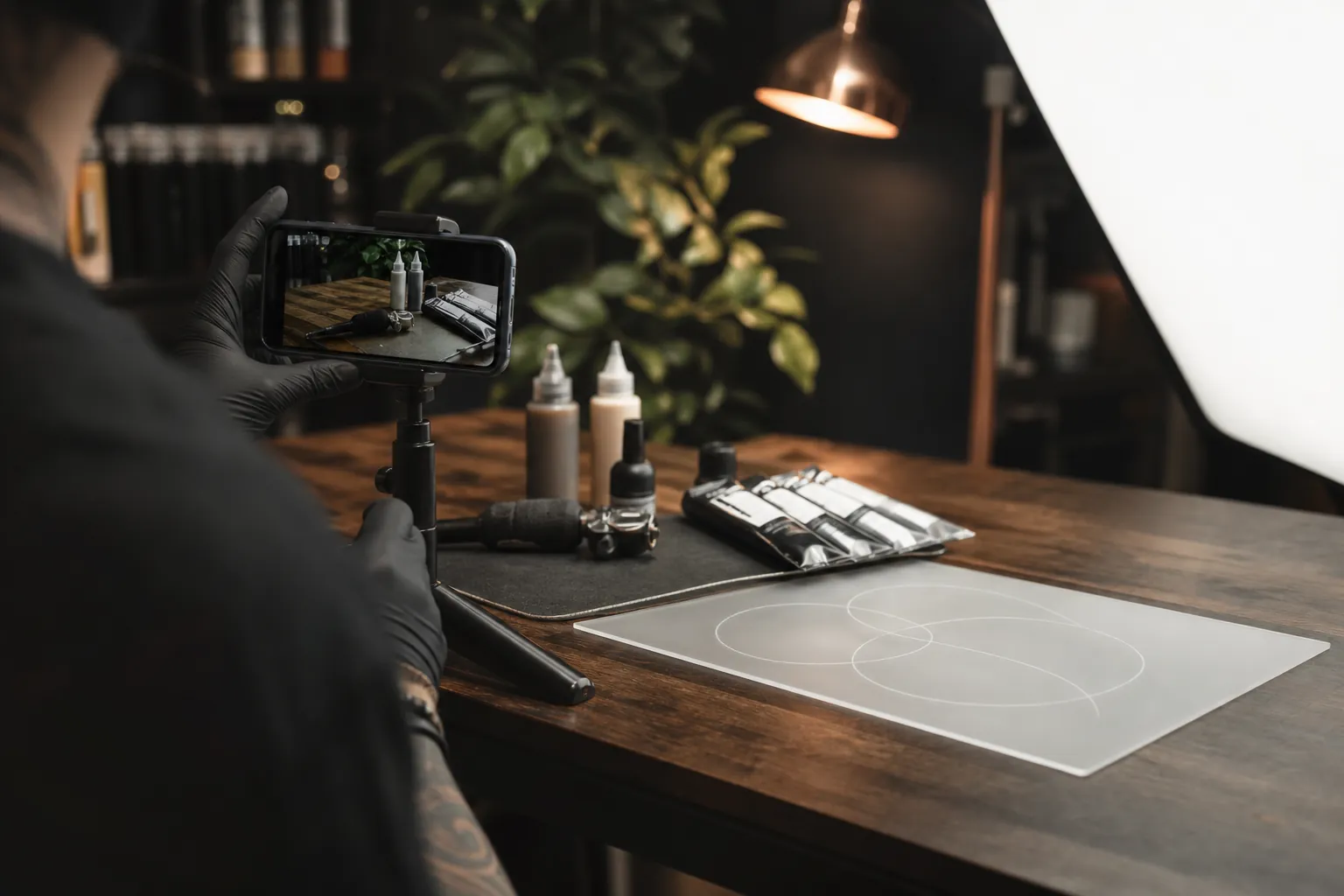
A useful disclosure travels with the endorsement and names the relationship in language the audience can understand.AI-generated editorial illustration; not a listed artist’s work.
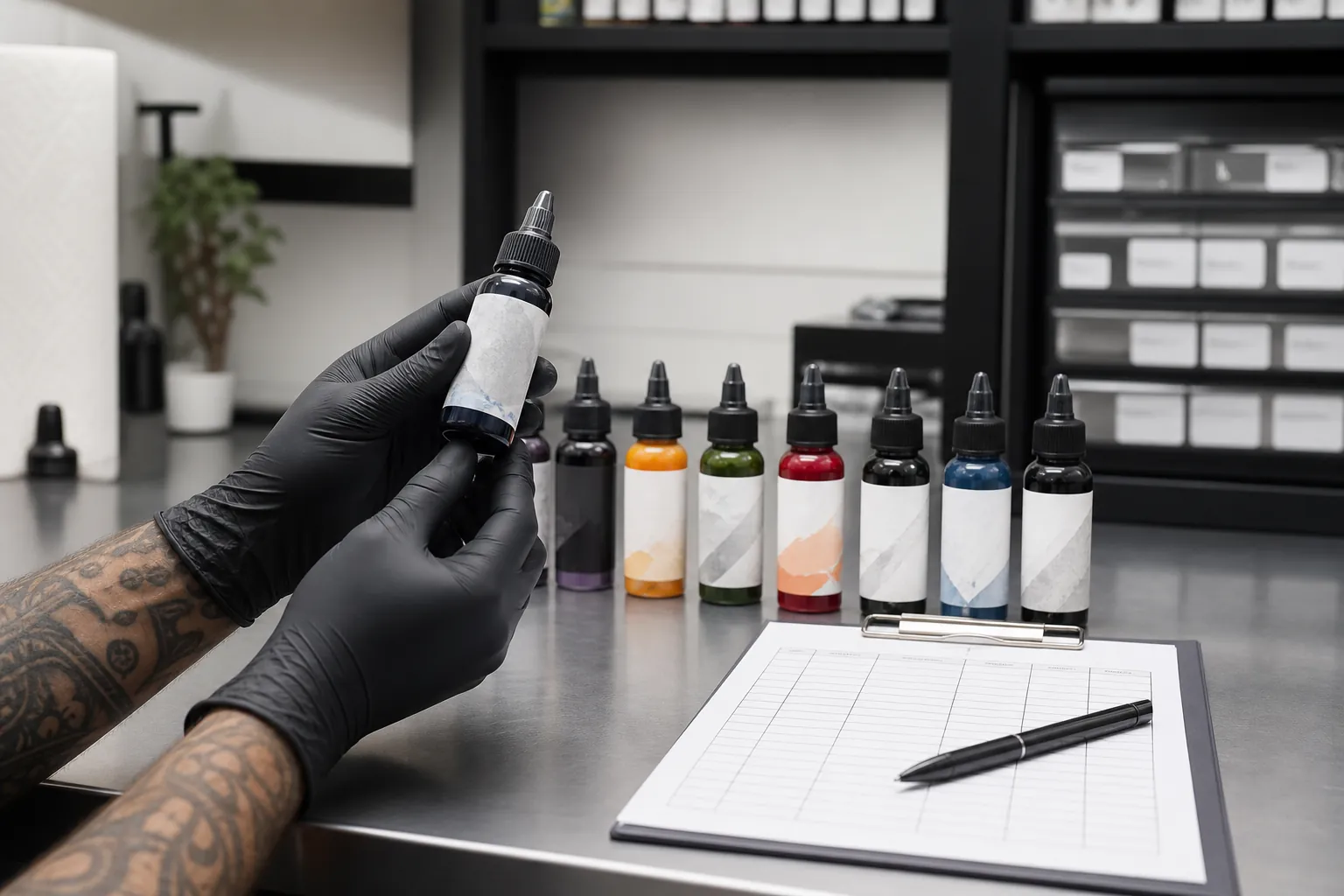
Tattoo sponsorships are not limited to a brand paying cash for one polished post. An artist may receive a machine, ink, cartridges, furniture, travel, convention fees, education, a discount code, affiliate commission, early access, studio support, or a place on a formal “pro team.” A studio may receive products for its resident artists. A brand may repost work or fund a guest spot.
This guide summarizes U.S. Federal Trade Commission business guidance for practical editorial use; it is not legal advice. Campaign facts and platform features change, and the FTC evaluates whether disclosures are clear and conspicuous in context. Artists, studios, agencies, and brands should review the current official guidance and obtain qualified advice for their agreements.
Start by Identifying the Material Connection
The FTC's Disclosures 101 guidance tells influencers to disclose financial, employment, personal, or family relationships with a brand. Financial relationships are not limited to money: receiving anything of value to mention a product can create a connection that the audience should understand. Free or discounted products and other perks can matter even when the brand did not script the exact post. A tag, pin, like, tutorial, healed-work caption, unboxing, or “what I use” video can function as an endorsement depending on context.
For tattoo professionals, map every benefit before content is planned. Was the product free? Was travel or booth space covered? Does a code pay commission? Is the artist employed by, contracted to, or related to someone at the company? Is there a volume discount unavailable to ordinary buyers? Does the studio receive supplies when its artists post? “I would use it anyway” does not erase the connection. The question is what the audience needs to know to evaluate the recommendation.
Use Language Ordinary Viewers Can Understand
A disclosure should name the relationship in plain terms. Depending on the actual facts, short statements such as “Ad,” “Sponsored by [Brand],” “Paid partnership with [Brand],” “Gifted by [Brand],” or “I earn a commission from this code” are easier to understand than insider labels. Do not choose wording because it is discreet; choose it because it accurately tells the audience what happened. An artist who received a free machine should not describe the relationship as paid cash, and an affiliate should not hide commission behind “support my code.”
FTC staff has warned that vague terms can fail to communicate a sponsorship. A brand name, “thanks,” an ambassador title, “collab,” “partner,” a team badge, or a discount code may leave viewers uncertain about compensation. The brand may be familiar to industry professionals while clients have no idea how its programs work. Explain the material fact, not only the program name.
Put the Disclosure With the Endorsement
FTC guidance says the disclosure should be placed with the endorsement message itself and should be hard to miss. Do not rely on an About page, profile bio, old announcement, contract link, or a disclosure viewers must search for. If the recommendation appears in a post caption, disclose in that content. If it appears in a video, livestream, or story, make the relationship apparent in the format people are consuming. Repetition may be necessary because viewers enter live content at different times.
Match the Disclosure to the Tattoo Content Format
Portfolio Image or Healed-Work Post
If the caption praises or prominently identifies gifted ink, a sponsored machine, or a paid campaign, place the disclosure near that endorsement. Do not imply that the product alone caused the healed result. Healing is influenced by the procedure, application, placement, client, aftercare, and other factors; only make product-performance claims you can support and that the brand has authorized accurately.
Tutorial, Reel, Livestream, or Studio Tour
State the relationship in the content where viewers will notice it, and repeat it when a long live session has multiple entry points. Caption-only disclosure may be missed by people watching video without opening the caption; audio-only disclosure may be missed by muted viewers. Consider both. If several products have different relationships, identify each accurately rather than using one blanket statement that suggests every item is sponsored.
Affiliate Code, Storefront, or Supply List
Tell users when a purchase can generate commission or another benefit. Put the explanation close to the link or code, not only on a remote policy page. If a code provides a client discount but no commission, say what is true. If the arrangement changes, update the profile and reusable templates so old language does not become misleading.
An Accurate Disclosure Does Not Cure an Unsupported Claim
The FTC Endorsement Guides address truthful endorsements as well as disclosure. A paid artist should not claim an experience they did not have or make a product claim the advertiser could not substantiate directly. A brand should not ask a professional to describe an ink, aftercare product, machine, or cartridge with medical, safety, sterility, durability, or performance language that exceeds reliable support. “Sponsored” tells the audience about the relationship; it does not transform exaggeration into evidence.
Separate personal observation from general fact. “This machine's balance feels comfortable in my hand during longer sessions” describes an experience. “This machine prevents hand injury” is a health claim requiring a very different basis. “I used this color in the pictured tattoo” is traceable. “This ink heals brighter on everyone” is an expansive result claim. Brands should provide approved claim language and supporting documentation; artists should refuse statements they cannot honestly make.
Brands Need a Compliance System, Not a Disclaimer Sentence
FTC guidance makes clear that brands and intermediaries have responsibilities around endorsement campaigns. A practical program begins with a written relationship inventory, plain disclosure instructions, examples for each platform, claim boundaries, review procedures, and monitoring proportionate to the campaign. The contract should not merely say “comply with all laws” while the creative brief rewards hidden or ambiguous promotion.
- State what the artist receives: cash, product, discount, commission, travel, education, event space, or another benefit.
- Define required disclosures for posts, stories, video, live content, event signage, affiliate links, and profile pages.
- Provide substantiated product claims and prohibit medical or performance claims outside that evidence.
- Create a correction path for missing disclosures, expired links, changed compensation, reposts, and platform formatting failures.
- Keep records of the agreement, supplied products, content approvals where used, monitoring, and corrections.
Artists Should Clarify the Deal Before Posting
Ask what deliverables are required, how long the relationship lasts, whether category exclusivity applies, who owns photographs and video, where the brand may repost them, whether paid advertising usage is included, and how termination affects old content. Clarify compensation, expenses, taxes, product replacement, returns, safety notices, and what happens if you stop using the product. A free machine is not free of obligations when the agreement transfers broad usage rights or demands months of exclusivity.
Preserve editorial honesty. If a supplied product does not fit your practice, the contract should not force a positive claim. If you have not tested it long enough to evaluate, say so or wait. If a product is recalled or the brand changes a material specification, update relevant posts and client information rather than leaving a confident recommendation detached from current facts. The tattoo ink safety and recalls guide shows why product identity and lot traceability matter beyond marketing.
Represent Sponsorships Carefully in Directory Profiles
A UFO Calling profile can record a relationship, but the label should describe evidence rather than prestige. “Artist lists Brand X as a sponsor on a current official profile” is different from “Brand X confirmed an active contract through a first-party source.” “Uses Brand X products” is different again and may be a self-reported working preference with no sponsorship. Dates matter because teams change. The methodology page explains why the source and last-checked date should remain visible.
Brands and artists should have a claim or correction route. If a sponsorship ends, the directory should preserve historical context only when useful and label it as past rather than implying an active endorsement. Product usage should not be inferred from a photograph when logos are ambiguous. A brand relationship is not a safety certification, skill ranking, or guarantee that every product visible in a studio is supplied by that brand. Browse brand profiles and artist profiles as starting points, then follow citations.
Practical Disclosure Examples by Relationship
- Paid campaign: “Ad — Brand X paid me to demonstrate this machine. These are my honest observations after the stated test period.”
- Gifted product: “Brand X sent this cartridge box to me at no cost. I was not paid for this post.”
- Affiliate: “I earn a commission when you buy through this link or code.”
- Travel support: “Brand X covered my convention travel and booth fee for this appearance.”
- Studio benefit: “Our studio received these supplies at no cost; I am showing how I used them in this session.”
These examples are templates, not universal safe harbors. Use only the statement that matches the real arrangement, name the brand, and place it where the audience encounters the endorsement. Add necessary context without weakening the first clear sentence. Review the final post on the actual device and platform rather than only in a desktop approval document.
Run a Quarterly Relationship and Content Audit
- List every active brand, affiliate, gifted-product, event-support, employment, studio, and family connection relevant to endorsements.
- Match each relationship to live posts, videos, links, discount codes, profile labels, event pages, and reusable templates.
- Check whether disclosures are accurate, understandable, proximate, readable, audible where needed, and visible before platform truncation.
- Retire expired codes, update ended sponsorships, correct unsupported claims, and preserve necessary records.
- Review current FTC guidance and platform tools, then train every person who creates, approves, reposts, or monitors campaign content.
Clear sponsorship disclosure does not make a recommendation less credible. It gives clients and other professionals the context needed to interpret it. The durable standard is simple: tell people what you received or how you are connected, make that explanation hard to miss, say only what you can honestly support, and keep the record current when the relationship changes.
Source desk
Primary References and Further Reading
External sources are provided for verification and context. Regulations can change; confirm the current rule with the responsible authority.